TL;DR
Cordless stick vacuum cleaners are battery-powered cleaners built for convenient, frequent floor care, often with a handheld unit for stairs and furniture. To choose one, compare tested pickup on your actual floor types, practical runtime with the powered head, bin size, handling, filtration, and the cost and availability of replacement parts.
Compare pickup on your own floor types; suction figures alone don’t show how a head handles dust, cereal, or carpet grit.
Treat maximum advertised runtime as a best-case claim and compare powered-head use on a practical setting.
Check removable-battery availability and replacement cost before relying on a spare pack to extend cleaning time.
Expect a smaller bin to need frequent emptying, especially in homes with pets or lots of debris.
Keep the brush roll, bin, and filters clean, and let washable filters dry fully before reinstalling them.

Get cleaning gear delivered free with Prime
- Fast, free delivery on millions of items
- Prime Video, Amazon Music and more included
- Member-only deals all year
What a cordless stick vacuum can do around your home
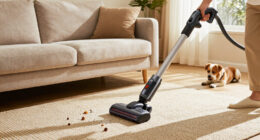
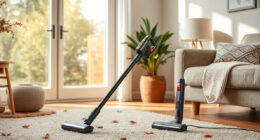
A cordless stick vacuum is a lightweight, battery-powered cleaner with a slim body and a powered floor head; many models detach into a handheld vacuum for above-floor jobs. That setup makes it easy to grab for everyday messes, though it doesn’t make every model a match for every home. Think of it as a small cleaning kit on a handle. After breakfast, you can sweep toast crumbs from the kitchen, pop off the handheld unit, and lift dust from the stair edges. Many models use a bagless bin and washable filters, but the details vary, so check the specific model’s instructions. A cordless stick can serve as your main vacuum if you have a modest floor area, mostly hard flooring or low-pile rugs, and a habit of cleaning frequently. Frequent short sessions suit the format because you can clear fresh debris before it spreads or gets pressed into a rug. A large home with thick carpet, lots of grit, or several pets may demand more capacity and sustained power than a compact battery-powered unit offers. In that setting, a small bin and limited runtime can interrupt cleaning just when the machine is working hardest. A larger upright or canister can make more sense for those heavy weekly sessions, while the stick can still be useful for quick pickups. You’ll also see features such as LED headlights, screens, automatic suction adjustment, and docks. A display may show an estimated remaining runtime, but that estimate changes with the selected mode and cleaning conditions. Treat extras as useful conveniences, not proof that the vacuum will clean better: a headlight can help reveal dust under furniture, for example, but it cannot compensate for a head that scatters debris.Products Worth Considering

Sonos Era 100 SL Compact Microphone-Free Speaker, Black

Philips Hue Bridge Pro Starter Kit with 4 A19 E26 Color Smart Bulbs

LG 77-Inch OLED evo C5 Series Smart TV (2025)
As an affiliate, we earn on qualifying purchases.
How to match the floor head to your floors
A cordless stick vacuum cleans well only when its floor head suits the surface and debris in front of it. Brush-roll design, airflow, suction, and how closely the head meets the floor all affect pickup, so a strong suction number by itself can’t predict the result. The head is the part that meets the mess: its shape and brush action determine whether debris enters the airflow or gets pushed aside. For hard floors, look for a head that collects fine dust and larger pieces without flicking rice or cereal across the room. A soft roller or carefully designed brush can help, but performance still depends on the floor head and the way you move it. Imagine sweeping up a tablespoon of oats beside a dark cabinet: scattered flakes are easy to spot, while flour can vanish into a weak pickup path. A head that seals too tightly may also struggle to pass over larger pieces, so useful pickup means handling both fine dust and visible debris. On carpet, a motorized brush roll can loosen debris from the pile, but thick carpet places more demand on the vacuum than tile or a low rug. The fibers resist the brush and can hold grit below the surface, so the vacuum needs enough agitation and airflow to lift it. A model that feels nimble on hardwood may drag or leave grit behind on plush carpet. If you have a mix of surfaces, test or consult independent results for both rather than assuming one impressive hard-floor test tells the whole story. Some heads have settings or automatic adjustment for different surfaces; these can reduce the need to swap tools, but check that they work well on your specific floors.| Surface or mess | What to check | Example at home |
|---|---|---|
| Hard floors | Fine dust pickup and large debris without scattering | Flour and cereal near the pantry |
| Low- or medium-pile carpet | Motorized brush performance and debris removal | Crumbs pressed into a living-room rug |
| Thick carpet | Tested pickup and manageable push resistance | Pet hair in a deep bedroom carpet |
How much runtime you can count on while cleaning
A cordless stick vacuum’s advertised maximum runtime is a best-case figure, not a promise that you’ll clean for that long with the powered floor head. Low-power settings usually extend battery life, while boost mode can drain it much faster; the tool and floor surface affect the result too. The practical question is whether the vacuum can finish your usual route at the power needed to pick up your usual mess. Picture a quick pass through a one-bedroom apartment. On hard floors, you may use a lower setting and finish before the battery becomes a concern. Switch to max mode to lift embedded grit from a rug, and the same battery can feel much smaller. That’s why a runtime measured with a small handheld tool may not describe a full-floor cleaning session. If you routinely need the stronger setting, a headline runtime based on a gentle setting can leave you stopping halfway through. Compare models using the powered head on the setting you expect to use. Check whether the battery comes out, how long it takes to charge, and whether the maker sells a compatible spare. A removable battery can let you swap in a charged pack, but only if you can actually buy one at a reasonable price. A spare also adds its own cost and needs charging and storage, so it is useful only if uninterrupted cleaning matters enough to justify those steps. Battery capacity also changes with age and use. If you’re choosing between two vacuums, a replaceable battery and accessible parts may matter more over several years than a slightly higher “up to” runtime printed on the box. For a large home, consider whether one charge and one small bin can cover the whole route without an inconvenient stop. If it cannot, compare the time and effort of recharging or emptying with the alternative of using a larger-capacity vacuum.How to judge comfort, bins, and filtration before buying
A cordless stick vacuum should feel easy to steer, empty, and maintain, because those small details decide whether you reach for it every day. Total weight matters, but so do balance, grip shape, head swivel, and how heavy the handheld section feels when you lift it overhead. A few extra ounces near the floor may matter less than weight concentrated in your hand during stairs or overhead cleaning. Try the movement in your mind: you’re guiding the head beneath a low sofa, then carrying the handheld unit up a flight of stairs. A top-heavy design may feel fine for a two-minute kitchen cleanup but tiring during a longer session. If possible, handle the vacuum in a shop or check reviews that describe balance and steering, not just a weight figure. A head that turns easily helps around chair legs, but very responsive steering can take a little practice in straight runs. Use this short buying check before you compare prices:- List your surfaces and messes. Note hard floors, carpet pile, rugs, pet hair, and recurring debris. This helps you prioritize pickup tests that resemble your routine instead of features you may rarely use.
- Check practical runtime. Look for powered-head runtime on a useful setting, plus charge time and removable-battery options. Match the figure to the area you clean in one session.
- Try the bin and controls. Check its capacity, how often you may need to empty it, and whether dust escapes during emptying. A small bin can keep the body light, but frequent trips to the bin interrupt longer cleaning sessions.
- Inspect filtration and parts. Look for a sealed system, clear filter instructions, and available batteries, brush rolls, and filters. Good filtration depends on air passing through the filter rather than leaking around it.
- Compare ownership terms. Read the warranty and check what common replacement parts cost. These details affect how practical it is to keep the vacuum working after wear or battery aging.
What upkeep keeps suction and airflow feeling strong
Regular upkeep helps a cordless stick vacuum keep working as intended: empty the bin, clear hair from the brush roll, and clean or replace filters according to the manufacturer’s instructions. A clogged filter or packed roller can reduce airflow and pickup, making a once-quick job drag on. The practical cost is time: if a vacuum is awkward to clean, you may put off maintenance until the decline in pickup is noticeable. After vacuuming a hallway where a long-haired cat naps, look over the brush roll for strands wrapped around its ends. Hair caught at the ends can restrict the roller, so remove it before the next session. Empty the bin before debris reaches the fill line, especially after pet-hair sessions. If the filter is washable, let it dry completely before reinstalling it; a damp filter can cause trouble, and each model’s care directions differ. Keeping to the maker’s cleaning instructions matters because filters and rollers vary, and an incorrect cleaning method can damage a part you might otherwise replace separately. The trade-off is simple. Bagless bins avoid buying bags, but emptying them can release dust, and the smaller capacity means more frequent handling than with a full-size vacuum. A self-emptying dock can reduce direct contact with debris, though it doesn’t remove the need to clean filters or check the brush head. It shifts one maintenance task into a larger container that still needs occasional attention. Before you buy, look up whether batteries, filters, and brush rolls are sold separately. A vacuum with a modest initial price can cost more to keep running if common parts are hard to find. Warranty length and coverage also vary, so read the terms for the exact model instead of assuming every component receives the same protection. These checks help you judge the cost of ownership, not just the price on the shelf.When a cordless stick is the right fit—and when it isn’t
A cordless stick vacuum makes sense when quick access and frequent light cleaning matter more than large capacity or uninterrupted power. It can be a strong primary vacuum in a small home with mostly hard floors, but a larger or corded vacuum may suit broad areas of thick carpet or heavy debris better. The key difference is how often the stick’s limits create a pause: if its bin and battery cover your usual cleaning route, the convenience can outweigh the smaller capacity; if they do not, repeated emptying or charging can erase that advantage. Consider two homes. In the first, a couple in a compact flat has tile, a small rug, and a habit of cleaning crumbs every evening; a wall-mounted stick vacuum is convenient and easy to store. Short, frequent sessions keep debris from accumulating, and the limited bin is less likely to become a problem. In the second, a family has a large carpeted house and a dog that sheds heavily; a small bin and limited battery may turn the weekly clean into repeated stops. The same vacuum can still help with quick spills, but it may not be a satisfying sole cleaner for that workload. Filtration deserves the same care as pickup. “HEPA” refers to a high-efficiency filter, but the claim is most useful when the entire vacuum is sealed well enough to stop air leaking around that filter. If air bypasses the filter, the label alone cannot describe how well the vacuum retains fine particles overall. If someone in your household cares about fine particles, check for information about the whole system, not just the filter label. Storage can change the decision too. A wall mount keeps a vacuum ready in a narrow closet, but mounting may require drilling. A freestanding dock avoids that step and can move between rooms, though it takes up floor space. A charging dock can make the vacuum easier to grab when its battery is full, but its location needs to suit both storage and charging. Choose the setup that fits where you actually clean and store things.Frequently Asked Questions
Can a cordless stick vacuum replace a corded vacuum?
It can, depending on your home’s size, floor surfaces, cleaning frequency, and the vacuum’s bin and battery. A small flat with hard floors may be well served, while a large carpeted home with heavy debris may benefit from a corded or larger-capacity model.
How long does a cordless stick vacuum battery really last?
Runtime varies by model, power setting, floor head, and cleaning conditions. Compare figures for the powered floor head on a setting you would actually use, since low-power maximums may not reflect a carpet cleanup in boost mode.
Are cordless stick vacuums good for pet hair?
Many can pick up pet hair, particularly with a motorized brush head, but results depend on hair length, carpet type, and head design. Hair can wrap around the roller and fill a small bin quickly, so plan to inspect and empty the vacuum often.
What does HEPA filtration mean on a vacuum?
HEPA describes a high-efficiency filter, but the whole vacuum also needs to limit leaks so air doesn’t bypass the filter. Check whether the manufacturer describes a sealed filtration system, especially if fine-particle capture matters in your home.
Are self-emptying docks worth the extra cost?
A self-emptying dock transfers debris from the vacuum’s small bin into a larger container, so you handle dust less often. It takes extra space and adds cost, noise, and another part to maintain; it also doesn’t eliminate routine filter and brush-roll care.