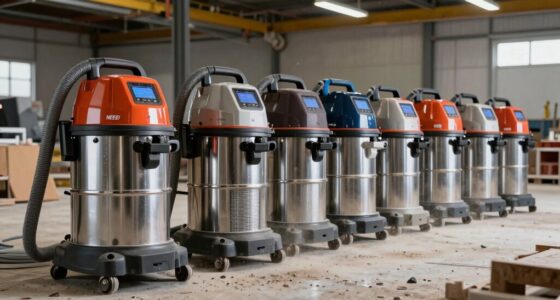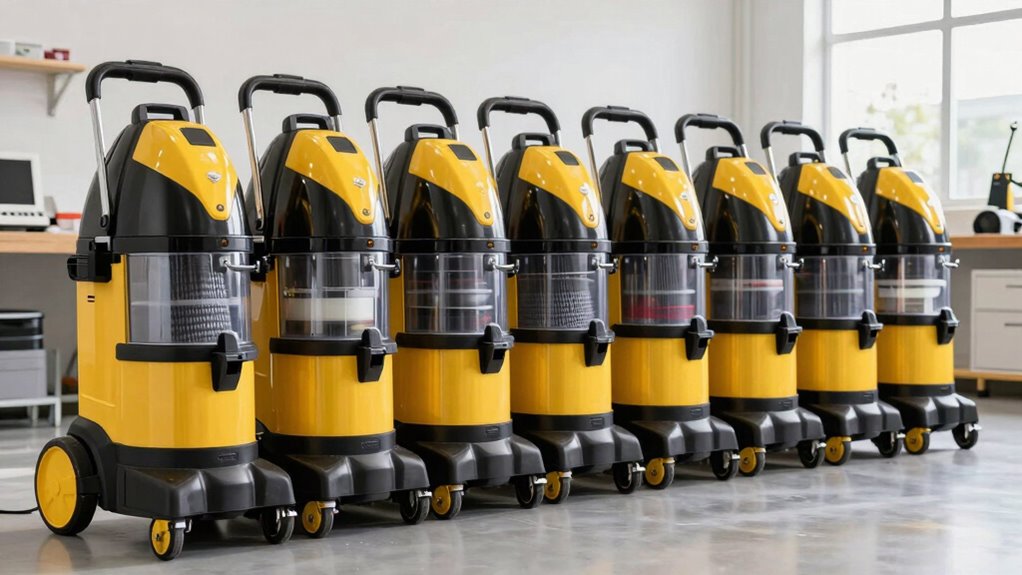

For contractors who need a HEPA wet-dry vacuum, I’d start with the DEWALT DWV010 as the best overall balance of automatic filter cleaning and jobsite-ready capacity. The Makita VC4210L stands out for its larger 11-gallon tank, while the Fein Turbo II is a strong option when quieter operation and tool-triggered extraction matter. The main tradeoffs are capacity versus portability, automatic filter cleaning versus simpler upkeep, and verified HEPA filtration versus models with less specific filtration details. I compare all 15 options by how well their stated features fit contractor work, so keep reading for the full breakdown and help matching a vacuum to your jobs.

Get cleaning gear delivered free with Prime
- Fast, free delivery on millions of items
- Prime Video, Amazon Music and more included
- Member-only deals all year
Complete the kit


Key Takeaways
- The DEWALT DWV010 ranks first for its combination of an 8-gallon capacity and automatic filter cleaning, a useful pairing for repeated dust-producing work.
- The Makita VC4210L is the capacity pick with an 11-gallon tank, but that larger format may be less convenient to move between floors or tight work areas.
- The Fein Turbo II emphasizes quieter tool-connected work, while its 8.4-gallon size sits between compact cleanup units and larger contractor models.
- Nilfisk’s Aero lineup gives buyers several size and feature combinations: compare the 21, 26, and 31 by capacity and tool-start needs rather than treating them as interchangeable.
- Small and portable models serve a different job: the DEWALT 20V MAX and WEN VC4710 prioritize maneuverability, while larger extractors better suit sustained dust collection.


| hepa wet dry vacuum for contractor | Capacity | Airflow | Noise level | Filter cleaning |
|---|---|---|---|---|
| DEWALT DWV010 HEPA Dust Extrac | 8 gallons | 150 CFM | — | Automatic pulse every 30 seconds |
| Makita VC4210L 11 Gallon Wet/D | 11 gallons | 148 CFM | 60 dB(A) | Automatic |
| Nilfisk Aero 21 5-Gallon Profe | 5 gallons | 127 CFM | 64 dB(A) | Automatic |
| Dapper Supply Wet/Dry Dust Ext | 8 gallons | 140 CFM | — | — |
| Fein Turbo II Wet/Dry Vacuum | 8.4 gallons | 151 CFM | 66 dB(A) | — |
| Starmix Ultimate HEPA Industri | 9.2 gallons / 35L | 157 CFM | 69 dB(A) | i-Pulse electromagnetic sequential cleaning |
| Dustless Technologies D1606 Tr | — | 126.39 CFM | 79 dB | — |
| Nilfisk Aero 31 8-Gallon Profe | 8 gallons | 127 CFM | 64 dB | Automatic |
| Dustless Technologies D1603 We | — | — | — | — |
| Dust Extractor | — | — | — | — |
| Bosch VAC090AH 9 Gallon Dust E | — | — | — | Automatic, every 15 seconds |
| Dustless Technologies HEPA Wet | 8 gallons | 138 CFM | 76 dB | Semi-automatic |
| DEWALT 20V MAX Shop Vacuum Wet | 2 gallons | — | 80 dB | — |
| WEN VC4710 10-Amp 5-Gallon Por | — | — | — | — |
| Nilfisk Alto Aero 26 HEPA Cont | 25 liters | — | 64 dB | Automatic |
More Details on Our Top Picks
DEWALT DWV010 HEPA Dust Extractor with Automatic Filter Cleaning, 8-Gallon
The DEWALT DWV010 is the most focused choice here for contractors who want a vacuum that starts with a connected tool and keeps extracting through dusty work. Its 150 CFM airflow and automatic filter pulses every 30 seconds are aimed at maintaining pickup without frequent manual pauses. Compared with the Makita VC4210L, it has less stated capacity, but its power-tool actuation and 15-foot anti-static hose make the workflow particularly straightforward for tool-linked cleanup. The key qualification is its lead-renovation claim: EPA RRP compliance applies only when DWV9330 filters are used, so contractors should verify the installed filter before relying on that use. This is a jobsite-oriented extractor, not a quiet, light-duty shop vacuum; its 15-amp motor and substantial hose setup favor connected-tool use over casual cleanup.
Pros:- 150 CFM airflow supports dust collection during tool use.
- Automatic filter cleaning pulses every 30 seconds to reduce work interruptions.
- Power-tool actuation switches the extractor on and off with a connected tool.
- 15-foot anti-static hose and heavy-duty wheels suit active jobsite use.
Cons:- The stated EPA RRP compliance depends on using DWV9330 filters.
- The supplied information does not give a wet-capacity rating or noise level.
- Its 15-amp motor and jobsite setup may be more than occasional cleanup requires.
Best for: Remodeling and renovation contractors who regularly connect a dust extractor to power tools and need automatic filter cleaning.
Not ideal for: Buyers who need a documented wet-capacity specification, a notably quiet unit, or EPA RRP compliance without confirming the required DWV9330 filter.
- Capacity:8 gallons
- Motor:15 amps
- Airflow:150 CFM
- Filter cleaning:Automatic pulse every 30 seconds
- Tool activation:Power-tool actuation
- Hose:15 feet; 1.25-inch diameter; anti-static
- EPA RRP use:Meets the stated HEPA vacuum requirement only with DWV9330 filters
- Mobility:Heavy-duty wheels and casters
Our verdict“Choose the DWV010 if tool-triggered dust extraction and frequent automatic filter cleaning matter more than a larger stated capacity or quiet operation.”
Makita VC4210L 11 Gallon Wet/Dry HEPA Filter Dust Extractor/Vacuum
For contractors balancing dust extraction with wet cleanup, the Makita VC4210L offers the broadest stated capability in this group. Its 11-gallon tank holds more than the 8-gallon DEWALT DWV010 and Dapper Supply extractors, while its listed wet/dry design supports both debris and liquid pickup. The 148 CFM airflow is close to the DEWALT’s 150 CFM, and the Makita adds a stated HEPA capture rate of 99.97% at 0.3 microns, automatic filter cleaning, and a 60 dB(A) noise rating. At 35 pounds, it is still a substantial machine to move, and the professional feature set may be unnecessary for occasional home use. I’d favor it when capacity and documented filtration matter more than choosing the smallest extractor.
Pros:- 11-gallon capacity reduces emptying interruptions compared with the 8-gallon DEWALT and Dapper Supply models.
- HEPA filter is specified to capture 99.97% of particles 0.3 microns and larger.
- Automatic filter cleaning supports sustained extraction during dusty work.
- Listed 60 dB(A) noise level is lower than the Nilfisk Aero 21’s stated 64 dB(A).
Cons:- At 35 pounds, it is not the easiest option to carry between floors or load in and out.
- The professional feature set may be unnecessary for casual or infrequent cleanup.
- HEPA filters need replacement over time.
Best for: Contractors handling mixed concrete, woodworking, and liquid cleanup who want a larger tank, stated HEPA efficiency, and automatic filter cleaning.
Not ideal for: Occasional DIY users or crews who prioritize a smaller, lighter machine over 11-gallon capacity and professional extraction features.
- Capacity:11 gallons
- Motor:12 amps
- Airflow:148 CFM
- Water lift:92 inches
- Filtration:HEPA; 99.97% capture at 0.3 microns and larger
- Filter cleaning:Automatic
- Noise level:60 dB(A)
- Weight:35 pounds
- Included hose:13-foot anti-static hose
Our verdict“Choose the Makita when you want the largest stated capacity here alongside wet/dry use, automatic filter cleaning, and specified HEPA performance.”
Nilfisk Aero 21 5-Gallon Professional Wet/Dry HEPA Vacuum
The Nilfisk Aero 21 trades tank capacity for a smaller footprint, making it the compact professional option among these five. Its 5-gallon capacity is well below the Makita VC4210L’s 11 gallons, so it is better suited to localized extraction and smaller work areas than prolonged cleanup across a large site. The stated 127 CFM airflow and 84-inch waterlift give buyers concrete performance figures, while the HEPA filter is specified for 99.97% capture at 0.3 microns. Automatic filter cleaning helps maintain pickup, and the 64 dB(A) rating is quieter than many jobsite vacuums, though not as quiet as the Makita’s listed 60 dB(A). Frequent emptying is the obvious cost of its compact size, particularly when collecting bulky debris or liquid.
Pros:- Compact 5-gallon capacity suits tighter work areas and smaller tasks.
- HEPA filter is specified to capture 99.97% of particles at 0.3 microns.
- Automatic filter cleaning helps sustain airflow during dust collection.
- Listed 64 dB(A) noise level is lower than the Dapper Supply option, which has no noise figure provided.
Cons:- The 5-gallon tank fills sooner than the Makita VC4210L’s 11-gallon tank.
- Its 127 CFM airflow is lower than the stated airflow of the DEWALT DWV010 and Fein Turbo II.
- The supplied product details do not specify tool-triggered operation or hose dimensions.
Best for: Contractors working in smaller rooms or on contained tasks who need a professional wet/dry vacuum with HEPA filtration and automatic filter cleaning.
Not ideal for: Crews tackling large cleanup jobs or collecting substantial volumes of liquid, where the 5-gallon tank will need frequent emptying.
- Capacity:5 gallons
- Airflow:127 CFM
- Waterlift:84 inches
- Filtration:HEPA; 99.97% capture at 0.3 microns
- Filter cleaning:Automatic
- Noise level:64 dB(A)
- Use:Wet/dry vacuum
Our verdict“Pick the Aero 21 for professional HEPA cleanup in confined or smaller work areas, not for jobs where tank capacity is the priority.”
Dapper Supply Wet/Dry Dust Extractor with Auto HEPA Filter, 8 Gallon, Tool Auto-Start, 140 CFM, 20 kPa Suction, 2-Year Warranty
The Dapper Supply extractor combines an 8-gallon wet/dry tank with tool auto-start, making it a practical fit for contractors who want connected-tool convenience without moving up to the Makita VC4210L’s larger 11-gallon body. Its 140 CFM airflow sits below the DEWALT DWV010’s stated 150 CFM, but Dapper Supply also provides a 19.7-foot power cord and 13.1-foot hose, giving crews useful reach between outlets and work areas. Automatic HEPA filter cleaning is included, and the two-year warranty is a clear ownership detail. The major limitation is the tool outlet’s 5.5-amp maximum, which rules out pairing it with some higher-draw tools. Its heavy-duty mobility may also be awkward in tight rooms, so reach does not make it especially nimble.
Pros:- 8-gallon wet/dry capacity balances jobsite use with a smaller tank than the Makita VC4210L.
- Tool auto-start synchronizes vacuum operation with compatible connected tools.
- 19.7-foot power cord and 13.1-foot hose provide useful working reach.
- Automatic HEPA filter cleaning and a stated two-year warranty.
Cons:- Tool outlet supports connected tools only up to 5.5 amps.
- 140 CFM airflow is lower than the DEWALT DWV010’s stated 150 CFM.
- Heavy-duty mobility may be difficult in confined work areas.
Best for: Contractors who want an 8-gallon wet/dry extractor with tool auto-start, a longer cord and hose, and a stated warranty.
Not ideal for: Crews using power tools that draw more than 5.5 amps through the extractor outlet, or working in tight spaces where maneuverability matters most.
- Capacity:8 gallons
- Motor:1200 watts
- Airflow:140 CFM
- Suction:20 kPa
- Static water lift:84.3 inches
- Hose:13.1 feet; 1-1/4-inch diameter
- Power cord:19.7 feet
- Tool outlet limit:5.5 amps
- Warranty:2 years
Our verdict“Choose Dapper Supply for longer-reach tool-connected work if your tools stay within the 5.5-amp outlet limit.”
Fein Turbo II Wet/Dry Vacuum – 8.4-Gal Shop Vac for Garage, Woodworking & Jobsite, 151 CFM Suction, Quiet 66 dB, Long Cord & Hose, Anti-Static Tool-Activated Dust Extractor – 92036118090
The Fein Turbo II is the airflow leader in this group on the figures provided: its 151 CFM narrowly exceeds the DEWALT DWV010’s 150 CFM and the Makita VC4210L’s 148 CFM. Its 8.4-gallon capacity also gives it a modest edge over the 8-gallon DEWALT and Dapper Supply models, while remaining smaller than the Makita’s 11-gallon tank. A 19-foot cord, 13-foot hose, and tool-activated autostart make it a strong choice for moving around a work area without repeated outlet changes. The stated 66 dB(A) operation is relatively quiet, though louder than the Makita’s 60 dB(A). One important gap: the supplied details describe anti-static operation but do not specify a HEPA filter or HEPA capture rate. I would verify filtration before choosing it for regulated fine-dust work.
Pros:- 151 CFM is the highest stated airflow among these five options.
- 8.4-gallon capacity is slightly larger than the 8-gallon DEWALT and Dapper Supply models.
- 19-foot cord and 13-foot hose extend working reach.
- Tool-activated autostart and anti-static design support connected-tool use.
Cons:- The supplied product details do not confirm a HEPA filter or its capture efficiency.
- Its 66 dB(A) noise rating is higher than the Makita VC4210L’s stated 60 dB(A).
- The listed 98 PSI static water lift does not make up for the missing HEPA specification when certified fine-dust filtration is required.
Best for: Contractors who value high stated airflow, tool-triggered operation, and a long cord and hose for woodworking or general jobsite cleanup.
Not ideal for: Buyers who require confirmed HEPA filtration or a specified HEPA capture rate for fine or regulated dust.
- Capacity:8.4 gallons
- Motor:1100 watts
- Airflow:151 CFM
- Static water lift:98 PSI
- Noise level:66 dB(A)
- Power cord:19 feet
- Hose:13 feet
- Tool activation:Tool-activated autostart
- Dust control feature:Anti-static system
Our verdict“Choose the Turbo II for airflow and reach if general dust extraction is the priority, but verify HEPA filtration before using it for fine-dust control requirements.”
Starmix Ultimate HEPA Industrial Vacuum Cleaner – 35L Wet/Dry Dust Extractor
I’d put the Starmix first for crews whose main concern is collecting hazardous fine dust during demanding site work. Its i-Pulse electromagnetic filter cleaning is designed to clear the HEPA filters automatically without interrupting suction, a meaningful advantage during extended silica-dust tasks. The 35L double-walled container also gives it a more industrial, jobsite-focused build than the smaller Nilfisk Aero 31, while its listed 157 CFM airflow exceeds that model’s 127 CFM. At 69 dB(A), it is quieter on paper than the Dustless D1606, though not as quiet as the Nilfisk’s listed 64 dB. This focus comes with a tradeoff: it may be more machine than a home workshop needs, and its specialized construction can be a harder fit for buyers seeking a general-purpose vacuum.
Pros:- Automatic i-Pulse cleaning is designed to maintain suction without a cleaning pause.
- 35L capacity and double-walled container suit demanding jobsite use.
- Listed 157 CFM airflow is higher than the Nilfisk Aero 31’s 127 CFM.
- 69 dB(A) operating noise is lower than the Dustless D1606’s listed 79 dB.
Cons:- Its specialized industrial design may be excessive for occasional household cleanup.
- The product data does not specify wet pickup capacity or hose dimensions.
- Premium German-engineered positioning may not suit buyers seeking a basic contractor vacuum.
Best for: Contractors regularly collecting silica or other hazardous fine dust who need automatic filter cleaning and a robust site-ready container.
Not ideal for: Casual DIYers or crews prioritizing a lighter, simpler vacuum for occasional mixed cleanup.
- Capacity:9.2 gallons / 35L
- Airflow:157 CFM
- Noise level:69 dB(A)
- Filter:HEPA, two filters with 1,200 sq. in. total surface area
- Filter cleaning:i-Pulse electromagnetic sequential cleaning
- Origin:Germany
- Model number:103365
Our verdict“Choose the Starmix if hazardous-dust control and uninterrupted filter cleaning matter more than a simple, general-purpose setup.”
Dustless Technologies D1606 True HEPA Wet and Dry Shop Vac
The D1606 is a strong fit for contractors who need a certified HEPA wet/dry vacuum with a larger stated tank than the 8-gallon Nilfisk Aero 31. Its 16-gallon tank provides more room for dry debris, while the listed wet capacity is 12 gallons; that distinction matters when a crew handles both jobsite dust and liquid cleanup. With 126.39 CFM airflow and a 12-foot hose, it offers a useful working reach, though the Starmix Ultimate lists higher airflow and automatic filter cleaning that the D1606 specs do not claim. This Dustless model’s heavier 34-pound body and 79 dB noise rating make it less appealing for frequent carrying or quiet indoor work. I’d favor it when tank volume and certified filtration take precedence over low noise and lighter handling.
Pros:- Certified HEPA filtration is specified for hazardous-material pickup.
- 16-gallon dry capacity is larger than the Nilfisk Aero 31’s 8-gallon capacity.
- Supports both wet and dry pickup, with 12-gallon wet capacity listed.
- 12-foot hose provides useful reach around work areas.
Cons:- At 34 pounds, it is less convenient to carry than a lighter jobsite vacuum.
- Listed 79 dB noise level is higher than the Starmix Ultimate’s 69 dB(A).
- Its 1,380W draw may be a concern on limited electrical circuits.
Best for: Contractors and remediation crews who want certified HEPA filtration, wet pickup, and a large tank for longer cleanup runs.
Not ideal for: Workers who frequently carry equipment between floors or need a quieter vacuum for occupied indoor spaces.
- Peak horsepower:5 HP
- Tank size:16 gallons
- Wet capacity:12 gallons
- Dry capacity:16 gallons
- Airflow:126.39 CFM
- Filtration:3-stage filter system with certified HEPA filter
- Hose:1.5-inch diameter, 12 feet long
- Noise level:79 dB
- Weight:34 pounds
Our verdict“Pick the D1606 when certified HEPA filtration and substantial wet/dry capacity matter more than quiet operation or easy carrying.”
Nilfisk Aero 31 8-Gallon Professional Wet/Dry HEPA Vacuum, Tool Start, Stainless Steel
Among these five, the Nilfisk Aero 31 makes the clearest case for quieter cleanup in occupied spaces: its listed 64 dB noise level is lower than the Starmix Ultimate’s 69 dB(A) and the Dustless D1606’s 79 dB. Its 8-gallon capacity is smaller than either of those options, so I see it as a more manageable choice for recurring indoor work rather than long, high-volume debris runs. The stated 127 CFM airflow and 84-inch waterlift offer useful suction figures, and automatic filter cleaning is intended to help sustain performance. The product description also claims 99.97% capture at 0.3 microns. One specification lists weight at just 2.1 pounds, a figure that seems unusually low for this class, so I would verify handling details before relying on it. Its single power level also limits adjustment options.
Pros:- Listed 64 dB noise level is the lowest among these five products.
- Automatic filter cleaning is designed to help maintain suction during use.
- 127 CFM airflow and 84-inch waterlift are specified.
- Stainless steel construction and wet/dry capability suit varied cleanup tasks.
Cons:- 8-gallon capacity is smaller than the Starmix Ultimate’s 35L and the Dustless D1606’s 16-gallon tank.
- Only one power level is listed, limiting control over different tasks.
- The stated 2.1-pound weight is unusually low for this product category and merits verification.
Best for: Contractors doing indoor renovation, automotive, or maintenance cleanup who value low operating noise and a compact 8-gallon capacity.
Not ideal for: Crews handling large debris volumes or heavy industrial shifts that call for a bigger tank and more ruggedly specified construction.
- Capacity:8 gallons
- Airflow:127 CFM
- Waterlift / maximum suction:84 inches
- HEPA capture claim:99.97% at 0.3 microns
- Filter cleaning:Automatic
- Noise level:64 dB
- Hose length:11.5 feet
- Power:120 volts, 1,000 watts
- Construction:Stainless steel
Our verdict“Choose the Aero 31 for quieter, lower-volume indoor work, but look to the Starmix or D1606 for larger-scale contractor cleanup.”
Dustless Technologies D1603 Wet+Dry Shop Vac
The D1603 is the most task-specific pick here: its product data names drywall sanding and concrete grinding as jobsite applications, making it a natural match for contractors who want a straightforward wet/dry vacuum for dusty trade work. Its patented filtration system is described as capturing particles down to 0.5 microns and uses a WunderBag micro pre-filter; that is a different filtration claim from the certified HEPA language attached to the D1606 and the 0.3-micron claim for the Nilfisk Aero 31. I would not treat those descriptions as interchangeable when hazardous-material requirements apply. The D1603 also offers filter cleaning and reinforced lid-and-barrel construction, but the supplied specs omit airflow, tank volume, and a formal HEPA certification. Compared with the D1606, it offers less clearly documented filtration detail, so buyers should confirm the required classification before use.
Pros:- Designed for jobsite applications such as drywall sanding and concrete grinding.
- Patented filtration system is described as capturing particles down to 0.5 microns.
- WunderBag micro pre-filter adds a pre-filtration stage.
- Reinforced lid and barrel plus rubber wheels suit rougher work areas.
Cons:- The supplied product data does not identify the filtration system as certified HEPA.
- No tank volume or airflow figure is provided, making capacity and performance comparisons harder.
- The listed 40-pound capacity does not clarify whether it refers to weight or container volume.
Best for: Drywall and concrete contractors seeking a durable wet/dry vacuum with fine-dust filtration and a pre-filter bag.
Not ideal for: Remediation crews who need explicitly documented certified HEPA performance or buyers who require stated airflow and tank-volume figures.
- Capacity listing:40 pounds
- Filtration:Patented system with WunderBag micro pre-filter
- Particle capture claim:Down to 0.5 microns
- Pickup:Wet and dry
- Filter maintenance:Easy filter cleaning
- Wheels:Rubber
- Construction:Reinforced lid and barrel
Our verdict“Consider the D1603 for drywall and concrete cleanup, but choose the D1606 when certified HEPA documentation is a firm job requirement.”
Dust Extractor, 9 Gallon, 1400W, 19KPA Wet Dry Vacuum Cleaner with Dual Cyclone Pre-Separator, HEPA Filter, and 8.2 FT Anti-Static Hose
This 9-gallon extractor is the lineup’s clearest match for woodworking shops that generate chips, shavings, and wet waste. Its dual-cyclone pre-separator is intended to remove more debris before it reaches the filter, which may reduce how often the HEPA filter needs attention during routine cleanup. The listed 1,400W motor and 19 kPa suction give buyers concrete power figures, unlike the D1603, whose supplied data lacks airflow and suction measurements. But the comparison favors the Starmix Ultimate for hazardous-dust-focused contractor work: Starmix specifies automatic filter cleaning, while this model’s description only claims reduced filter maintenance through cyclone separation. Its 8.2-foot hose is also shorter than the 12-foot hose on the Dustless D1606. I’d treat it as a shop-oriented extractor, not a first choice where certified hazardous-dust controls are the main requirement.
Pros:- Dual-cyclone separation is designed to reduce debris reaching the filter.
- 9-gallon tank suits substantial shop cleanup loads.
- Listed 1,400W motor and 19 kPa suction provide clear power specifications.
- Wet/dry capability supports mixed shop cleanup.
Cons:- The 8.2-foot hose is shorter than the Dustless D1606’s 12-foot hose.
- Automatic filter cleaning is not specified, unlike on the Starmix Ultimate.
- Its heavy, bulky design is less suited to frequent transport or small work areas.
Best for: Woodworkers and contractors who regularly collect chips, shavings, and wet shop debris and want cyclone separation ahead of the filter.
Not ideal for: Hazardous-dust remediation crews needing clearly documented HEPA certification or workers who need a long hose and easy portability.
- Tank capacity:9 gallons
- Motor power:1,400W
- Suction:19 kPa
- Filtration:HEPA filter
- Pre-separator:Dual cyclone
- Hose length:8.2 feet
- Pickup:Wet and dry
Our verdict“Choose this extractor for woodworking debris and cyclone-assisted filter management, but favor a more explicitly specified HEPA extractor for hazardous-dust work.”
Bosch VAC090AH 9 Gallon Dust Extractor with Auto Filter for Grinder 1773AK
I’d put the Bosch VAC090AH high on the list for contractors who need a dust extractor that can keep up with power-tool work. Its stated 150 CFM airflow and 97-inch water lift give it a strong extraction profile, while the power-tool activation and Power Broker dial let users coordinate suction with the connected tool. The automatic filter cleaning every 15 seconds is a practical advantage during long dusty sessions, helping maintain airflow without frequent manual stops. Its HEPA filter is specified to capture 99.97% of particles at 0.3 microns or larger, and the included fleece bag adds dry-dust containment. Compared with the wet/dry-focused Nilfisk Alto Aero 26, Bosch is the more clearly tool-centered pick; the tradeoff is that the supplied description emphasizes dry dust rather than wet pickup.
Pros:- Stated 150 CFM airflow and 97-inch static water lift support demanding extraction work.
- Power-tool activation allows the vacuum to run with a connected tool.
- Automatic filter cleaning cycles every 15 seconds to help maintain suction.
- HEPA filtration and an included fleece bag support fine dry-dust containment.
Cons:- The supplied product information does not establish wet-pickup capability.
- Its tool-focused setup is less suited to quick, cordless spot cleanup than the DEWALT 20V MAX Shop Vacuum.
- Power Broker adjustment and connected-tool features may be unnecessary for contractors doing mostly general debris pickup.
Best for: Contractors using grinders and other compatible power tools who prioritize automatic filter cleaning, tool activation, and fine-dust containment.
Not ideal for: Crews seeking a clearly documented wet-and-dry extractor or a compact cordless cleanup vacuum; the product details here focus on tool-connected dust collection.
- Dust capacity:9 gallons
- Maximum airflow:150 CFM
- Maximum static water lift:97 inches
- Filter:HEPA; captures 99.97% of particles 0.3 microns or larger
- Filter cleaning:Automatic, every 15 seconds
- Tool operation:Power-tool activation with Power Broker suction adjustment
- Included dust containment:Fleece filter bag
Our verdict“Choose the Bosch VAC090AH for grinder and power-tool dust control, but look elsewhere if wet pickup is a priority.”
Dustless Technologies HEPA Wet+Dry Pro Vacuum, 8 Gallon, Black
The Dustless Technologies HEPA Wet+Dry Pro suits contractors who need one machine for both dry debris and liquid pickup, with certified HEPA filtration designed to prevent dust from bypassing the filter. Its stated 138 CFM airflow and 83-inch water lift place it below the Bosch VAC090AH’s listed airflow and lift, but Dustless offers the more explicit wet-and-dry proposition. A blower-capable exhaust port adds another practical jobsite use, while its semi-automatic filter cleaning is less hands-off than the Bosch’s timed automatic cycle. At 76 dB, it is not a quiet-work specialist, and the 8-gallon canister may be awkward to move through tight spaces. I’d favor it for mixed cleanup over the smaller DEWALT 20V MAX, which trades capacity and stated HEPA certification detail for cordless convenience.
Pros:- Certified HEPA system is designed to prevent harmful dust from bypassing the filter.
- Supports both wet and dry debris pickup without changing filters.
- Blower-capable exhaust port adds utility for clearing work areas.
- Semi-automatic filter cleaning helps manage dust loading.
Cons:- At 76 dB, it may be disruptive in occupied or noise-sensitive interiors.
- Its 8-gallon size can be cumbersome to move compared with the 2-gallon DEWALT 20V MAX.
- Filter cleaning is semi-automatic rather than the Bosch VAC090AH’s automatic 15-second cycle.
Best for: Remodeling contractors who regularly switch between fine dry dust and liquid spills and want certified HEPA filtration in one canister vacuum.
Not ideal for: Crews needing automatic timed filter cleaning, low-noise operation, or a small vacuum for frequent stair and vehicle transport.
- Capacity:8 gallons
- Airflow:138 CFM
- Water lift:83 inches
- Filtration:Certified HEPA system
- Filter cleaning:Semi-automatic
- Noise level:76 dB
- Power:120 volts, 1,200 watts, 10 amps
- Additional function:Blower-capable exhaust port
Our verdict“Pick the Dustless Wet+Dry Pro if wet pickup and certified HEPA containment matter more than quieter operation or automatic filter cleaning.”
DEWALT 20V MAX Shop Vacuum Wet and Dry, 2 Gallon, Cordless and Corded
The DEWALT 20V MAX Shop Vacuum is the lineup’s portability-first choice: its 2-gallon tank and corded-or-cordless operation suit service calls, vehicle cleanup, and quick spills better than larger contractor extractors. That convenience comes with a different job description. It is not a substitute for the Bosch VAC090AH when a grinder is producing sustained fine dust, and its short, 5-foot hose and small tank make it less suitable for broad cleanup across a large site. The product information lists an included HEPA filter, but does not give a filtration capture rate or automatic filter cleaning system, so I would not rank it alongside dedicated silica-dust extractors for continuous tool use. Battery and charger are sold separately, adding a practical limitation for buyers outside the 20V MAX battery system.
Pros:- Corded and cordless operation gives flexibility between site work and nearby outlets.
- Compact 2-gallon tank is easier to carry for spot cleanup than the 8- and 9-gallon extractors.
- Includes a HEPA filter and wide nozzle for varied cleanup tasks.
- Integrated accessory storage helps keep small tools and attachments together.
Cons:- Battery and charger are sold separately.
- The 2-gallon capacity requires more frequent emptying than the Bosch VAC090AH or Dustless Wet+Dry Pro.
- The product details do not specify a HEPA capture rate or automatic filter cleaning for continuous fine-dust work.
Best for: Contractors already carrying DEWALT 20V MAX batteries who need a portable vacuum for small wet spills, vehicle interiors, and localized cleanup.
Not ideal for: Crews collecting sustained silica or grinder dust, or anyone needing a large tank, long hose, or a supplied battery and charger.
- Capacity:2 gallons
- Operation:Corded or cordless
- Battery platform:DEWALT 20V MAX; battery and charger sold separately
- Hose length:5 feet
- Power levels:2
- Maximum suction:31 feet
- Filter:HEPA filter included
- Noise level:80 dB
Our verdict“Choose this DEWALT for mobile, small-area wet-and-dry cleanup, not as your primary extractor for sustained fine-dust tool work.”
WEN VC4710 10-Amp 5-Gallon Portable HEPA Wet/Dry Shop Vacuum and Blower
The WEN VC4710 lands between the DEWALT’s highly portable 2-gallon format and the larger Bosch and Dustless extractors. Its 5-gallon tank gives contractors more room for routine cleanup without committing to a full-size canister, and the vacuum’s blower function can help clear loose debris from a work area. A listed F9 HEPA filter adds fine-particle filtration, while onboard storage and included extension tubes, utility nozzle, and crevice nozzle make the kit useful for varied cleanup. Compared with the Nilfisk Alto Aero 26, WEN is positioned as a lighter, more portable general-purpose unit rather than a contractor-grade extractor with automatic filter cleaning and tool start. The supplied details do not state its weight, airflow, or filter-cleaning method, so I’d choose it for moderate cleanup rather than sustained tool-connected dust collection.
Pros:- 5-gallon tank provides more capacity than the DEWALT 20V MAX without moving to a larger extractor.
- Functions as both a vacuum and a blower.
- Includes an F9 HEPA filter for fine-particle filtration.
- Onboard storage and supplied nozzles and extension tubes support organized general cleanup.
Cons:- The supplied details do not specify airflow or suction performance.
- No automatic filter-cleaning or tool-start feature is listed, unlike the Nilfisk Alto Aero 26.
- Its 5-gallon capacity may still require frequent emptying on larger construction cleanups.
Best for: Small renovation crews and tradespeople who want a mid-size wet/dry vacuum with HEPA filtration, blower capability, and included accessories.
Not ideal for: Contractors needing documented airflow performance, automatic filter cleaning, or a tool-start extractor for continuous drywall or grinder work.
- Motor:10 amps
- Tank capacity:5 gallons
- Filter:F9 HEPA filter
- Hose length:5 feet
- Included accessories:Two extension tubes, utility nozzle, and crevice nozzle
- Functions:Wet/dry vacuum and blower
Our verdict“Choose the WEN VC4710 for portable, moderate wet-and-dry cleanup, but favor a dedicated extractor for sustained power-tool dust collection.”
Nilfisk Alto Aero 26 HEPA Contractor-Grade Wet/Dry Vacuum with Tool Start
The Nilfisk Alto Aero 26 makes the strongest case here for crews who need a larger contractor-grade wet/dry vacuum with tool start and a quieter operating profile. Its 25-liter capacity is substantially larger than the WEN VC4710’s 5-gallon tank, which means fewer interruptions for emptying during extended cleanup. Automatic filter cleaning and a certified HEPA filter are well matched to drywall dust, while auto-tool start links operation to compatible electric tools. The stated 64 dB noise level is a clear differentiator against the Dustless Wet+Dry Pro at 76 dB and the DEWALT at 80 dB. I’d still check jobsite needs before choosing it: the listing is indoor-focused, and its industrial capacity and tool-oriented features are more machine than many occasional cleanup tasks require.
Pros:- 25-liter capacity is suited to longer cleanup sessions than the WEN VC4710’s 5-gallon tank.
- Certified HEPA filtration and automatic filter cleaning support fine-dust collection.
- Auto-tool start coordinates vacuum operation with compatible electric tools.
- Stated 64 dB noise level is lower than the Dustless Wet+Dry Pro and DEWALT 20V MAX.
Cons:- Indoor-use positioning may not suit crews needing a vacuum for outdoor cleanup.
- Its industrial capacity and tool-start setup can be excessive for quick, small-area jobs.
- The supplied details do not state airflow or water-lift figures for direct suction comparison with Bosch.
Best for: Drywall and remodeling contractors who need a larger HEPA wet/dry extractor with automatic filter cleaning, tool start, and lower stated noise.
Not ideal for: Homeowners or small crews seeking a lightweight spot-cleanup vacuum, or contractors whose work regularly requires outdoor operation.
- Capacity:25 liters
- Filtration:Certified HEPA filter
- Filter cleaning:Automatic
- Tool operation:Auto-tool start
- Noise level:64 dB
- Use type:Wet/dry
- Power source:Corded electric
- Operating modes:3 speeds and 3 power levels
- Primary surface recommendation:Drywall
Our verdict“Pick the Nilfisk Alto Aero 26 for larger indoor contractor jobs where HEPA filtration, tool start, and quieter operation matter more than compact portability.”
How We Picked
I ranked these vacuums by contractor-relevant fit rather than by a single headline specification. I gave more weight to clearly stated HEPA filtration, automatic filter cleaning, tool-triggered operation, useful tank capacity, and jobsite mobility. I also looked at whether the supplied details explain the vacuum’s intended role, such as quiet indoor work, portable cleanup, or higher-volume extraction. Since product names and listings do not provide the same level of technical detail for every model, I avoid treating unlisted specifications as confirmed performance.
The DEWALT DWV010 leads because its stated automatic filter cleaning and 8-gallon capacity make a practical combination for routine extraction. The Makita VC4210L follows for buyers who value more tank capacity, while the Fein Turbo II earns a distinct place for quiet operation and tool activation. Models with specialized advantages or smaller capacities rank lower for general contractor use, not because they are poor fits, but because their strengths serve narrower needs. Before purchase, I’d confirm the exact HEPA certification, wet-use instructions, filter-cleaning method, and compatibility with the tools and dust-control rules on your job.
| hepa wet dry vacuum for contractor | Filter cleaning |
|---|---|
| DEWALT DWV010 HEPA Dust Extrac | Automatic pulse every 30 seconds |
| Makita VC4210L 11 Gallon Wet/D | Automatic |
| Nilfisk Aero 21 5-Gallon Profe | Automatic |
| Dapper Supply Wet/Dry Dust Ext | — |
| Fein Turbo II Wet/Dry Vacuum | — |
| Starmix Ultimate HEPA Industri | i-Pulse electromagnetic sequential cleaning |
| Dustless Technologies D1606 Tr | — |
| Nilfisk Aero 31 8-Gallon Profe | Automatic |
| Dustless Technologies D1603 We | — |
| Dust Extractor | — |
| Bosch VAC090AH 9 Gallon Dust E | Automatic, every 15 seconds |
| Dustless Technologies HEPA Wet | Semi-automatic |
| DEWALT 20V MAX Shop Vacuum Wet | — |
| WEN VC4710 10-Amp 5-Gallon Por | — |
| Nilfisk Alto Aero 26 HEPA Cont | Automatic |
Factors to Consider When Choosing Hepa Wet Dry Vacuum For Contractors
Choosing a contractor vacuum takes more than matching a tank size to a job. I’d first identify the material and tools involved, then check whether the vacuum’s filtration, cleaning system, and electrical setup match the dust-control demands of the work. These broader checks can prevent a mismatch that a feature list alone may not reveal.
Match Filtration Claims to the Dust You Handle
“HEPA” in a product name is a useful starting point, not a substitute for checking the documentation. Look for the filtration standard and whether the vacuum is designed to maintain containment across the filter, housing, hose, and bag or collection method. Fine dust from concrete, drywall, or wood can load a filter quickly, so a suitable system needs more than a filter label. If a project has formal exposure-control requirements, confirm that the complete setup meets the applicable rules before relying on it. A model with limited technical details may still suit general cleanup, but it is harder to validate for regulated work.
Choose Filter Cleaning for Your Work Rhythm
Automatic filter cleaning can preserve airflow during long extraction sessions, which matters when connected tools produce dust continuously. It can also add noise, complexity, or maintenance points, so it may be unnecessary for intermittent cleanup. Contractors who pause often to empty the tank or move between short tasks may prefer a simpler arrangement. Check whether the cleaning cycle runs automatically, how often it activates, and whether it interrupts connected-tool use. Do not assume that a HEPA filter alone prevents airflow loss as dust accumulates.
Size the Tank Around the Job, Not the Truck
A larger tank means fewer stops to empty, but it also takes up more storage space and can be harder to maneuver when full. The 11-gallon class can help on extended work, while smaller units make more sense for punch-list tasks, stairs, and cramped interiors. Think about the kinds of debris you collect: wet material, heavy rubble, and fine dust affect usable capacity differently. Check the manufacturer’s fill guidance rather than assuming the advertised volume is all available for every type of waste. For crews moving between sites, a vacuum that is easy to lift and stow can save more time than extra capacity.
Check Tool Activation and Electrical Compatibility
Tool-start outlets can make a vacuum switch on with a connected saw or sander, reducing the chance of running the tool without extraction. Before choosing on that basis, check the outlet’s supported load and whether your tools are compatible with the vacuum’s electrical setup. Cord length, hose reach, and the number of adapters also affect how smoothly the system works at a bench or across a room. A long hose can extend reach but may add bulk and reduce ease of storage. If your crew uses battery tools, confirm whether the vacuum’s trigger feature applies to those tools or only to corded equipment.
Treat Wet Pickup as a Separate Requirement
Wet/dry labeling does not mean every filter can remain installed for every wet pickup task. Read the operating instructions for filter removal, float shutoff, drainage, and cleanup after liquids. A vacuum that handles dry fine dust well may need a different setup for spills, slurry, or damp debris. Switching modes without following the manual can damage filters or leave residue inside the unit. If wet pickup is frequent, favor a design with clear instructions and a tank that is practical to drain and clean.
Calculate the Real Cost of Keeping It Job-Ready
Purchase fit depends partly on recurring supplies and service needs, not just the vacuum itself. Check the availability and replacement intervals of filters, bags, hoses, and tool adapters before committing to a less familiar system. Crews working across multiple sites may value a common platform that shares accessories, while a specialized extractor can be worthwhile if it solves a recurring dust-control problem. Ask how quickly filters can be inspected and changed, and whether routine maintenance needs tools. A lower-complexity model may be the better business choice when it covers the actual work without features the crew will rarely use.
Frequently Asked Questions
Can I use any vacuum labeled HEPA for concrete or silica dust?
No. A HEPA label by itself does not confirm that the entire vacuum setup is suitable for a specific exposure-control plan. Check the documentation for the filter standard, system design, cleaning method, and approved use with the material and tool involved. Also verify that bags, hoses, and connections support the required containment. For regulated work, follow your site plan and applicable workplace requirements rather than choosing by product name alone.
Is automatic filter cleaning worth choosing over a larger tank?
That depends on whether your work produces fine dust continuously or in short bursts. Automatic cleaning can help maintain airflow during extended extraction, while a larger tank mainly reduces how often you stop to empty it. For long cutting or grinding runs, filter upkeep may affect productivity more than tank volume. For intermittent cleanup or bulky debris, capacity may matter more. Compare the work cycle you actually have, rather than treating either feature as universally better.
Will a tool-start vacuum work with my cordless saw or sander?
Not necessarily. Many tool-start outlets are designed around corded tools plugged directly into the vacuum, and cordless tools may not provide a compatible electrical trigger. Check the vacuum manual and the tool’s power arrangement before counting on automatic activation. If the tool is battery-powered, you may need to start the vacuum separately or use a compatible dust-control accessory. Hose fittings and airflow needs should also match the tool, even when the power connection works.
Should I choose a compact vacuum or an 8- to 11-gallon model for a small crew?
Choose based on the crew’s typical workload and how often the vacuum must be carried, not on crew size alone. Compact units can be easier to move through finished interiors and store in a crowded vehicle, but their smaller capacity can mean more interruptions. Larger extractors suit longer sessions and heavier collection, though they take more room and become less convenient when full. If jobs vary widely, consider which task creates the greatest downtime when the vacuum is undersized. Check loaded weight and handle design as well as empty capacity.
Can I leave the same filter in place for both wet and dry pickup?
Do not assume so; filter requirements vary by model and task. Some wet pickup operations require removing or changing a dry filter, while others use a different approved arrangement. Consult the operating manual for the exact steps, including any float shutoff and tank-cleaning instructions. Using the wrong setup can damage the filter or impair the vacuum. If your crew switches between liquids and fine dust regularly, choose a model whose changeover process is clear and manageable.
Conclusion
For most contractors seeking one unit for recurring extraction and cleanup, I’d choose the DEWALT DWV010 as the best overall because its automatic filter cleaning pairs with a practical 8-gallon capacity. The Makita VC4210L is my best premium-style capacity choice for crews that benefit from its larger 11-gallon tank, while the Dapper Supply extractor is a value-oriented option for buyers drawn to its stated auto-start and automatic HEPA filter features who are comfortable verifying specifications and support. For beginners, I’d favor a model whose instructions, filter changes, and tool connections are easy to confirm before use; the WEN VC4710 is worth comparing for portable general cleanup, though its 5-gallon size better suits lighter work. Choose the Fein Turbo II for quieter tool-connected jobs, a Nilfisk Aero model for the capacity and tool-start combination that fits your crew, or the DEWALT 20V MAX when cordless portability matters more than sustained extraction. Match the final choice to the documented filtration requirements and the tasks your crew repeats most often.
Fall Picks

eufy Security Essential 7-Piece Alarm System
As an affiliate, we earn on qualifying purchases.