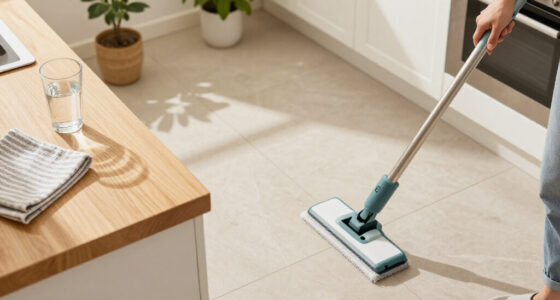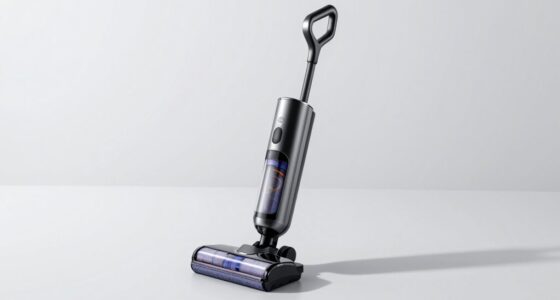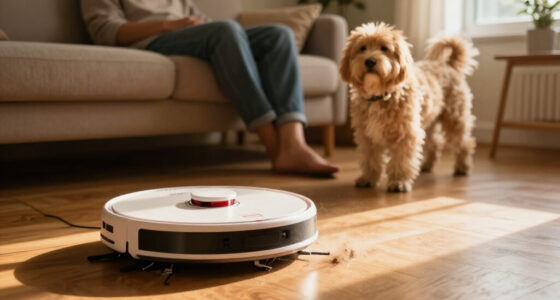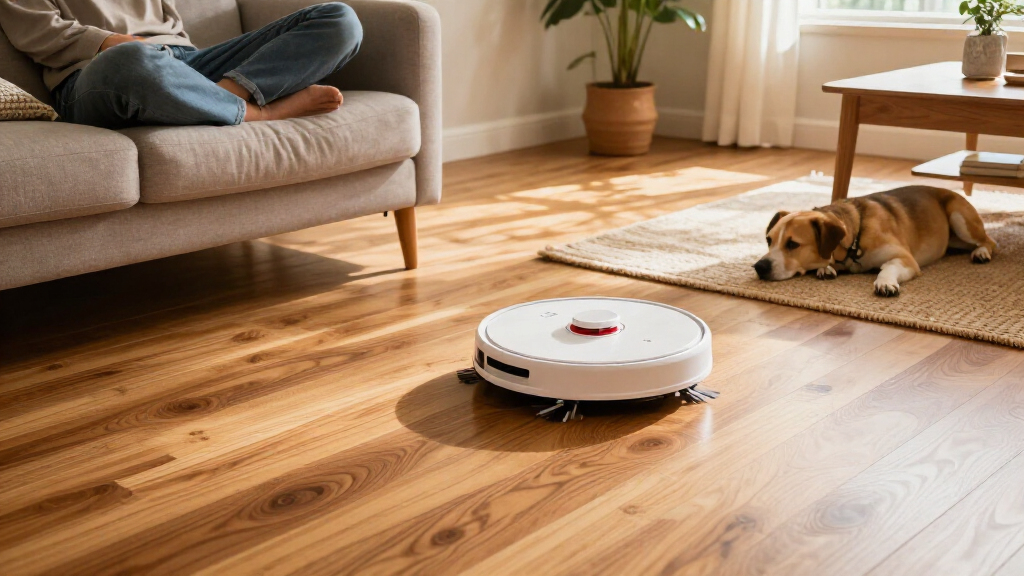
For robotic vacuum cleaners for hardwood floors, my best overall pick is the Roborock Q10 S5+, whose high stated suction and self-emptying design suit households seeking more automation. The iRobot Roomba Max 715 stands out for buyers who want an auto-empty dock, while the Shark Navigator RV2110 offers a vacuum-focused alternative with SmartPath navigation. The main tradeoffs are how much automation you need, whether you want a mop attachment, and how much maintenance you are willing to handle. A lower-feature model may be enough for routine dust and crumbs, while a docked combo can reduce hands-on upkeep but adds complexity. Read on for the full breakdown and a guide to choosing for your floors and household.

Get cleaning gear delivered free with Prime
- Fast, free delivery on millions of items
- Prime Video, Amazon Music and more included
- Member-only deals all year
Complete the kit


Key Takeaways
- The Roborock Q10 S5+ leads this group for buyers who want high stated suction alongside a self-emptying setup; its vacuum-and-mop format may be more than a simple hardwood routine requires.
- The iRobot Roomba Max 715 and Tikom L8000 Plus make automation a key point of difference with auto-empty or self-emptying docks, but dock size and ongoing upkeep matter.
- The Shark Navigator RV2110 and Roomba 105 Vac keep the focus on vacuuming, a sensible direction for shoppers who do not need a mop function.
- Many models combine vacuuming and mopping, but suction figures alone do not establish how well a robot handles fine dust, edge debris, or dried-on marks on hardwood.
- The lineup ranges from simple models such as the ILIFE V2 and Lefant M210 to feature-rich docked combos; choosing the simplest model that fits your layout can reduce cost and maintenance complexity.
| ILIFE V2 Robot Vacuum Cleaner, White |  | Best for Simple, Low-Profile Cleaning | Dimensions: 12.2 × 12.2 × 2.99 in | Weight: 3.21 kg | Runtime: Up to 120 minutes | VIEW LATEST PRICE | See Our Full Breakdown |
| iRobot Roomba Max 715 Robot Vacuum with AutoEmpty Dock |  | Best for Low-Maintenance, Mapped Cleaning | Model: Roomba Max 715 | Navigation: ClearView Pro LiDAR mapping | Obstacle detection: PrecisionVision AI | VIEW LATEST PRICE | See Our Full Breakdown |
| Tikom L8000 Plus Robot Vacuum and Mop with Self-Emptying Base |  | Best for Hardwood Vacuuming and Mopping | Functions: Vacuuming, mopping, and self-emptying | Maximum suction: 6000 Pa | Dustbag capacity: 3 liters | VIEW LATEST PRICE | See Our Full Breakdown |
| Shark Navigator Robot Vacuum with SmartPath Navigation, Steel Grey (RV2110) |  | Best for Row-by-Row Hardwood Coverage | Model: RV2110 | Navigation: SmartPath with spot LiDAR | Brushroll: Self-cleaning, anti-hair-wrap | VIEW LATEST PRICE | See Our Full Breakdown |
| iRobot Roomba 105 Vac Robot Vacuum with Charging Base |  | Best for Adjustable, App-Guided Cleaning | Cleaning system: 3-stage | Suction levels: 4 | Navigation: ClearView LiDAR | VIEW LATEST PRICE | See Our Full Breakdown |
| E8S Robot Vacuum and Mop with 6500 Pa Suction |  | Best for Long, Scheduled Cleaning Runs | Maximum suction: 6500 Pa | Suction modes: 800, 1600, 3000, and 6500 Pa | Navigation: Gyro and inertial navigation; zigzag cleaning | VIEW LATEST PRICE | See Our Full Breakdown |
| Kilgone Robot Vacuum and Mop with Self-Emptying Dock |  | Best for Less Frequent Emptying | Model: SDL40 | Dock dust bag capacity: 2.5 L | Robot dustbin capacity: 300 ml | VIEW LATEST PRICE | See Our Full Breakdown |
| ILIFE V5s Max Robot Vacuum with 4000Pa Suction and Gyro Navigation |  | Best Slim Vacuum-Only Pick | Maximum suction: 4000 Pa | Navigation: Gyroscope | Cleaning modes: Smart, Edge, Spot | VIEW LATEST PRICE | See Our Full Breakdown |
| ROPVACNIC Robot Vacuum and Mop Combo with 5200Pa Suction |  | Best for Brush-Free Pet-Hair Pickup | Maximum suction: 5200 Pa | Suction levels: 3 | Mopping: Electronically controlled; four-stage water adjustment | VIEW LATEST PRICE | See Our Full Breakdown |
| Tikom G8000 Max Robot Vacuum and Mop Combo |  | Best for Larger Debris Loads | Maximum suction: 5000 Pa | Dustbin capacity: 450 ml | Water tank capacity: 300 ml | VIEW LATEST PRICE | See Our Full Breakdown |
| eufy C28 Robot Vacuum and Mop |  | Best for Hands-Off Roller Mopping | Suction power: 15,000 Pa | Mop system: 28 cm HydroJet roller; 270 RPM | Mop lift: 10.8 mm | VIEW LATEST PRICE | See Our Full Breakdown |
| Roborock Q10 S5+ Robot Vacuum and Mop, 10,000 Pa Suction |  | Best for Mixed-Floor Homes | Suction: 10,000 Pa | Dust bag capacity: 2.7 L | Advertised hands-free cleaning: Up to 70 days | VIEW LATEST PRICE | See Our Full Breakdown |
| Lefant M210 Omni Robot Vacuum and Mop |  | Best for Low-Clearance Hardwood Spaces | Suction power: Up to 20,000 Pa | Height: 85 mm | Diameter: 280 mm | VIEW LATEST PRICE | See Our Full Breakdown |
| Madtue G2 Robot Vacuum and Mop Combo, 6500 Pa, Self-Charging, Anti-Tangle Suction, 2.4 GHz Wi-Fi, App and Alexa Control |  | Best for Straightforward Hardwood Cleaning | Maximum suction: 6,500 Pa | Battery life: 120 minutes | Cleaning path width: 6.81 inches | VIEW LATEST PRICE | See Our Full Breakdown |
| Lefant M210 Robot Vacuum Cleaner with App and Voice Control |  | Best Vacuum-Only Pick for Pet Hair | Dimensions: 11 inches in diameter; 2.99 inches high | Battery runtime: Up to 120 minutes on low suction | Dustbin capacity: 500 ml | VIEW LATEST PRICE | See Our Full Breakdown |
| robotic vacuum cleaners for hardwood floor | Navigation | Battery life |
|---|---|---|
| ILIFE V2 Robot Vacuum Cleaner | — | — |
| iRobot Roomba Max 715 Robot Va | ClearView Pro LiDAR mapping | — |
| Tikom L8000 Plus Robot Vacuum | 360° LiDAR | Up to 150 minutes in gentle suction mode |
| Shark Navigator Robot Vacuum w | SmartPath with spot LiDAR | 120 minutes |
| iRobot Roomba 105 Vac Robot Va | ClearView LiDAR | — |
| E8S Robot Vacuum and Mop with | Gyro and inertial navigation; zigzag cleaning | — |
| Kilgone Robot Vacuum and Mop w | — | — |
| ILIFE V5s Max Robot Vacuum wit | Gyroscope | 100 minutes |
| ROPVACNIC Robot Vacuum and Mop | — | 120 minutes |
| Tikom G8000 Max Robot Vacuum a | — | Up to 150 minutes |
| eufy C28 Robot Vacuum and Mop | LiDAR; no cameras | 140 minutes |
| Roborock Q10 S5+ Robot Vacuum | LiDAR with 360° scanning and multi-level mapping | 150 minutes |
| Lefant M210 Omni Robot Vacuum | ToF | 120 minutes |
| Madtue G2 Robot Vacuum and Mop | — | 120 minutes |
| Lefant M210 Robot Vacuum Clean | — | — |
More Details on Our Top Picks
ILIFE V2 Robot Vacuum Cleaner, White
The ILIFE V2 makes sense for hardwood homes that want a straightforward vacuum without app setup. Its 2.99-inch profile can reach under some beds and sofas, while the tangle-free suction port is designed to handle loose pet hair without a brush roller collecting as much of it. Remote and one-touch controls keep daily operation simple, and scheduled runs plus automatic docking add useful convenience.
Compared with the Roomba 105, the V2 gives up room mapping, keep-out zones, and adjustable suction for a simpler setup and slim shape. Its 120-minute runtime suits routine maintenance, but the single power level and 300 ml bin offer less flexibility for varied messes or larger debris loads. It is recommended for low-pile carpet, so homes with thick rugs should choose a different fit.
Pros:- Tangle-free suction port is designed to pick up pet hair with less hair wrap.
- 2.99-inch height can fit beneath some low-clearance furniture.
- Remote and one-touch controls work without Wi-Fi.
- Scheduled cleaning and automatic return to the charging dock support routine upkeep.
Cons:- Single power level offers limited control over different floor conditions and messes.
- Low-pile carpet recommendation limits its usefulness in homes with thicker rugs.
- 300 ml dustbin may need frequent emptying in homes with heavy shedding.
Best for: Hardwood-floor owners with pet hair who want scheduled cleaning, a slim robot, and remote control without Wi-Fi.
Not ideal for: Homes with thick carpets, large floor plans needing mapped room cleaning, or buyers who want adjustable suction and app-based controls.
- Dimensions:12.2 × 12.2 × 2.99 in
- Weight:3.21 kg
- Runtime:Up to 120 minutes
- Dustbin capacity:300 ml
- Cleaning modes:Auto, spot, and edge
- Controls:Remote control and one-touch button
- Surface recommendation:Hard floors, pet hair, and low-pile carpet
- Noise level:69 dB
- Charging:Automatic return to charging dock
Our verdict“Choose the ILIFE V2 for simple, low-profile hardwood maintenance, but pick the Roomba 105 if mapped cleaning and adjustable suction matter more.”
iRobot Roomba Max 715 Robot Vacuum with AutoEmpty Dock
The Roomba Max 715 is the strongest fit here for buyers who want mapped cleaning with less frequent bin emptying. Its ClearView Pro LiDAR supports room-by-room routes, while obstacle recognition and dirt detection help it respond to objects and dirtier areas. Anti-tangle dual rubber brushes and edge sweeping are a useful combination for hardwood floors where hair, dust, and debris gather along walls. Carpet Boost also adjusts suction when it reaches rugs.
Unlike the Roomba 105, this model includes an AutoEmpty dock that stores debris in odor-control bags for up to 90 days, reducing routine handling. That convenience comes with ongoing bag replacement, and some scheduling and controls depend on the Roomba Home app. Buyers who only need basic vacuuming may find the ILIFE V2’s simpler, Wi-Fi-free operation a better match.
Pros:- LiDAR mapping supports room-by-room cleaning routes.
- Anti-tangle dual rubber brushes are designed to reduce hair wrap.
- AutoEmpty dock stores debris in odor-control bags for up to 90 days.
- Carpet Boost raises suction on carpets and rugs.
Cons:- AutoEmpty bags need replacement, adding a recurring maintenance task.
- Some scheduling and controls require the Roomba Home app.
- The provided product details do not specify runtime or dustbin capacity for direct planning.
Best for: Busy households with hardwood floors, pets, and mixed flooring that want room-by-room mapping and less frequent bin emptying.
Not ideal for: Buyers who prefer app-free controls, want to avoid replacement dust bags, or need only basic cleaning on a small floor area.
- Model:Roomba Max 715
- Navigation:ClearView Pro LiDAR mapping
- Obstacle detection:PrecisionVision AI
- Brushes:Anti-tangle dual rubber brushes and edge-sweeping brush
- Dirt detection:Dirt Detect Technology
- Included dock:AutoEmpty dock
- Hands-free debris storage:Up to 90 days in odor-control bags
- Voice assistants:Alexa, Siri, and Google Assistant
Our verdict“Pick the Roomba Max 715 if mapped coverage and a long interval between emptying matter more than app-free simplicity or avoiding dust bags.”
Tikom L8000 Plus Robot Vacuum and Mop with Self-Emptying Base
For buyers who want one machine to vacuum and mop sealed hard floors, the Tikom L8000 Plus offers the broadest floor-care setup among these five picks. It combines up to 6000 Pa suction with adjustable water flow, so you can tune vacuuming and mopping rather than relying on a single fixed setting. LiDAR mapping covers up to five floors, and the 3-liter self-emptying dustbag reduces how often you handle collected debris.
Compared with the Roomba Max 715, the L8000 Plus adds a mop and multi-floor maps, while the Roomba’s included dock is described around debris storage for up to 90 days. The Tikom’s mop needs attention around rugs: remove the holder or mark carpet areas as no-go zones to prevent wetting them. Its stated 150-minute runtime applies to gentle suction mode, not necessarily stronger cleaning settings.
Pros:- Combines vacuuming, mopping, and self-emptying in one system.
- 3-liter dustbag reduces the frequency of manual debris disposal.
- LiDAR supports maps for up to five floors and room-specific cleaning.
- Adjustable suction and water-flow settings give more control over hard-floor care.
Cons:- Mop holder must be removed or carpet areas marked as no-go zones to avoid wetting rugs.
- Up to 150 minutes of runtime is specified for gentle suction mode.
- App and voice features require Wi-Fi, unlike the simpler remote control on the ILIFE V2.
Best for: Multi-floor homes with mostly hard flooring where owners want mapped vacuuming, scheduled mopping, and reduced dustbin emptying.
Not ideal for: Homes with many rugs that need seamless vacuum-to-mop operation, or buyers who expect the maximum stated runtime at high suction.
- Functions:Vacuuming, mopping, and self-emptying
- Maximum suction:6000 Pa
- Dustbag capacity:3 liters
- Navigation:360° LiDAR
- Multi-floor maps:Up to 5
- Battery life:Up to 150 minutes in gentle suction mode
- Suction levels:3
- Water-flow settings:3
- Control and Wi-Fi:App and voice control; 2.4 GHz and 5 GHz Wi-Fi
Our verdict“Choose the Tikom L8000 Plus for mapped vacuuming and mopping across multiple hard-floor levels, provided you can manage rugs around the mop.”
Shark Navigator Robot Vacuum with SmartPath Navigation, Steel Grey (RV2110)
The Shark Navigator RV2110 suits buyers who value an orderly cleaning route over a mop or self-emptying dock. Its SmartPath navigation with spot LiDAR maps rooms and sends the robot in a row-by-row pattern, which can make coverage easier to follow than the ILIFE V2’s less mapping-focused approach. Object detection helps it avoid obstacles, while the self-cleaning anti-hair-wrap brushroll targets a common maintenance nuisance in homes with pets.
It covers both hard floors and carpet, but it has one speed setting, so there is less tuning than with the Roomba 105’s four suction levels or Tikom L8000 Plus’s three. The 120-minute battery life is useful for routine runs, though larger homes may need recharge-and-resume support to finish a full clean. App and voice controls add convenience, but this is a vacuum-only option, unlike the Tikom combo.
Pros:- SmartPath LiDAR maps rooms and supports row-by-row cleaning.
- Self-cleaning anti-hair-wrap brushroll is designed to reduce hair buildup.
- Detects and avoids objects during cleaning.
- App and voice controls pair with recharge-and-resume cleaning.
Cons:- One speed setting offers less control than the Roomba 105’s four suction levels.
- 120-minute battery life may require recharge and resume in larger homes.
- Vacuum-only design does not provide the mopping option offered by the Tikom L8000 Plus.
Best for: Pet owners who want mapped, row-by-row vacuuming across hardwood and carpet without needing a mop function.
Not ideal for: Buyers who want adjustable suction, automatic dirt disposal, or a vacuum-and-mop system for hard floors.
- Model:RV2110
- Navigation:SmartPath with spot LiDAR
- Brushroll:Self-cleaning, anti-hair-wrap
- Obstacle detection:Detects and avoids objects
- Battery life:120 minutes
- Capacity:0.52 quarts
- Surface recommendation:Carpet and hard floors
- Controls:App and voice control
- Included components:Docking station, robot vacuum, and side brush
Our verdict“Choose the Shark Navigator for structured, hair-conscious vacuuming on hardwood and carpet, but look to the Tikom L8000 Plus if mopping is a priority.”
iRobot Roomba 105 Vac Robot Vacuum with Charging Base
The Roomba 105 is a good match for hardwood owners who want mapped routes and more control over where and how the robot cleans, without stepping up to an auto-empty dock. ClearView LiDAR maps rooms and helps the vacuum navigate around obstacles; the app adds room targeting, schedules, and keep-out zones. Four suction levels let you adapt cleaning to lighter dust or a dirtier area, while recharge-and-resume support helps it finish a run after a battery break.
Compared with the ILIFE V2, the Roomba offers a more guided, adjustable clean but depends on a 2.4 GHz Wi-Fi setup for app features. Unlike the Roomba Max 715, it comes with a charging base rather than an AutoEmpty dock, so you still empty the robot yourself. The three-stage system and multi-surface brush suit mixed flooring, though this model is a vacuum rather than a mop.
Pros:- ClearView LiDAR maps rooms and supports obstacle-aware navigation.
- Four suction levels allow cleaning intensity to be adjusted.
- App features include room targeting, scheduling, and keep-out zones.
- Recharge-and-resume helps complete cleaning after a charging break.
Cons:- Charging base is not described as an automatic dirt-emptying station.
- App setup and operation use a 2.4 GHz Wi-Fi network.
- Vacuum-only design lacks the mopping function available on the Tikom L8000 Plus.
Best for: Households with hardwood and rugs that want room-specific scheduling, keep-out zones, and adjustable suction through an app.
Not ideal for: Buyers who want a self-emptying base, mopping, or controls that avoid Wi-Fi setup and app dependence.
- Cleaning system:3-stage
- Suction levels:4
- Navigation:ClearView LiDAR
- Controls:App, button, and compatible voice assistants
- Special features:Anti-fall sensors, bagless design, dirt detection sensor, and Eco Mode
- Wi-Fi:2.4 GHz
- Surface recommendation:Carpet and hard floor
- Charging behavior:Returns to recharge and resumes cleaning
Our verdict“Pick the Roomba 105 for app-guided, adjustable cleaning across hardwood and rugs, but choose the Roomba Max 715 if automatic dirt disposal is worth prioritizing.”
E8S Robot Vacuum and Mop with 6500 Pa Suction
The E8S is the strongest fit here for buyers who want a systematic zigzag route and long cleaning sessions on wood or tile. Its gyro navigation is more orderly than a random-feeling sweep, while four suction settings let you use quieter, lower-power cleaning for routine dust and reserve Max mode for heavier debris. The advertised 200-minute runtime applies only in Eco mode; Max mode is listed at 70 minutes, so large homes may need to balance suction against coverage. Compared with the Tikom G8000 Max, the E8S offers higher stated peak suction and a longer Eco-mode run, but Tikom has the larger dustbin and water tank. The E8S combines vacuuming with adjustable-flow mopping, though its 300 ml bin means more frequent emptying than Tikom’s.
Pros:- Gyro navigation follows a systematic zigzag route.
- Four suction levels and app-adjustable water flow let you tailor cleaning to hard floors.
- App, remote, and Google Assistant controls offer several ways to start a run.
- Returns to its dock after cleaning or when the battery falls below 15%.
Cons:- Maximum runtime drops to 70 minutes at the highest suction setting.
- The 300 ml dustbin is smaller than the Tikom G8000 Max’s 450 ml bin.
- Wi-Fi app setup supports 2.4 GHz networks only.
Best for: Hardwood and tile owners who want scheduled, orderly cleaning, adjustable mopping, and long low-power runs.
Not ideal for: Buyers with large areas of ground-in debris who expect long sessions at maximum suction, or households using only 5 GHz Wi-Fi.
- Maximum suction:6500 Pa
- Suction modes:800, 1600, 3000, and 6500 Pa
- Navigation:Gyro and inertial navigation; zigzag cleaning
- Runtime:Up to 200 minutes in Eco mode; 70 minutes in Max mode
- Coverage:Up to 1290 sq. ft.
- Dustbin capacity:300 ml
- Water tank capacity:200 ml
- Controls and Wi-Fi:App, remote, Google Assistant; 2.4 GHz only
Our verdict“Choose the E8S if you value orderly floor coverage and long Eco-mode runs more than a large debris bin or extended high-power cleaning.”
Kilgone Robot Vacuum and Mop with Self-Emptying Dock
The Kilgone puts its emphasis on reducing routine cleanup: its dock holds a 2.5 L sealed dust bag, stated to collect debris for up to 13 weeks. That makes it a distinct choice for hardwood households that would rather handle one larger bag occasionally than empty a robot after frequent runs. Its dual brushrolls are designed to resist hair wrap, and the 3.64-inch body can reach beneath some low furniture. Compared with the Tikom G8000 Max, Kilgone adds self-emptying and a lower profile, while Tikom provides a larger onboard dustbin and more fully specified vacuum-and-mop details. Kilgone’s robot bin is only 300 ml, so the dock matters if debris pickup is steady. Carpet performance is not specified, making this a more focused hard-floor pick than a mixed-floor option.
Pros:- The 2.5 L sealed dock bag is specified to hold debris for up to 13 weeks.
- Dual brushrolls are designed to resist hair wrap.
- At 3.64 inches tall, it can fit beneath some low furniture.
- Automatically recharges and resumes cleaning.
Cons:- The robot’s own dustbin is 300 ml, making the dock important for reducing emptying.
- Carpet performance is not specified.
- The supplied product details list app control and three water levels but do not describe broader control options.
Best for: Hard-floor households with pets or frequent debris who want to reduce how often they empty the robot.
Not ideal for: Buyers who need clearly specified carpet cleaning, or who want a larger onboard bin and more detailed cleaning-mode controls.
- Model:SDL40
- Dock dust bag capacity:2.5 L
- Robot dustbin capacity:300 ml
- Maximum battery life:Up to 150 minutes
- Dimensions:12.6 × 12.6 × 3.64 in
- Water settings:3 levels
- Wi-Fi:2.4 GHz and 5 GHz
- Filtration:Multi-stage filtration
Our verdict“Pick Kilgone for hard floors when reducing debris-bin chores matters more than documented carpet versatility or a larger onboard bin.”
ILIFE V5s Max Robot Vacuum with 4000Pa Suction and Gyro Navigation
For hardwood buyers who want a robot vacuum without a mop tank or pad to manage, the V5s Max keeps the job simple. Its 2.99-inch height gives it access beneath furniture that taller models may miss, and gyroscope navigation supports a more systematic route than unstructured wandering. Suction reaches 4000 Pa in Spot Mode, with Smart, Edge, and Spot cleaning for different mess locations. Unlike the E8S or ROPVACNIC, this ILIFE does not mop, so it cannot combine dust pickup with a damp pass; that omission is a benefit only if you prefer vacuum-only upkeep. Its 100-minute battery life is also shorter than the E8S’s listed Eco runtime, and it lacks mapping. The 2.4 GHz-only Wi-Fi requirement may limit setup options in some homes.
Pros:- The 2.99-inch profile can reach beneath many beds, sofas, and cabinets.
- Gyroscope navigation supports systematic cleaning routes.
- Spot, Edge, and Smart modes suit different floor-cleaning tasks.
- App, voice, and remote controls provide flexible operation.
Cons:- It has no mopping function, unlike the E8S and ROPVACNIC.
- The listed battery life is 100 minutes, shorter than the E8S’s Eco-mode runtime.
- No mapping function is specified, and Wi-Fi is limited to 2.4 GHz.
Best for: Owners of hardwood or low-pile carpet who want a slim, vacuum-only robot for routine dust and debris.
Not ideal for: Buyers who want automated mopping, room mapping, or longer cleaning sessions for a large floor plan.
- Maximum suction:4000 Pa
- Navigation:Gyroscope
- Cleaning modes:Smart, Edge, Spot
- Height:2.99 inches
- Battery life:100 minutes
- Dust capacity:300 ml
- Noise level:65 dB
- Controls and Wi-Fi:App, voice, remote; 2.4 GHz only
Our verdict“Choose the V5s Max if low-clearance access and vacuum-only simplicity matter more than mopping or mapped room control.”
ROPVACNIC Robot Vacuum and Mop Combo with 5200Pa Suction
ROPVACNIC is a notable hardwood option for homes where hair tends to collect along floors: its brush-free design with rotating side brushes avoids a central brushroll that can gather wrapped hair. It also vacuums and mops, with electronically controlled water flow across four stages, giving buyers more control over damp cleaning than the three-level system listed for the Kilgone SDL40. Three suction levels and app, remote, touchpad, and voice controls add flexibility, while automatic recharging supports routine use. The tradeoff is a more limited surface brief: the product is specified for hardwood and low-pile carpet, so it is less clearly suited to varied floor coverings than the Tikom G8000 Max, which lists carpets and rugs as recommended surfaces. Its 120-minute battery life is also shorter than the E8S’s Eco-mode maximum.
Pros:- Brush-free design with rotating side brushes is intended to collect pet hair without a central brushroll.
- Electronically controlled mopping has four water-flow stages.
- Three suction levels and multiple cleaning modes allow cleaning adjustments.
- App, remote, touchpad, and voice controls provide several operating options.
Cons:- Specified surface compatibility is limited to hardwood and low-pile carpets.
- The listed battery life is 120 minutes, below the E8S’s maximum Eco-mode runtime.
- The supplied specifications do not state dustbin or water-tank capacity.
Best for: Pet owners with mostly hardwood floors who want brush-free hair pickup and adjustable mopping.
Not ideal for: Households with substantial carpet or rug coverage, or buyers who need a longer listed runtime for large areas.
- Maximum suction:5200 Pa
- Suction levels:3
- Mopping:Electronically controlled; four-stage water adjustment
- Battery life:120 minutes
- Surface recommendation:Hardwood floors and low-pile carpets
- Control methods:App, remote, touchpad, and voice
- Voice assistant compatibility:Amazon Echo and Google Home
- Filter:Multi-layer high-efficiency filtration
Our verdict“Choose ROPVACNIC for brush-free hair pickup and adjustable mopping on mostly hardwood floors, not for a home dominated by carpet.”
Tikom G8000 Max Robot Vacuum and Mop Combo
The G8000 Max makes a practical case for hardwood homes that want vacuuming and mopping in one pass without a self-emptying dock. Its 450 ml dustbin and 300 ml water tank are both larger than the E8S’s 300 ml bin and 200 ml tank, so buyers may need fewer mid-routine stops to empty or refill. A 2.99-inch profile helps it reach beneath furniture, while four modes and app, remote, voice, and button controls suit different household routines. Its 5000 Pa suction is below the E8S’s 6500 Pa peak, but the larger onboard capacities may matter more for everyday hard-floor upkeep. Compared with the Kilgone SDL40, Tikom lists carpet and rug compatibility but lacks a self-emptying dock. Carpet suitability is limited to short- and medium-pile types.
Pros:- The 450 ml dustbin and 300 ml water tank exceed the capacities listed for the E8S.
- Vacuuming and mopping can run simultaneously.
- Its 2.99-inch height helps it reach beneath many low-clearance furnishings.
- Four cleaning modes and app, remote, voice, and button controls offer flexible operation.
Cons:- Its 5000 Pa maximum suction is lower than the E8S’s 6500 Pa peak.
- Carpet support is specified for short- and medium-pile types, not all carpets.
- It does not include the self-emptying dock offered with the Kilgone SDL40.
Best for: Households with substantial hardwood areas that want combined vacuuming and mopping, a larger onboard bin, and broad control options.
Not ideal for: Buyers seeking a self-emptying dock, very high stated peak suction, or support for long-pile carpet.
- Maximum suction:5000 Pa
- Dustbin capacity:450 ml
- Water tank capacity:300 ml
- Battery life:Up to 150 minutes
- Height:2.99 inches
- Cleaning modes:Spot, edge, zigzag, and manual
- Noise level:45 dB
- Recommended surfaces:Hard floors, carpets, and rugs
Our verdict“Choose the G8000 Max when larger onboard dust and water capacity matters more than self-emptying or the highest peak suction.”
eufy C28 Robot Vacuum and Mop
The eufy C28 is the strongest fit here for hardwood homes that want wet cleaning to be more than a damp pad dragged across the floor. Its self-cleaning HydroJet roller washes and dries at the station, while the station also empties dust and collects wastewater, cutting down on routine mop care. At 15,000 Pa suction, it also has more stated suction than the Roborock Q10 S5+, and its DuoSpiral brush is designed to limit pet-hair tangles. LiDAR navigation avoids cameras, a useful distinction for buyers who prefer camera-free mapping. The tradeoff is flexibility: its 10.8 mm mop lift is limited for carpets, and its listed surfaces focus on hard floors and short-wool carpet. Compared with the Lefant M210 Omni, it has longer stated runtime and a wider mop roller, but less suction on paper.
Pros:- HydroJet roller is washed and hot-air dried by the all-in-one station.
- 15,000 Pa suction and automatic carpet suction boost support pickup across hard floors and short-wool rugs.
- DuoSpiral brush is designed to reduce tangles from pet hair, including long hair.
- LiDAR navigation operates without cameras.
Cons:- The 10.8 mm mop lift may not provide enough clearance for thicker carpets.
- Its stated surface range is narrower than the Roborock Q10 S5+’s all-floor recommendation.
- The automated roller system and station add more components than a vacuum-only setup.
Best for: Hardwood households with pets that want a roller mop washed and dried automatically, plus strong vacuuming for short-wool rugs.
Not ideal for: Homes with thick or high-pile carpet, since the 10.8 mm mop lift and stated surface recommendations favor hard floors and short-wool carpet.
- Suction power:15,000 Pa
- Mop system:28 cm HydroJet roller; 270 RPM
- Mop lift:10.8 mm
- Dust bag capacity:3 L
- Battery life:140 minutes
- Navigation:LiDAR; no cameras
- Mop drying:50°C hot-air drying
- Noise level:54.89 dB
Our verdict“Choose the C28 if you want automated roller-mop care and strong hardwood pickup, but skip it if thick carpet is a major part of your home.”
Roborock Q10 S5+ Robot Vacuum and Mop, 10,000 Pa Suction
The Roborock Q10 S5+ makes the most sense for homes that move between hardwood, tile, and carpet rather than treating hard floors as the only surface. LiDAR mapping, multi-level maps, and ReactiveTech obstacle avoidance give it a more navigation-focused setup than the Madtue G2, while its sonic mop can scrub at up to 3,000 times per minute and lift up to 8 mm over carpets. The 2.7 L self-emptying bag is advertised for up to 70 days of hands-free cleaning, reducing how often dust needs attention. Its 10,000 Pa suction is lower on paper than the eufy C28’s 15,000 Pa, and the vibration mop differs from the C28’s actively washed roller. The 8 mm lift also favors low-clearance rugs, not thick carpet, and 2.4 GHz Wi-Fi support may limit setup options.
Pros:- LiDAR mapping supports multi-level layouts and planned cleaning routes.
- ReactiveTech structured-light obstacle avoidance adds object detection.
- Self-emptying station has a 2.7 L dust bag, advertised for up to 70 days between maintenance.
- Sonic mopping and automatic 8 mm carpet lift suit mixed hard-floor and low-pile-carpet homes.
Cons:- Suction is lower on paper than the eufy C28’s 15,000 Pa.
- The 8 mm mop lift may not clear thicker carpets.
- Wi-Fi support is limited to 2.4 GHz.
Best for: Households with hardwood, tile, and low-pile carpet that want mapped cleaning, obstacle avoidance, and less frequent dust-bin emptying.
Not ideal for: Buyers whose router setup requires 5 GHz Wi-Fi, or homes with thick rugs that need more than an 8 mm mop lift.
- Suction:10,000 Pa
- Dust bag capacity:2.7 L
- Advertised hands-free cleaning:Up to 70 days
- Mopping system:VibraRise 2.0 dual-zone sonic vibration; up to 3,000 scrubs per minute
- Carpet mop lift:Up to 8 mm
- Navigation:LiDAR with 360° scanning and multi-level mapping
- Obstacle avoidance:ReactiveTech structured light
- Battery life:150 minutes
- Wi-Fi:2.4 GHz only
Our verdict“Pick the Q10 S5+ for mapped cleaning across several floor types and reduced dust-bin upkeep, not for thick rugs or 5 GHz-only networks.”
Lefant M210 Omni Robot Vacuum and Mop
At just 85 mm high, the Lefant M210 Omni has a clear niche: hardwood rooms where dust collects under beds, sofas, or cabinets that taller robots cannot reach. It pairs vacuuming with a roller that sprays fresh water, scrubs, and recovers dirty water, and its base refills, drains, washes, and cool-air dries the mop. That gives it a more involved floor-care system than the simpler Lefant M210, which is a vacuum-only model. The stated suction reaches 20,000 Pa, higher on paper than the eufy C28, though runtime is shorter at 120 minutes and the M210 Omni is recommended for hard floors only. ToF navigation and app or voice controls support routine management, but 2.4 GHz Wi-Fi is required. Its 800 ml dustbin also means more frequent onboard-bin attention than a self-emptying arrangement.
Pros:- 85 mm profile can reach beneath some low furniture.
- Roller system sprays fresh water, scrubs, and recovers dirty water.
- Base refills, drains, washes, and cool-air dries the roller.
- Brushless suction inlet is designed to avoid pet-hair tangles.
Cons:- Recommended for hard floors, limiting its usefulness in carpeted rooms.
- 120-minute battery life is shorter than the Roborock Q10 S5+’s 150 minutes.
- 2.4 GHz Wi-Fi is required, and the 800 ml dustbin still needs attention.
Best for: Hardwood owners with low-clearance furniture who want a fresh-water roller mop and automated washing at the base.
Not ideal for: Homes with substantial carpet, or buyers who want a robot intended to move between hard floors and rugs.
- Suction power:Up to 20,000 Pa
- Height:85 mm
- Diameter:280 mm
- Mopping roller:7.9 inches; 240 RPM; 15 N downward pressure
- Clean water tank:2.4 L
- Dirty water tank:1.5 L
- Dustbin capacity:800 ml
- Battery life:120 minutes
- Navigation:ToF
Our verdict“Choose the M210 Omni for low furniture and automated roller care on hard floors, but look elsewhere if you need one robot for carpet and hardwood.”
Madtue G2 Robot Vacuum and Mop Combo, 6500 Pa, Self-Charging, Anti-Tangle Suction, 2.4 GHz Wi-Fi, App and Alexa Control
The Madtue G2 is a simpler choice for buyers who want routine hardwood vacuuming with an occasional mop pass, rather than an elaborate wash-and-dry station. Its 6,500 Pa suction, removable 500 ml water tank, and automatic return to the charging dock cover the basics, while the anti-tangle suction port is aimed at homes with pet hair. Compared with the Roborock Q10 S5+, the G2 has no listed LiDAR mapping, obstacle avoidance, or self-emptying station, so it offers fewer tools for managing complex layouts and reducing upkeep. Its 6.81-inch cleaning path is also relatively narrow, which may mean more passes across open rooms. The payoff is a more pared-back setup with app, button, and voice controls. Its stated surfaces include hard floors and hardwood, plus low-pile carpet, but it is not positioned for thick rugs.
Pros:- Vacuuming and mopping are combined in one robot.
- Anti-tangle suction port is designed for pet hair.
- Removable 500 ml water tank makes filling and emptying straightforward.
- Automatically returns to its charging dock.
Cons:- No mapping, obstacle-avoidance system, or self-emptying station is listed, unlike the Roborock Q10 S5+.
- The 6.81-inch cleaning path may require more passes over open hardwood areas.
- 2.4 GHz Wi-Fi only, and its stated carpet range is low-pile.
Best for: Buyers seeking a basic vacuum-and-mop robot for hardwood and low-pile rugs, with app or Alexa controls and a removable water tank.
Not ideal for: Owners of large or complex floor plans who want mapped routes, obstacle avoidance, or a self-emptying dock.
- Maximum suction:6,500 Pa
- Battery life:120 minutes
- Cleaning path width:6.81 inches
- Water tank capacity:500 ml
- Noise level:58 dB
- Filter:HEPA
- Controls:App, buttons, voice
- Wi-Fi compatibility:2.4 GHz
- Recommended surfaces:Hard floor, hardwood, and low-pile carpet
Our verdict“The G2 suits buyers who want basic hardwood vacuuming and light mopping, but not those who need mapped coverage or reduced bin maintenance.”
Lefant M210 Robot Vacuum Cleaner with App and Voice Control
The Lefant M210 is the straightforward choice in this group for hardwood owners who want pet-hair pickup without adding a mop system to maintain. Its brushless suction port avoids a conventional brush roll that can collect hair, and the 2.99-inch profile can fit under some beds and sofas. That makes it a simpler alternative to the Lefant M210 Omni: the Omni adds fresh-water roller mopping and an automated cleaning base, while this model sticks to vacuuming and has a 500 ml dustbin. The tradeoff is less floor-care range; there is no mopping, and its stated 120-minute runtime applies only on low suction. Six cleaning modes, scheduling, and Alexa or Google Assistant control offer flexible routine cleaning, but the listed obstacle avoidance is not a substitute for the Roborock Q10 S5+’s mapped navigation and structured-light detection.
Pros:- Brushless suction port is designed to pick up pet hair without brush tangles.
- 2.99-inch height can fit beneath some low furniture.
- Six cleaning modes include zigzag, spot, edge, and scheduled cleaning.
- App scheduling and Alexa or Google Assistant voice control are supported.
Cons:- No mopping function, unlike the eufy C28 and Lefant M210 Omni.
- The stated 120-minute runtime applies only on low suction.
- 500 ml dustbin requires manual emptying; no self-emptying dock is listed.
Best for: Pet owners with hardwood, wood, or low-pile carpet who prefer a slim vacuum-only robot and do not need mopping.
Not ideal for: Buyers who want wet cleaning, a self-emptying station, or high-suction runtime across a larger home.
- Dimensions:11 inches in diameter; 2.99 inches high
- Battery runtime:Up to 120 minutes on low suction
- Dustbin capacity:500 ml
- Noise level:52 dB
- Filter:Cartridge
- Cleaning modes:Zigzag, random, spot, edge, scheduled, and manual
- Controls:App, Alexa, and Google Assistant
- Recommended surfaces:Wood, hard floors, and low-pile carpet
Our verdict“Choose the M210 if you want a slim, pet-hair-focused hardwood vacuum without mop maintenance, and skip it if you need wet cleaning or automated emptying.”
How We Picked
I compared the 15 listed models through the needs of hardwood-floor owners: dependable pickup of everyday debris, navigation that can cover rooms consistently, and features that make routine cleaning easier rather than more involved. I also weighed whether each model vacuums only or adds a mop, whether it includes a self-emptying or auto-empty dock, and what those extras mean for upkeep, space, and setup. Stated suction figures were treated as one comparison point, not proof of cleaning performance on their own.
The ranking favors useful hardwood-floor fit over feature count. The Roborock Q10 S5+ ranks highest for combining a high stated suction figure with a self-emptying design; the Roomba Max 715 and Tikom L8000 Plus follow for buyers who prioritize dock-based automation. Vacuum-only choices such as the Shark Navigator and Roomba 105 Vac suit shoppers who prefer a simpler routine, while entry-level and compactly positioned alternatives rank lower because their listed feature sets are less automation-focused. Since specific floor-surface performance, obstacle handling, and long-term reliability can vary by home, I avoid treating a spec sheet as a substitute for checking compatibility with your layout and care needs.
Factors to Consider When Choosing Robotic Vacuum Cleaners For Hardwood Floors
Choosing a robot for hardwood is less about chasing the largest feature list and more about matching the machine to your floor plan, debris, and tolerance for upkeep. These broader checks can help you avoid paying for features that complicate a routine clean or overlooking details that matter in daily use.
Match the Robot to Your Floor Plan
Navigation matters because a robot that misses sections of a room may leave visible dust trails on smooth flooring. Before choosing, think about how many rooms it must cover, whether furniture creates narrow paths, and whether cords or thresholds interrupt its route. A more structured navigation system can be useful in larger or multiroom homes, while a simpler model may suit a small, open space. Do not assume a robot will handle every transition between floor surfaces or move around clutter without help. Check the manufacturer’s guidance for mapping, boundaries, and obstacle handling. A tidy route can matter more than an impressive suction number if the robot cannot reach the areas that collect debris.
Treat Suction Numbers as One Clue
High stated suction can be attractive, but it does not tell you everything about pickup on hardwood. Brush design, airflow, how the robot approaches edges, and its ability to collect fine dust all affect the result. For homes with grit near entryways, crumbs in dining areas, or pet hair, look for a cleaning setup suited to the debris you actually see. If your floors mainly collect light dust, a simpler machine may meet your needs without extra modes. Avoid comparing models by suction figures alone, especially when the figures come from different product specifications. Consider whether the robot can clean close to walls and furniture, where debris tends to gather.
Decide Whether Mopping Is Worth the Added Care
A vacuum-and-mop combo can help with light surface maintenance, but the mop feature adds tasks: filling or managing a water reservoir, washing pads, and keeping the attachment clean. It should not be treated as a replacement for manual care of stuck-on spills or marks. Hardwood also varies in finish and care instructions, so check your floor maker’s guidance before using a wet-cleaning function. A vacuum-only model avoids the question of moisture and may be the better fit for owners who want a straightforward dust-and-debris routine. If you choose a combo, confirm how its mop function works and whether you can run vacuum-only sessions. The convenience is most useful when you will maintain the pad and water components regularly.
Weigh Dock Convenience Against Space and Upkeep
Self-emptying docks can reduce how often you empty the robot’s onboard bin, which helps when cleaning frequently or collecting lots of debris. They take up more floor space, add another component to maintain, and may require replacement bags or other consumables depending on the design. A charging base without an auto-empty function is less involved but asks you to empty the robot yourself. Measure the intended docking area before committing, including the clearance needed for the robot to leave and return. Think about whether the dock’s convenience solves a real problem in your home or just adds equipment. If you clean small spaces and do not mind routine bin care, a basic base may be the more practical choice.
Check Brushes, Wheels, and Floor Protection
Hardwood can show scuffs and dragged grit more clearly than many carpeted surfaces, so routine brush and wheel care matters. Check how accessible the brush roll is and how the manufacturer recommends removing tangled hair or debris. A brush that is difficult to clean can turn a low-effort cleaning routine into regular maintenance. Keep cords, small objects, and gritty debris out of the robot’s path where possible; any robot can push or trap items rather than avoid them. Review the care instructions for your floor finish and the robot’s contact surfaces. Do not assume that a model advertised for multiple surfaces is automatically the gentlest choice for every hardwood finish.
Prioritize the Controls You Will Actually Use
App scheduling and voice control can make regular cleaning easier, but they depend on setup and, for some models, a compatible network. Check the stated Wi-Fi requirements before buying, particularly if your router setup is split across bands or the robot will be used in a shared home. Some households benefit from room selection and repeatable schedules; others only need a start button and a charging base. Extra controls are not valuable if setup is frustrating or if the robot cannot map the rooms you want to clean. Also consider who will maintain the app settings and connect the robot after network changes. Choose controls around your routine rather than treating every connectivity feature as a must-have.
Frequently Asked Questions
Do I need a mop function for hardwood floors?
No; a vacuum-only robot can be a better match if your main goal is collecting dust, hair, and crumbs. A mop attachment may help with light surface upkeep, but it brings pad and water-reservoir maintenance and does not replace cleaning stuck-on spills. Check your hardwood manufacturer’s care guidance before using a wet function. If you are unlikely to wash the pad regularly, a vacuum-only option may be easier to live with. Choose a combo only when the added cleaning step fits your routine.
Is a self-emptying dock worth choosing for a hardwood home?
It can be useful if you run the robot often, have pets, or want to empty the onboard bin less frequently. The dock does not improve floor pickup by itself, and it takes up more space than a basic charging base. It may also introduce bag or dock maintenance, depending on the model. For a small home with light debris, manual bin emptying may be a minor task rather than a reason to buy a larger system. Compare the convenience against the dock’s footprint and ongoing care.
Should I choose a model with the highest stated suction?
Not by that figure alone. Suction claims do not describe brush design, navigation coverage, edge pickup, or how well a robot collects the debris in your home. The Roborock Q10 S5+ has the highest stated suction figure among the models listed, but that makes it a point of comparison, not a guarantee that it will outperform every alternative on every floor. Consider your debris mix and floor plan alongside the specification. A robot that covers your rooms reliably may be a better fit than one chosen only for a large number.
Can a robot vacuum scratch or scuff hardwood?
Any robot can encounter grit, small hard objects, or debris that may mark a floor, so keeping its path clear is a useful precaution. Check the manufacturer’s instructions for brush and wheel care, and follow the flooring maker’s guidance for your particular finish. Inspect the robot’s contact points and remove trapped debris as part of routine maintenance. Avoid assuming that a product described for hard floors suits every wood finish without precautions. If your floor is delicate or newly finished, confirm compatibility before regular use.
Is a basic robot enough for an open-plan home?
It may be, but the answer depends on how the robot navigates and how reliably it covers several connected areas. A basic model can make sense in an uncluttered layout if you are comfortable setting it running and checking its progress. Larger or more complicated spaces can make mapping, room controls, or more structured navigation more useful. Think about thresholds, furniture legs, and places where the robot could become stuck, not just the total floor area. For this lineup, models with more navigation and automation features may suit complex routines better, while simpler options fit straightforward spaces.
Conclusion
For the strongest blend of stated suction and dock convenience, my best overall recommendation is the Roborock Q10 S5+; choose it if a vacuum-and-mop format and self-emptying setup suit your home. The ILIFE V2 is my best value-style pick for shoppers who want a simpler, vacuum-focused routine without a large dock. For premium automation, compare the Roomba Max 715 with the Tikom L8000 Plus, focusing on the dock and controls you prefer rather than feature count alone. The Roomba 105 Vac is my beginner-friendly choice for buyers who want to start with vacuuming rather than manage a mop attachment. If you specifically want a vacuum-only model with SmartPath navigation, look at the Shark Navigator RV2110; if you want a combo, compare the Tikom, Roborock, and other listed mop models against your floor-care instructions and willingness to maintain pads. The right choice is the one that fits your layout and cleaning habits without adding upkeep you will not use.