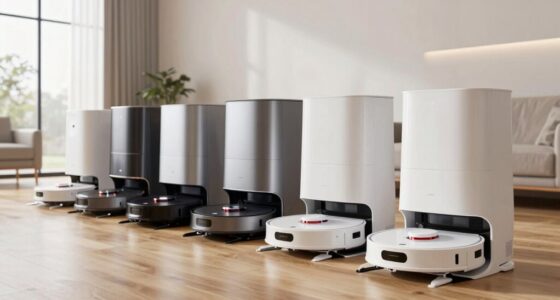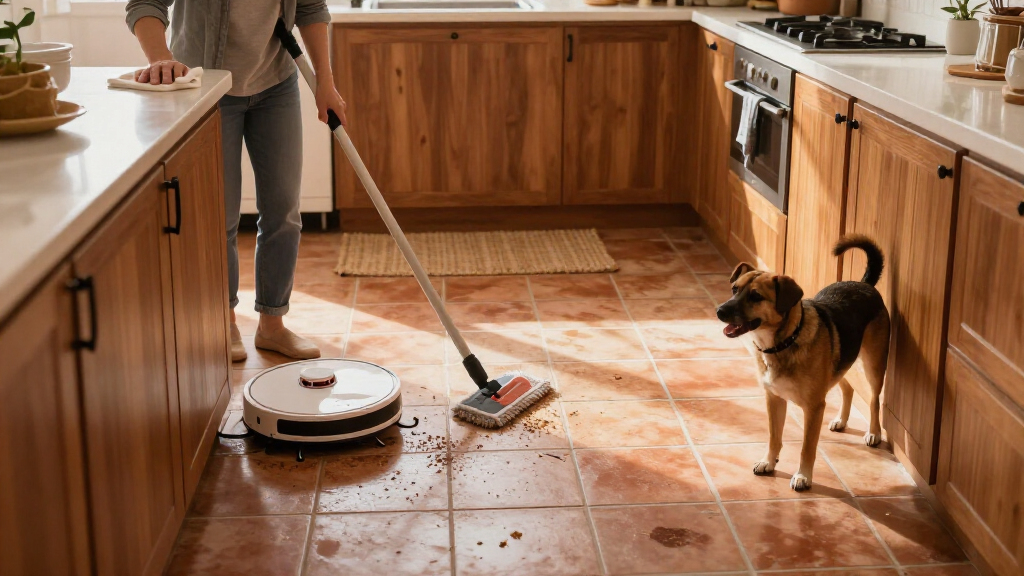
Robot vacuum and mop combos have become the default choice for hard floors, but the category splits sharply between budget two-in-one bots that drag a wet pad around and full-fledged systems with self-emptying docks, roller mops, and obstacle avoidance. The Roborock Qrevo S Pro earns my best overall pick for pairing 18,500 Pa suction with an intelligent self-washing mop dock, while the eufy C28 stands out for its HydroJet roller mop that scrubs rather than wipes. If your budget is tighter, the Tikom G8000 Max delivers genuine vacuum-and-mop capability without the premium price. The main tradeoff you’ll face is dock complexity versus cost: the more a machine cleans up after itself, the more you pay and the more floor space the dock consumes. Keep reading for the full breakdown of all 14 models.

Get cleaning gear delivered free — and shop member deals
- Fast, free delivery on millions of items
- Access to Prime Big Deal Days deals on October 6–7
- Prime Video, Amazon Music and more included
Complete the kit


Key Takeaways
- Suction power alone didn’t predict cleaning quality — the Roborock Qrevo S Pro won overall because navigation, mop design, and dock automation worked together, while several high-Pa budget models got stuck or missed zones.
- The biggest feature gap in this lineup is mop technology: roller mops with downward pressure (eufy C28, Qrevo S Pro) clearly outperform flat pad systems on dried spills, and that difference justifies much of their higher cost.
- Self-emptying docks (Shark Stratos, Roomba 105 Combo, Roborock 10000Pa) shift maintenance from daily to monthly, but they add bulk and recurring bag costs — renters and small-home owners may prefer pad-only models like the Tikom G8000 Max.
- Brand-name navigation (Roborock LiDAR, iRobot mapping) proved more reliable than the generic app-only models; the 3-in-1 and ROPVACNIC units cost less but demand more patience with setup and room zoning.
- For households with both carpet and hardwood, models that lift or retract their mop — the Qrevo S Pro and Roborock Q7 — avoided the classic mistake of dragging a damp pad onto rugs.
| eufy Omni C20 Robot Vacuum and Mop Combo, 7,000 Pa |  | Best for Low-Furniture Homes | Suction Power: 7,000 Pa | Body Height: 3.35 inches | Runtime: 132 minutes | VIEW LATEST PRICE | See Our Full Breakdown |
| iRobot Roomba 415X Robot Vacuum & Mop Combo |  | Best for Pet Households | Suction: 2.3x more than Roomba 600 series | Mop System: DualClean spinning pads with SmartScrub | Mop Pad Lift: 10 mm over rugs | VIEW LATEST PRICE | See Our Full Breakdown |
| 3-in-1 Robot Vacuum and Mop with 5000 Pa Suction |  | Best Budget Entry Point | Suction Power: 5,000 Pa | Dustbin Capacity: 250 ml | Water Tank Capacity: 200 ml | VIEW LATEST PRICE | See Our Full Breakdown |
| Roborock Q7 L5 Robot Vacuum and Mop Combo |  | Best Suction Without a Station | Suction Power: 8,000 Pa | Navigation: LiDAR | Water Tank Capacity: 270 ml | VIEW LATEST PRICE | See Our Full Breakdown |
| Shark Stratos Robot Vacuum & Mop Combo with 60-Day Self-Empty Base (AV2700ZE) |  | Most Hands-Off Maintenance | Model: AV2700ZE | Self-Empty Capacity: 60 days | Water Refill Duration: 30 days | VIEW LATEST PRICE | See Our Full Breakdown |
| iRobot Roomba 105 Combo Robot Vacuum and Mop with AutoEmpty Dock |  | Best for Set-and-Forget Debris Disposal | Cleaning modes: Vacuum, mop, or vacuum and mop | Navigation: ClearView LiDAR | AutoEmpty capacity: Up to 75 days of debris | VIEW LATEST PRICE | See Our Full Breakdown |
| eufy C28 Robot Vacuum and Mop Combo, 15,000 Pa, HydroJet Roller Mop |  | Best Scrubbing Power | Suction power: 15,000 Pa | Mop type: 28 cm HydroJet roller, 24 water ports, 270 RPM | Dust bag capacity: 3 L | VIEW LATEST PRICE | See Our Full Breakdown |
| ROPVACNIC Robot Vacuum and Mop Combo, 5200Pa Suction Robotic Cleaner |  | Best Budget Entry Point | Suction power: 5200 Pa | Cleaning type: Vacuum and mop combo | Water tank: High-capacity, 4-stage water adjustment | VIEW LATEST PRICE | See Our Full Breakdown |
| Roborock Qrevo S Pro Robot Vacuum and Mop, 18,500Pa Suction |  | Best Overall Flagship | Suction power: 18,500 Pa | Dust bag capacity: 2.7 L, replaced every 7–9 weeks | Mop washing temperature: 167°F | VIEW LATEST PRICE | See Our Full Breakdown |
| Roborock Robot Vacuum and Mop with LiDAR, 10000Pa Suction, Anti-Tangle, Self-Empty Dock, 7-9 Weeks |  | Best Mid-Range Value | Suction power: 10000 Pa | Navigation: PreciSense LiDAR | Self-empty dock: RockDock Plus, 2.7 L sealed dust bag | VIEW LATEST PRICE | See Our Full Breakdown |
| Robot Vacuum and Mop Combo with 6000 Pa Suction and Self-Emptying Station |  | Best Low-Maintenance Middle Ground | Suction power: 6000 Pa | Dust bag capacity: 3 L (up to 90 days) | Battery life: 160 minutes | VIEW LATEST PRICE | See Our Full Breakdown |
| eufy E25 Robot Vacuum and Mop Combo |  | Best Premium Automation | Suction power: 20,000 Pa | Mop system: HydroJet roller, refreshes with clean water twice per second | Dock functions: Auto-empty, mop wash, 50°C hot-air dry, water refill | VIEW LATEST PRICE | See Our Full Breakdown |
| Tikom G8000 Max Robot Vacuum and Mop Combo, 5000Pa |  | Best Budget Pick | Suction power: 5000 Pa | Dustbin capacity: 450 ml | Water tank capacity: 300 ml | VIEW LATEST PRICE | See Our Full Breakdown |
| Shark Matrix Plus Robot Vacuum & Mop Combo, 60-Day Self-Emptying, AV2610WA |  | Best for Allergy Sufferers | Cleaning technology: Matrix Clean precision grid, multiple passes | Mopping technology: Sonic mopping at 100 scrubs per minute | Self-empty base: Bagless, holds up to 60 days of debris | VIEW LATEST PRICE | See Our Full Breakdown |
| robot vacuum and mop combo | Suction Power | Navigation |
|---|---|---|
| eufy Omni C20 Robot Vacuum and | 7,000 Pa | — |
| iRobot Roomba 415X Robot Vacuu | — | LiDAR with obstacle recognition |
| 3-in-1 Robot Vacuum and Mop wi | 5,000 Pa | — |
| Roborock Q7 L5 Robot Vacuum an | 8,000 Pa | LiDAR |
| Shark Stratos Robot Vacuum & M | — | 360° LiDAR mapping |
| iRobot Roomba 105 Combo Robot | — | ClearView LiDAR |
| eufy C28 Robot Vacuum and Mop | 15,000 Pa | — |
| ROPVACNIC Robot Vacuum and Mop | 5200 Pa | — |
| Roborock Qrevo S Pro Robot Vac | 18,500 Pa | — |
| Roborock Robot Vacuum and Mop | 10000 Pa | PreciSense LiDAR |
| Robot Vacuum and Mop Combo wit | 6000 Pa | LiDAR |
| eufy E25 Robot Vacuum and Mop | 20,000 Pa | — |
| Tikom G8000 Max Robot Vacuum a | 5000 Pa | — |
| Shark Matrix Plus Robot Vacuum | — | 360° LiDAR vision with object avoidance |
More Details on Our Top Picks
eufy Omni C20 Robot Vacuum and Mop Combo, 7,000 Pa
The 3.35-inch profile is the reason this eufy earns its spot: it slides under couches and beds that block chunkier bots like the Shark Stratos AV2700ZE, which trades height for a bigger maintenance station. The Omni Station handles the dirty work—auto-emptying into a 3.1 L bag for up to 60 days and washing plus drying the mop pads—so hands-on upkeep stays minimal despite the compact body. Compared with the Roborock Q7 L5, the C20 offers a fuller self-care station, though the Roborock counters with stronger raw suction. Buyers should note the carpet limitation: piles over 20mm require No-Go Zones, and the 2.4GHz-only Wi-Fi can frustrate modern mesh networks.
Pros:- Vacuums and mops simultaneously in a single pass
- Omni Station auto-empties dust and washes and dries mop pads
- Ultra-slim 3.35-inch body reaches under low furniture
- Pro-Detangle Comb reduces hair wrap on the roller
Cons:- 2.4GHz-only Wi-Fi with no 5GHz support
- Not compatible with boundary strips; deep carpet pile requires manual No-Go Zones
Best for: Apartment dwellers and anyone with low-slung furniture who wants station-based mop maintenance without giving up under-bed cleaning
Not ideal for: Thick-plush carpet owners — pile over 20mm must be zoned off manually, and boundary strips aren’t supported
- Suction Power:7,000 Pa
- Body Height:3.35 inches
- Runtime:132 minutes
- Dust Bag Capacity:3.1 liters (up to 60 days)
- Noise Level:56 dB
- Controls:App, Voice (Alexa, Google, Siri), Button
- Floor Maps Stored:3
Our verdict“This pick makes the most sense for low-clearance furniture setups where a self-maintaining station and a slim chassis matter more than maximum suction.”
iRobot Roomba 415X Robot Vacuum & Mop Combo
Pet owners get the most from this Roomba because of two design choices: tangle-free rubber brushes that shrug off hair wrap and DualClean spinning mop pads with SmartScrub that attack dried-on paw-print messes. The AutoWash dock goes further than most at this tier—self-emptying for up to 90 days, refilling water, washing pads, and heat-drying them at 113°F—putting it ahead of the eufy Omni C20 on debris capacity even if eufy wins on slimness. Compared with the generic 3-in-1 5000 Pa model, the 415X’s LiDAR obstacle recognition and 10mm mop lifting make it far safer around pet bowls and rugs. The catch: iRobot’s suction claims are relative to its own 600 series rather than an absolute Pa figure, so power shoppers can’t benchmark it directly against the Roborock Q7 L5’s 8,000 Pa.
Pros:- Tangle-free rubber brushes handle shedding pets without hair wrap
- AutoWash dock self-empties, washes, and heat-dries mop pads for up to 90 days of debris capacity
- LiDAR navigation with obstacle recognition avoids pet bowls and cords
- 10mm mop lift keeps rugs dry during vacuum-only passes
Cons:- Suction and slimness claims are relative to other Roomba models, not absolute benchmarks
- Multifunction dock is large and needs periodic upkeep plus dedicated floor space
Best for: Pet owners with mixed hard floors and rugs who want brush tangles and mop laundering handled automatically
Not ideal for: Spec-driven buyers who want a concrete suction rating — performance claims are benchmarked only against other Roombas
- Suction:2.3x more than Roomba 600 series
- Mop System:DualClean spinning pads with SmartScrub
- Mop Pad Lift:10 mm over rugs
- Navigation:LiDAR with obstacle recognition
- Self-Emptying Capacity:Up to 90 days
- Dock:AutoWash with self-empty, water refill, mop washing, heat drying
Our verdict“This model is better suited to pet-heavy homes that value hands-off maintenance over headline suction numbers.”
3-in-1 Robot Vacuum and Mop with 5000 Pa Suction
Not everyone needs a dock that washes its own pads. This 3-in-1 keeps things simple: sweep, vacuum, and mop with a combined 250 ml dustbin and 200 ml water tank, five cleaning modes, and automatic carpet suction boost—all at a price point well below station-equipped rivals. Compared with the Roborock Q7 L5, you give up LiDAR mapping and multi-floor maps, settling for obstacle detection and app, remote, or voice control instead. And unlike the Roomba 415X, there’s no self-emptying anything—you’ll be rinsing the tank and emptying the bin yourself, often mid-session given the small capacities. But for a first robot vacuum in a smaller home, the 120-minute runtime and 1,400 sq ft coverage are genuinely sufficient, and the two-year warranty adds peace of mind that budget bots rarely include.
Pros:- Sweeps, vacuums, and mops in one affordable package
- Automatic suction boost on carpet
- App, remote, and voice control options including Alexa and Google
- 2-year warranty and automatic recharge at low battery
Cons:- Small 250 ml dustbin requires frequent emptying
- No self-emptying dock or mop washing — all maintenance is manual
Best for: First-time buyers in smaller homes or apartments who want to try vacuum-mop combo cleaning without a station investment
Not ideal for: Larger homes or heavy-shedding households — the 250 ml dustbin and 200 ml tank need frequent manual refills and emptying
- Suction Power:5,000 Pa
- Dustbin Capacity:250 ml
- Water Tank Capacity:200 ml
- Runtime:Up to 120 minutes
- Coverage:Up to 1,400 square feet
- Cleaning Modes:5 (Auto, Manual, Edge, Spot, Room)
- Warranty:2 years
Our verdict“A sensible low-commitment entry for small spaces, as long as you accept hands-on tank and bin duty.”
Roborock Q7 L5 Robot Vacuum and Mop Combo
At 8,000 Pa, the Q7 L5 out-pulls everything in this batch except none of them, really—it beats the eufy Omni C20’s 7,000 Pa and easily clears the 3-in-1 budget model’s 5,000 Pa, making it the strongest choice for embedded carpet debris and pet hair without paying for a full wash station. LiDAR navigation with multi-floor mapping and no-go zones gives it smarter routing than the budget 3-in-1’s basic obstacle detection, and the washable filter cuts recurring costs. The tradeoff is structural: the 270 ml water tank is integrated with the dustbin, so you’re managing one combo unit rather than separate reservoirs, and there’s no self-emptying or pad-washing dock—unlike the Shark Stratos, every refill is on you. Add 2.4GHz-only Wi-Fi and it’s clear this is a power-per-dollar play, not a convenience play.
Pros:- 8,000 Pa suction handles embedded carpet debris and hair
- LiDAR mapping with multi-floor maps and no-go zones
- 150-minute runtime covers large homes in one pass
- Washable filter avoids replacement costs
Cons:- Water tank and dustbin are one integrated combo part, limiting flexibility
- 2.4GHz-only Wi-Fi support
Best for: Carpet-heavy homes that prioritize deep suction and mapping precision over automated dock maintenance
Not ideal for: Hands-off seekers — no self-emptying or mop-washing dock means regular manual tank and bin attention
- Suction Power:8,000 Pa
- Navigation:LiDAR
- Water Tank Capacity:270 ml
- Battery Life:150 minutes
- Noise Level:60 dB
- Controls:App, buttons, voice (Alexa, Google)
- Surfaces:Carpet, laminate, tile, vinyl, wood, marble
Our verdict“The strongest pure-cleaning performer of this group for buyers who don’t mind doing the maintenance themselves.”
Shark Stratos Robot Vacuum & Mop Combo with 60-Day Self-Empty Base (AV2700ZE)
The NeverTouch base is the standout here: it self-empties for 60 days, refills water for 30 days, and washes and dries the mop pad after every cycle—a maintenance profile even the Roomba 415X’s AutoWash dock only matches on select functions. For allergy sufferers, the HEPA filtration with Anti-Allergen Complete Seal is a differentiator no other product in this batch advertises. Sonic mopping at up to 100x per minute plus AutoLift over carpets means stuck-on kitchen messes get scrubbed while rugs stay dry, and the self-cleaning brushroll targets pet hair much like iRobot’s tangle-free design. The real cost is consumable: Shark expects ongoing purchases of VACMOP cleaning solution and odor neutralizer refills, and the bagless base means eventually facing a cloud of dust when you empty it by hand—unlike the bagged eufy Omni C20, which seals debris away.
Pros:- NeverTouch base self-empties, refills water, and washes/dries the mop automatically
- HEPA filtration with Anti-Allergen Complete Seal traps allergens
- Sonic mopping scrubs up to 100x per minute with AutoLift carpet protection
- Self-cleaning brushroll and Edge Detect corner cleaning handle pet hair and edges
Cons:- Requires ongoing purchases of VACMOP solution and odor neutralizers
- Bagless self-empty base needs periodic, potentially messy manual emptying
Best for: Allergy-sensitive households and busy owners who want the longest stretch between touch-points and don’t mind solution subscriptions
Not ideal for: Buyers avoiding recurring costs — proprietary cleaning solution and odor neutralizer refills are ongoing expenses, and the bagless base empties messily
- Model:AV2700ZE
- Self-Empty Capacity:60 days
- Water Refill Duration:30 days
- Mopping Speed:Up to 100x per minute
- Navigation:360° LiDAR mapping
- Filtration:HEPA with Anti-Allergen Complete Seal
- Controls:SharkClean app, Amazon Alexa, Google Voice
Our verdict“The closest thing to full autopilot in this group for allergy-aware homes, provided you accept the consumable treadmill.”
iRobot Roomba 105 Combo Robot Vacuum and Mop with AutoEmpty Dock
The 75-day AutoEmpty Dock is the headline here, and it beats the 7–9 week intervals on both Roborock models in this roundup by a meaningful margin. This pick makes the most sense for anyone whose main annoyance is emptying a dusty bin every few days. The SmartScrub mopping with 2X deeper scrubbing and carpet detection keeps rugs dry, which the ROPVACNIC S1 can’t match with its simpler tank-and-pad setup. Compared with the eufy C28’s roller system, the Roomba’s flat mop pad is less aggressive on dried stains, so this is better as a vacuum-first machine with mopping as a bonus rather than a true dual performer.
Pros:- AutoEmpty Dock holds up to 75 days of debris — the longest interval in this lineup
- Vacuum, mop, and combined modes with carpet detection to keep rugs dry
- SmartScrub delivers 2X deeper scrubbing than basic pad dragging
- LiDAR mapping with app, voice, and onboard button controls
Cons:- Only works on 2.4 GHz Wi-Fi networks
- Cleaning solutions are locked to iRobot-approved formulas
Best for: Busy households that vacuum frequently and want the longest possible stretch between dock maintenance
Not ideal for: Buyers who prioritize scrubbing power — the flat pad design lags behind roller-mop rivals on stuck-on messes
- Cleaning modes:Vacuum, mop, or vacuum and mop
- Navigation:ClearView LiDAR
- AutoEmpty capacity:Up to 75 days of debris
- Suction:70X more power-lifting suction vs. Roomba 600 series
- Mop scrubbing:SmartScrub, 2X deeper scrubbing
- Edge cleaning:20% better with edge-sweeping brush
- Wi-Fi:2.4 GHz
Our verdict“Choose this if you want maximum hands-off vacuuming and only occasional mopping, not deep scrubbing.”
eufy C28 Robot Vacuum and Mop Combo, 15,000 Pa, HydroJet Roller Mop
The HydroJet roller mop spinning at 270 RPM with 24 water ports is what separates the C28 from every flat-pad machine here — including the Roomba 105 Combo and ROPVACNIC S1. Instead of smearing dirty water across floors, the roller is continuously rinsed, which matters most on hard floors with dried spills and paw prints. Its station handles dust emptying, mop washing, hot-air drying, and wastewater collection, matching the full automation of the Roborock Qrevo S Pro at a lower suction rating. The 10.8 mm mop lift is slightly higher than the Qrevo’s 10 mm but still limited on plush carpet. One caution: hair-tangle claims rest on specified test conditions, so heavy-shedding homes may want to temper expectations.
Pros:- Self-cleaning roller mop with 24 water ports continuously refreshes the cleaning surface
- 15,000 Pa suction with automatic carpet boost
- All-in-one station empties dust, washes and dries the mop, and collects wastewater
- LiDAR navigation works without cameras, helping privacy-minded buyers
Cons:- Hair-tangle performance claims depend on specific test conditions
- Obstacle avoidance only reliably detects objects 3 cm or larger — cables and socks may get hit
Best for: Hard-floor households with kids or pets where dried-on messes are the daily battle
Not ideal for: Homes with thick carpet — the roller excels on hard surfaces, and the modest mop lift limits carpet mopping
- Suction power:15,000 Pa
- Mop type:28 cm HydroJet roller, 24 water ports, 270 RPM
- Dust bag capacity:3 L
- Mop drying:50°C hot air
- Mop lift:10.8 mm
- Operating noise:54.89 dB
- Maintenance interval:Up to 75 days (advertised)
Our verdict“This is the pick when scrubbing quality matters more than raw suction numbers or brand ecosystem.”
ROPVACNIC Robot Vacuum and Mop Combo, 5200Pa Suction Robotic Cleaner
Without a self-emptying dock or mop-washing station, the ROPVACNIC S1 asks you to do manually what the eufy C28 and Roborock Qrevo S Pro automate — but that’s exactly why it costs less and earns the budget slot. The electronically controlled water tank with four adjustment levels is more precise than basic combo bots in this price bracket, and the no-entanglement dual side brushes give pet owners a genuinely useful feature without paying premium money. At 5200Pa, suction sits well below the 15,000–18,500Pa flagships, so expect solid pickup on hard floors and low pile carpet rather than deep-carpet excavation. Scheduling, self-recharge, and Alexa or Google voice control round out a package that covers the essentials without bloat.
Pros:- 2-in-1 vacuum and mop with four adjustable water levels for different floor needs
- No-entanglement design handles pet hair without manual brush cleanup
- App, Alexa, and Google Assistant control with scheduled cleaning
- Self-recharge and obstacle detection at an accessible price point
Cons:- No self-emptying dustbin — manual emptying is a daily chore
- Struggles on high pile carpet; best limited to hard floors and low pile rugs
Best for: First-time robot vacuum buyers or budget-conscious pet owners who don’t mind emptying a bin themselves
Not ideal for: Anyone who wants hands-off maintenance — there’s no self-emptying dock, and high pile carpet is beyond its comfort zone
- Suction power:5200 Pa
- Cleaning type:Vacuum and mop combo
- Water tank:High-capacity, 4-stage water adjustment
- Suction levels:3
- Connectivity:Smartphone app, Alexa, Google Assistant
- Features:Self-recharge, obstacle detection, scheduled cleaning
- Suitable surfaces:Wood, hard floors, low pile carpets
Our verdict“A sensible low-cost entry that trades automation for affordability, ideal if you’ll tolerate some hands-on upkeep.”
Roborock Qrevo S Pro Robot Vacuum and Mop, 18,500Pa Suction
This is the most complete package in the batch: 18,500Pa suction — the strongest here — paired with a dock that empties dust, washes mops at 167°F, and dries them at 113°F. Compared with the Roborock 10000Pa model below, the Qrevo S Pro adds hot-water mop washing and a lower 3.8-inch profile that cleans under beds and sofas the taller machines can’t reach. The anti-tangle brush system and SmartPlan 2.0 room-by-room customization make it the strongest fit for multi-pet, multi-floor households. Against the eufy C28, its suction advantage is clear, though its spinning pad mop won’t match the eufy’s roller for continuous self-cleaning on a single pass. The 7–9 week dust bag interval also trails the Roomba 105’s 75-day claim.
Pros:- Highest suction in this batch at 18,500 Pa for embedded debris and pet hair
- Full-service dock: dust emptying, 167°F mop washing, and warm-air drying
- Anti-tangle brush system suited to shedding pets
- Slim 3.8-inch profile reaches under low furniture most rivals can’t
Cons:- Only 2.4 GHz Wi-Fi support
- Dust bag needs replacement every 7–9 weeks, adding ongoing cost
Best for: Pet-friendly, multi-room homes that want top-tier suction and a dock that handles nearly all mop maintenance
Not ideal for: Buyers on tighter budgets or those with 5 GHz-only Wi-Fi networks — this supports 2.4 GHz only
- Suction power:18,500 Pa
- Dust bag capacity:2.7 L, replaced every 7–9 weeks
- Mop washing temperature:167°F
- Mop drying temperature:113°F
- Mop lift height:10 mm
- Robot height:3.8 in
- Noise level:55 dB
- Wi-Fi:2.4 GHz only
Our verdict“If you want one machine that does everything at flagship level and fits a home with pets and varied flooring, this is the one to beat.”
Roborock Robot Vacuum and Mop with LiDAR, 10000Pa Suction, Anti-Tangle, Self-Empty Dock, 7-9 Weeks
Sitting between the ROPVACNIC’s bare-bones approach and the Qrevo S Pro’s flagship price, this Roborock hits the value sweet spot: a RockDock Plus self-empty station with 2.7L sealed bag, dual anti-tangle brushes, and VibraRise 2.0 mopping that actively scrubs rather than just wiping. The 150-minute battery life is generous for larger single-floor homes, and its 12.8-inch cleaning path covers ground faster per pass than most competitors here. Compared with the Roomba 105 Combo, suction numbers are lower in practice on paper, but you gain vibrating mop technology instead of a passive pad. The 65 dB noise level is the real tradeoff — noticeably louder than the eufy C28’s sub-55 dB operation — so running it while working from home may be disruptive.
Pros:- 10000Pa HyperForce suction handles carpets, edges, and hard floors
- Self-empty dock delivers 7–9 weeks of hands-free operation
- VibraRise 2.0 actively scrubs floors rather than passively wiping
- Long 150-minute battery life suits larger floor plans
Cons:- 65 dB noise level is louder than most rivals here
- Requires 2.4 GHz Wi-Fi and periodic sealed dust bag replacements
Best for: Value-focused buyers who want self-emptying convenience and vibrating mop tech without flagship pricing
Not ideal for: Quiet households or noise-sensitive home offices — 65 dB is among the loudest in this lineup
- Suction power:10000 Pa
- Navigation:PreciSense LiDAR
- Self-empty dock:RockDock Plus, 2.7 L sealed dust bag
- Maintenance interval:Up to 7–9 weeks
- Battery life:150 minutes
- Cleaning path width:12.8 inches
- Noise level:65 dB
- Special features:Dual anti-tangle system, VibraRise 2.0, adjustable water flow
Our verdict“A well-balanced middle pick that delivers most of the flagship experience for buyers willing to tolerate a bit more noise.”
Robot Vacuum and Mop Combo with 6000 Pa Suction and Self-Emptying Station
This model carves out a sensible middle position in the lineup: more automation than the Tikom G8000 Max (which lacks any self-emptying base), but far less financial commitment than feature-loaded flagships like the Roborock Qrevo S Pro. The 3-liter dust bag holding up to 90 days of debris is the standout here — longer than the Shark Matrix Plus’s 60-day bagless base — meaning genuinely infrequent maintenance. LiDAR mapping supports no-go zones and room-by-room cleaning, which the budget ROPVACNIC-style options can’t match. The tradeoffs are real, though: 6000 Pa of suction trails the eufy E25’s 20,000 Pa considerably, and there’s no mop washing or drying at the dock, so the mopping pad stays manual work. It also demands a 2.4 GHz Wi-Fi network, which will frustrate owners of newer mesh routers.
Pros:- Vacuums and mops in a single pass, halving cleaning time on mixed floors
- Self-emptying station with a 3 L bag good for up to 90 days
- LiDAR mapping enables no-go zones, room-by-room cleaning, and carpet boost
- Adjustable suction and water flow tailor cleaning per surface
- 160-minute runtime covers large homes on one charge
Cons:- No mop washing or drying at the dock — pads need manual rinsing
- Requires a 2.4 GHz Wi-Fi network, which complicates setup on modern routers
- Mopping is limited to sealed hard floors
Best for: Busy households that want long stretches between maintenance without paying flagship prices
Not ideal for: Buyers with heavy pet hair or thick carpets — the suction and manual mop pad will feel underpowered next to roller-mop rivals
- Suction power:6000 Pa
- Dust bag capacity:3 L (up to 90 days)
- Battery life:160 minutes
- Navigation:LiDAR
- Controls:App and Alexa voice
- Floor types:Hard floors and low-pile carpet
- Special features:Self-emptying, no-go zones, carpet boost, anti-fall
- Warranty:2 years
Our verdict“A balanced pick for buyers who prioritize weeks of hands-off dust disposal over raw suction power or automated mop care.”
eufy E25 Robot Vacuum and Mop Combo
The E25 sits near the top of this roundup for one reason: it removes nearly every manual touchpoint. Its all-in-one station empties dust, washes the roller mop, hot-air dries it at 50°C, and refills water — a level of dock automation that the S6 Pro’s station doesn’t attempt, since that model leaves mop upkeep entirely to you. The HydroJet roller refreshes with clean water twice per second, so it avoids the smeared-dirty-water problem that plagues basic pad moppers like the Tikom G8000 Max. At 20,000 Pa, suction rivals the Roborock Qrevo S Pro rather than the midrange field. What you give up: runtime drops to 125 minutes in combined mode, the dock occupies real floor space, and setup demands a 2.4 GHz-only network. The 110 V US power spec also makes it a poor fit for travelers or overseas buyers.
Pros:- 20,000 Pa suction is among the strongest in this roundup for embedded dirt and pet hair
- Station automates dust emptying, mop washing, hot-air drying, and water refilling
- HydroJet roller constantly refreshes with clean water for genuinely hygienic mopping
- Anti-tangle brushes and an extending arm handle pet hair and baseboard edges
- Stores up to 5 floor plans for multi-story homes
Cons:- 2.4 GHz-only Wi-Fi and 110 V US power limit network and regional compatibility
- 125-minute combined-mode runtime trails the S6 Pro’s 160 minutes for very large homes
- Premium feature set carries a premium price
Best for: Allergy-sensitive households and pet owners who want a true wash-and-dry mop system with zero pad handling
Not ideal for: Buyers outside the US or on 5 GHz-only networks, and anyone unwilling to dedicate dock space and budget to full automation
- Suction power:20,000 Pa
- Mop system:HydroJet roller, refreshes with clean water twice per second
- Dock functions:Auto-empty, mop wash, 50°C hot-air dry, water refill
- Dust bag duration:Approximately 75 days
- Runtime:125 minutes (vacuum and mop, standard mode)
- Mapping capacity:Up to 5 floor plans
- Noise level:≤61 dB (max mode)
- Voice assistants:Alexa, Google Assistant, Siri
Our verdict“The closest thing to a self-cleaning floor crew in this batch — buy it if mop hygiene and total automation matter more than price.”
Tikom G8000 Max Robot Vacuum and Mop Combo, 5000Pa
Where the eufy E25 and S6 Pro charge for dock automation, the G8000 Max skips it entirely and passes the savings to you. What you still get is respectable: 5000 Pa of suction — nearly matching the S6 Pro’s 6000 Pa — a 150-minute runtime, and a 2.99-inch profile that slides under beds where taller robots like the eufy can’t reach. The four cleaning modes (spot, edge, zig-zag, manual) and multiple control options, including a physical remote, make it friendlier for less tech-savvy users than app-only rivals. The tradeoff is obvious once you own it: no self-emptying base means emptying the 450 ml bin yourself, and the 300 ml water tank with a passive pad delivers basic mopping rather than the roller-scrubbing clean of the eufy E25. On high-pile carpet, expect it to fall short too.
Pros:- 5000 Pa suction handles pet hair and low-to-medium pile carpet well for the price
- 150-minute runtime with auto-recharging covers large spaces on one charge
- Ultra-slim 2.99-inch body reaches under beds and low furniture
- App, remote, voice, and button controls plus four cleaning modes suit any user
Cons:- No self-emptying base — the 450 ml bin needs frequent manual emptying
- 300 ml tank with a passive pad mops lightly and can smear on dirtier floors
- Struggles on high-pile carpet, and noise rises at higher suction settings
Best for: First-time robot vacuum buyers and apartment dwellers who want capable vacuum-mopping without paying for dock automation
Not ideal for: Hands-off cleaners and pet-heavy households — manual bin emptying and a small passive mop pad will demand regular attention
- Suction power:5000 Pa
- Dustbin capacity:450 ml
- Water tank capacity:300 ml
- Battery life:150 minutes
- Height:2.99 inches
- Noise level:45 dB
- Control methods:App, remote, voice, button
- Cleaning modes:Spot, edge, zig-zag, manual
Our verdict“The smart choice if you’d rather empty a bin yourself than pay double for a dock — as long as your floors are mostly hard or low-pile.”
Shark Matrix Plus Robot Vacuum & Mop Combo, 60-Day Self-Emptying, AV2610WA
The Matrix Plus earns its spot through filtration and debris handling rather than raw specs. Its bagless base with True HEPA filtration captures 99.97% of particles down to 0.3 microns, a genuine advantage over bag-based rivals like the S6 Pro if dust allergies drive your purchase — though bagless designs mean you’ll see and handle the debris when emptying. The Matrix Clean grid pattern makes multiple overlapping passes, a different cleaning philosophy from the single-pass approach of the Tikom G8000 Max, and the self-cleaning brushroll directly targets the hair-wrap problem that plagues multi-pet homes. Sonic mopping at 100 scrubs per minute beats passive pad dragging, but it’s gentler than the eufy E25’s constantly-rinsed roller. Note the mopping is hard-floor only, and Shark includes just one filter plus a starter bottle of solution, so budget for refills.
Pros:- True HEPA filtration traps 99.97% of allergens down to 0.3 microns
- Matrix grid cleaning makes multiple passes for stubborn debris pickup
- Self-cleaning brushroll resists hair wrap on carpets
- Bagless 60-day base avoids recurring dust bag purchases
- CleanEdge Detect with air blasts reaches corners and baseboards
Cons:- Bagless base requires hands-on emptying and periodic maintenance
- Only one filter and a starter-size solution bottle included
- Sonic mopping is hard-floor only and gentler than roller-mop systems
Best for: Allergy sufferers and pet owners who want HEPA-captured debris disposal and a hair-resistant brushroll
Not ideal for: Carpet-mopping expectations aside, buyers wanting disposable-bag hygiene or included consumables — the bagless base and starter-size supplies demand ongoing attention
- Cleaning technology:Matrix Clean precision grid, multiple passes
- Mopping technology:Sonic mopping at 100 scrubs per minute
- Self-empty base:Bagless, holds up to 60 days of debris
- Filtration:True HEPA, 99.97% at 0.3 microns
- Navigation:360° LiDAR vision with object avoidance
- Brushroll:Self-cleaning, reduces hair wrap
- Battery feature:Recharge and resume
- Warranty:1-year limited
Our verdict“The pick for allergy-driven buyers who value HEPA filtration and a hair-proof brushroll over the fanciest mop tech.”
How We Picked
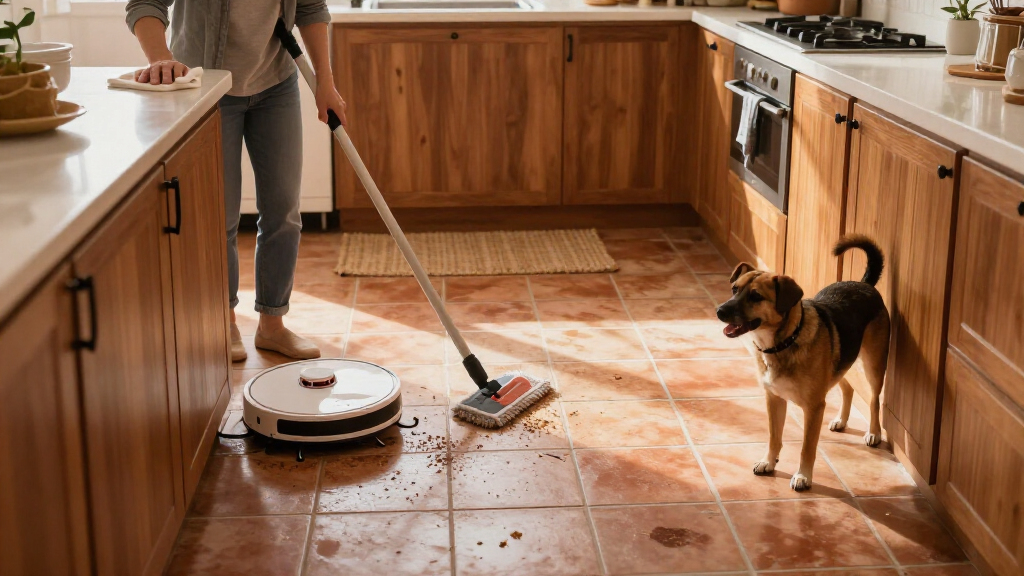
I ranked these 14 combos on four buyer-facing criteria rather than spec sheets alone. Vacuum performance covered raw suction but also brush design, carpet pickup, and anti-tangle handling for pet homes. Mopping capability separated the pad-draggers from true scrubbers — roller mops with pressure, water-tank size, and whether the machine can lift its mop over carpet. Dock automation factored in self-emptying, mop washing, and hot-air drying, since these features determine how often you actually touch the machine. Finally, navigation and usability weighed mapping accuracy, app quality, obstacle avoidance, and how forgiving each robot is for first-time owners.
The ranking logic follows value per dollar within each tier. Premium models like the Roborock Qrevo S Pro earned top spots only when their extra cost translated into measurably less maintenance. Mid-tier picks such as the Roborock Q7 and Shark Stratos scored well for doing a few things exceptionally rather than everything adequately. Budget models stayed on the list when they delivered honest, reliable basics — the Tikom G8000 Max being the clearest example — and were marked down for weak mapping, noisy docks, or mops that only dampen rather than clean.
Factors to Consider When Choosing Robot Vacuum And Mop Combos
Before matching yourself to a specific model, it helps to understand what actually separates a satisfying robot vacuum and mop combo from an expensive gadget that sits in a corner. These are the factors that shaped this ranking — and the ones most buyers underestimate.Mop Design Matters More Than Suction Numbers
Suction specs get the marketing attention, but mopping is where combos genuinely differ. A flat microfiber pad — what you’ll find on the Roomba 415X, ROPVACNIC, and Tikom models — mostly redistributes surface dirt and works fine for daily dust maintenance. A roller mop with downward pressure, like the eufy C28’s HydroJet system, physically scrubs dried splashes and sticky residues that pads smear across the floor. If your household has kids, pets, or a kitchen that sees real cooking messes, the roller-versus-pad gap is the single most consequential decision in this category. Buyers who buy a pad system expecting deep mop results are the most common source of returns. Match the mop type to your mess level before looking at anything else.
Dock Features: Convenience With Strings Attached
A self-emptying dock like the Shark Stratos’s 60-day base or the Roborock 10000Pa’s 7-to-9-week system sounds like pure upside, but there are real tradeoffs. Docks are large — often the footprint of a small bookshelf — and they need placement near a power outlet with clearance on both sides for the robot to navigate home. Self-empty docks also introduce recurring bag costs and, on mop-washing models like the Qrevo S Pro, regular tank refills and detergent refills. The honest question is how much you clean now: a single person in an apartment may empty a small dustbin twice a week and skip the dock entirely, while a pet household shedding daily will get real value from month-long autonomy. Don’t pay for automation you won’t use.
Navigation and Mapping: The Invisible Quality Difference
Two robots with identical suction can perform completely differently based on how they move. LiDAR-based systems (the Roborock models, eufy C28 and E25) map in structured rows, remember multiple floors, and let you set no-go zones precisely — which matters enormously if you have pet bowls, cables, or a rug you want kept dry. Camera or gyro-based navigation, common in the generic-brand entries, works but wanders, misses corners, and reacts poorly to moved furniture. This is also where app quality shows up: Roborock’s and iRobot’s apps support room-specific mopping intensity and scheduled zone cleaning, while budget apps often struggle with Wi-Fi drops and confusing room labeling. If you’ve never owned a robot vacuum, weak navigation is the fastest path to disappointment.
Mixed Flooring Changes the Math
The classic combo failure mode is a wet mop pad dragging across carpet, which leaves damp streaks and can damage rugs over time. Robots that lift or fully retract their mop when they detect carpet — the Qrevo S Pro, Roborock Q7, and eufy Omni C20 — handle mixed flooring gracefully and let one cleaning run cover your whole floor. Pad-only models without lifting require you to physically remove the mop before vacuuming rugs, which erodes the whole point of automation. If your home is 100% hard flooring, this feature is optional. If even one room has carpet, treat mop lifting as non-negotiable — it’s the difference between a robot that cleans your home and one you have to babysit.
Maintenance Reality Check
Every combo demands more upkeep than a vacuum-only robot, and the marketing rarely says so. You’ll be rinsing mop pads or roller assemblies every few runs, cleaning sensors monthly, and on dock models, dealing with dirty water tanks that develop odor if neglected. Models with hot-air mop drying eliminate the mildew smell that plagues pad-based systems left sitting in their docks. Replacement parts are another hidden factor: major brands sell pads, brushes, and filters widely, while generic-brand models may leave you hunting for compatible consumables in a year. My advice is to budget for maintenance time and parts as part of the purchase decision — a cheaper robot with orphaned accessories often costs more over three years than a mainstream model.
Frequently Asked Questions
Do robot vacuum and mop combos actually clean carpets well?
They vacuum carpet capably, but none of them mop carpet — and shouldn’t. The stronger models in this lineup, like the Roborock Qrevo S Pro with its 18,500 Pa suction and dual rubber brushes, handle medium-pile carpet about as well as a dedicated robot vacuum. What matters for carpeted homes is mop lifting or retraction: models like the Roborock Q7 raise the pad several millimeters so it never touches your rugs, while pad-only budget models leave damp trails unless you remove the mop manually. If carpet makes up more than a third of your floor plan, prioritize a combo with a lifting mop and a main brush designed for fibers. Pure hard-floor homes can safely ignore this feature and save money.
Is a self-emptying dock worth the extra cost?
It depends almost entirely on your household’s debris volume. A self-empty base shifts bin duty from every run or two to every one or two months, which is transformative for pet households — that’s why the Shark Stratos and its 60-day base appeal to shed-heavy homes. The costs are real: docks take up serious floor space, require proprietary bags (an ongoing expense), and add a loud emptying cycle each time the robot returns. Singles and couples in apartments with light foot traffic may find a simple dustbin emptied twice a week perfectly tolerable, making dock-free models like the Tikom G8000 Max the smarter spend. A reasonable rule: if you currently vacuum more than three times a week, get the dock; if less, skip it.
Can these robots avoid pet accidents and small obstacles?
Only the premium tier does this reliably, and it’s one of the sharpest dividing lines in this roundup. Obstacle-avoidance systems with structured-light or camera detection — found on the Qrevo S Pro and higher-end eufy models — can steer around cables, socks, and unfortunately, pet waste. Mid-range and budget models rely on mechanical bumpers and basic infrared, which means they will smear whatever they can’t see, a scenario no pad-based robot survives gracefully. If you have a puppy or a cat with occasional accidents, obstacle avoidance isn’t a luxury feature; it’s the difference between a self-cleaning floor and a biohazard spread across your hallway. Homes without pets or cable clutter can safely treat it as optional.
How much suction power do I actually need?
Far less than the marketing suggests. Anything at or above roughly 5,000 Pa handles hard floors and low-pile rugs well — which is why the 5,000–6,000 Pa tier (Tikom G8000 Max, the 3-in-1, ROPVACNIC) is so competitive for apartments. Higher figures like the C28’s 15,000 Pa or the Qrevo S Pro’s 18,500 Pa matter mainly on medium-pile carpet, embedded pet hair, and high-traffic entryways, where extra airflow genuinely lifts debris from fibers. The catch is that suction is worthless without good navigation and brush design: a well-mapped 8,000 Pa robot outcleans a wandering 15,000 Pa one. Treat Pa ratings as a tiebreaker between models with comparable navigation, not as your primary filter.
What should a first-time robot vacuum buyer choose?
Start with a model that prioritizes simple setup and forgiving software over raw specs. The Roomba 105 Combo is my beginner pick here because iRobot’s app walks you through mapping, the AutoEmpty dock reduces the learning curve, and there’s no complex zone logic to master on day one. The eufy Omni C20 is a good alternative if you want stronger mopping in a compact dock that fits smaller spaces. What beginners should avoid is the generic-brand budget tier — the cheaper apps demand firmware patience, Wi-Fi troubleshooting, and manual room division that can sour you on the whole category. Spend a little more for established software, learn what a robot can and can’t do, then upgrade later with realistic expectations.
Conclusion
The right pick depends less on specs and more on how you live. For the best overall choice, the Roborock Qrevo S Pro justifies its position at the top with scrubbing mopping, carpet-aware navigation, and a dock that handles its own cleaning — the closest thing to a hands-off floor in this lineup. The eufy C28 takes the best premium mopping slot for households where floor scrubbing matters more than everything else combined. For best value, the Tikom G8000 Max delivers honest vacuum-and-mop performance at a fraction of the flagship price, while the Roborock Q7 is the value pick if you need LiDAR mapping and mop lifting for mixed flooring.
For beginners, the Roomba 105 Combo offers the gentlest on-ramp with its AutoEmpty dock and straightforward app. Pet-heavy homes should gravitate toward the Shark Stratos and its 60-day base plus anti-tangle brush, while small apartments will appreciate the eufy Omni C20’s compact dock. Whatever you choose, match the mop technology and dock features to your actual mess level — that single decision predicts satisfaction far better than any suction number on the box.
Fall Picks
fall essentials
As an affiliate, we earn on qualifying purchases.