
To reduce your robot vacuum’s noise at night without sacrificing performance, try using lower power settings or quiet modes, and avoid activating carpet-boost features. Schedule cleaning for late-night hours and focus on hard floors for a quieter clean. Regular maintenance, like cleaning brushes and filters, is vital too. You can also use soft bumpers to minimize impact sounds. Stick around for more tips to guarantee your nighttime cleaning stays efficient and discreet!
Key Takeaways
- Schedule cleaning cycles during late-night hours when household activity is minimal to reduce disturbance.
- Use the vacuum’s app to activate quiet or low-power modes, minimizing noise during operation.
- Focus on hard-floor areas to decrease suction noise and avoid carpet-boost features at night.
- Regularly maintain the vacuum by cleaning filters and brushes to ensure optimal performance and lower noise levels.
- Implement soundproofing measures in sleeping areas to further reduce perceived noise from the vacuum.

When you want to keep your home clean without disturbing your nighttime peace, quiet cleaning at night can be a game-changer. Robot vacuums are designed with lower noise levels, typically ranging from 55 to 70 dB, making them quieter than traditional vacuums. To maximize quiet cleaning, you can use several strategies that maintain performance while minimizing disturbances.
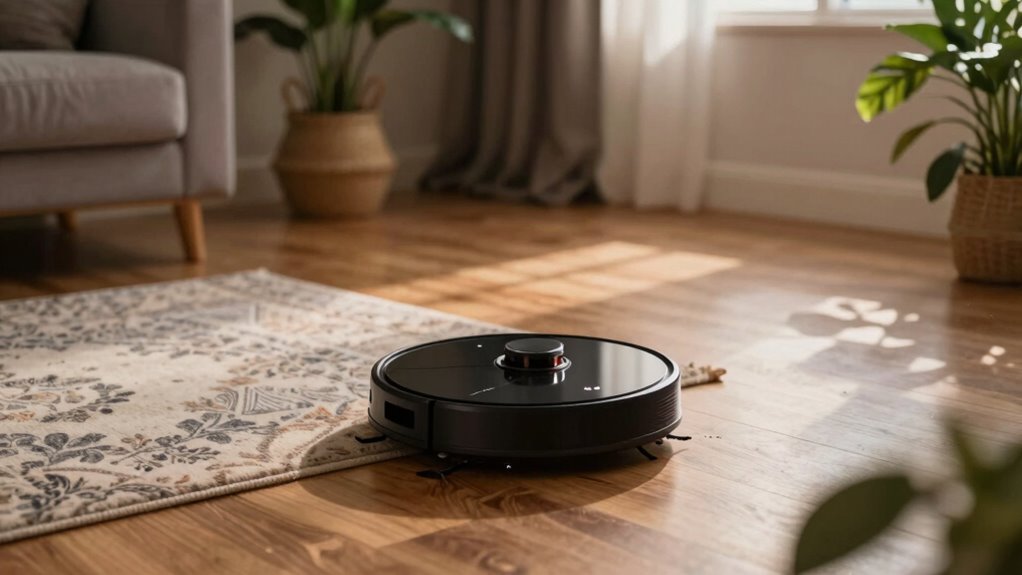
Maximize peaceful nighttime cleaning with a quiet robot vacuum, designed to operate at lower noise levels than traditional models.
Start by utilizing the quiet or low-power modes in your robot vacuum’s app. These settings reduce suction noise during operation, allowing you to maintain cleanliness without overwhelming sound. Scheduling your cleaning cycles for late at night is another effective tactic. Make sure to avoid carpet-boost features during these times, as they increase suction and create more noise. Focus on hard-floor areas instead, as these require less power and produce lower sound levels. Automatic vacuums generate around 55-70 dB, making them an excellent choice for nighttime cleaning.
Regular maintenance also plays a critical role in keeping noise to a minimum. Clogged filters and debris in brush housings can make your vacuum work harder, leading to increased noise. Clean or replace filters regularly to ensure ideal airflow. Additionally, check your main and side brushes for hair and debris that could cause friction. Inspecting and lubricating caster and drive wheels can eliminate grinding sounds, enhancing the quiet performance of your robot.
When it comes to hardware modifications, consider upgrading to rubber or noise-reducing roller brushes. These can dampen contact noise with floors, reducing the overall sound during operation. Make sure to use genuine OEM replacement parts, as aftermarket options may increase vibration and noise. Adding soft bumpers or edge protectors can also help minimize impact noise when the robot contacts furniture or walls.
Adjusting your home environment can further lower perceived noise. For instance, running your robot vacuum on hard floors rather than carpets will keep suction and fan noise down. Closing bedroom doors and using draft or door sweeps can substantially decrease sound transmission into sleeping areas. Removing small loose objects from the floor will prevent sharp impact sounds, ensuring a more peaceful cleaning experience.
Frequently Asked Questions
How Does Robot Vacuum Noise Compare to Traditional Vacuums?
Robot vacuums generally operate at sound levels between 50–70 dB, which is quieter than traditional upright vacuums that can reach 70–80 dB. You’ll notice that robot vacuums create less noise due to their design and efficiency. While they may still emit noise from motors and brushes, their overall sound profile is gentler, making them ideal for nighttime cleaning without disrupting your peace.
What Is the Ideal Db Level for Quiet Operation?
The ideal dB level for quiet operation in a robot vacuum is around 50 to 60 dB. This range allows you to clean effectively without causing significant disturbance. When choosing a robot vacuum, look for models that advertise this noise level. They often use advanced technology to balance suction power and noise reduction, ensuring you can maintain a clean home while enjoying a peaceful environment, especially during nighttime.
Can I Use Robot Vacuums on Carpet Without Increased Noise?
“Don’t judge a book by its cover.” You can indeed use robot vacuums on carpet without markedly increasing noise. Many models are designed to handle various surfaces, including carpets, while minimizing sound. To keep noise levels low, choose a vacuum with adjustable suction settings. Regular maintenance, like cleaning brushes and filters, also helps maintain quiet operation. So, go ahead and enjoy a cleaner carpet without the extra racket!
Are There Specific Brands Known for Quieter Robot Vacuums?
Yes, some brands are known for quieter robot vacuums. Look for models from iRobot, particularly the Roomba series, which often prioritize noise reduction. Neato’s Botvac series also features advanced soundproofing. Ecovacs and Roborock offer efficient models with eco modes to minimize noise. When choosing, check user reviews and specifications for sound levels to make certain you find a vacuum that maintains performance while keeping the noise down.
How Often Should I Maintain My Robot Vacuum for Optimal Noise Reduction?
Think of your robot vacuum as a well-tuned orchestra; if one instrument’s out of tune, the entire performance suffers. To keep the noise to a minimum, you should maintain your robot vacuum every month. Regularly clean or replace filters, remove hair from brushes, and check wheel assemblies. This routine not only reduces noise but guarantees your vacuum operates like a symphony, efficiently picking up dirt without the cacophony of clattering sounds.
Conclusion
In the end, achieving quiet cleaning at night is like finding the perfect harmony in a symphony. By adjusting settings, choosing the right model, and maintaining your robot vacuum, you can create a peaceful environment without sacrificing performance. So, don’t let noise be the villain in your nighttime routine. Embrace these tips, and enjoy the soothing serenade of a clean home while you sleep, knowing your trusty robot is hard at work, silently sweeping away the day’s mess.