
TL;DR

Get cleaning gear delivered free with Prime
- Fast, free delivery on millions of items
- Prime Video, Amazon Music and more included
- Member-only deals all year
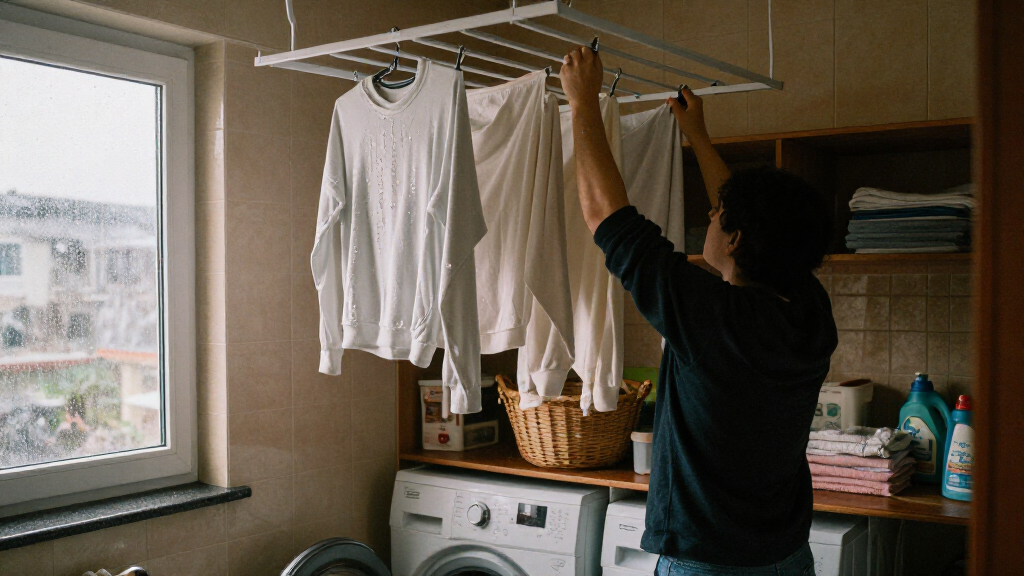
Ideal Home has highlighted a London homeowner’s built-in drying cupboard, designed to keep wet clothes tucked away while helping them dry. The setup uses pull-out hanging rails, ventilation grilles, a dehumidifier and a low-wattage heating element; drying times and energy use have not been independently measured.
Ideal Home has reported on a built-in laundry cupboard created by London homeowner Hatty Parker, which combines pull-out clothes rails, ventilation and a dehumidifier to dry laundry out of sight. The design offers households a way to reclaim floor space during winter, when clothes may take longer to dry indoors, though the report provides no measured drying times or energy-use results.
Parker, a web designer renovating a Victorian terraced house, made space for a small laundry room by reconfiguring a family bathroom and adjoining box bedroom. The drying cupboard sits beside a stacked washing machine and tumble dryer. Parker said she wanted a hybrid of a traditional airing cupboard and a dedicated drying space that could keep clothes out of view.
Her design includes pull-out hanging rails, a dehumidifier connected to the washing machine and tumble dryer waste, and a low-wattage heating element. Ventilation grilles cut into the cupboard doors allow air to circulate. Parker said the arrangement drew on her earlier experience using a dehumidifier alongside a heated clothes airer.
Ideal Home Senior Digital Editor Jenny McFarlane advised making room for a dehumidifier or small radiator near the bottom of the cupboard. She recommended allowing enough ventilation and clearance for equipment to operate. The report describes the layout as an idea to adapt, not a tested specification for every home.
A Concealed Place to Dry Laundry
The design addresses two common indoor-laundry problems: wet clothes occupying living space and damp washing taking time to dry in colder weather. Moving a drying rack into a cupboard can make a laundry room or utility area look less cluttered while keeping clothes hanging between washes.
Its usefulness depends on more than adding doors and rails. The cupboard needs airflow and space for drying equipment, and the report does not establish how quickly Parker’s setup dries a typical load or how much energy it uses. Households weighing the idea should treat those results as dependent on their equipment, laundry volume and room conditions rather than guaranteed benefits.
Products Worth Considering

LEVOIT Vital 200S-P Smart Air Purifier for Large Rooms

Blueair Blue Pure 511i Max Smart Air Purifier

Coway Mighty AP-1512HH(W) Air Purifier, White
As an affiliate, we earn on qualifying purchases.
How Parker Adapted an Airing Cupboard
Parker said the laundry room was created during a renovation that reduced the home’s bedroom count from five to four. Locating laundry facilities near the bathroom and bedrooms, she said, helped streamline household laundry tasks. The cupboard was positioned beside the stacked washer and dryer rather than as a separate feature elsewhere in the home.
The inspiration came from a drying cupboard Parker found on Pinterest. She said she adapted the idea after using a dehumidifier and heated airer together. The report presents her home as an example, alongside design guidance from McFarlane; it does not provide independent testing, installation plans or a cost estimate.
“The idea for the drying cupboard … came from wanting a cross between a traditional airing cupboard and a dedicated space where clothes could dry efficiently, but remain neatly out of sight.”
— Hatty Parker, homeowner
Drying Results and Costs Unreported
The Ideal Home report does not state how long a load takes to dry, how much electricity the dehumidifier or heating element uses, or how the cupboard performs against a conventional heated airer. It also gives no project budget, equipment installation details or measurements for the cupboard’s size and ventilation.
Connecting a dehumidifier to appliance waste and adding a heating element may require planning around the specific appliances and room. The report does not provide technical instructions or address building requirements, so its description should not be treated as a complete installation guide. It is also unclear whether Parker’s arrangement can be directly replicated in homes with different layouts or ventilation conditions.
What to Check Before Building
Readers considering a similar cupboard can use Parker’s example to plan for hanging space, airflow and room for a dehumidifier, then check the requirements for their own appliances and layout. McFarlane’s advice is to leave sufficient ventilation and clearance; the report does not specify a universal minimum.
Ideal Home’s article does not announce a follow-up test or further development. Any assessment of the design’s drying speed, running costs or suitability for a particular home remains a matter for the household and its chosen equipment.
Key Questions
What is the laundry cupboard design?
It is a built-in cupboard with pull-out rails for hanging clothes, ventilation grilles, a dehumidifier and a low-wattage heating element. Parker placed hers beside a stacked washing machine and tumble dryer.
How does the cupboard help with indoor laundry?
The cupboard keeps hanging laundry out of sight and off the floor. Parker said she adapted the idea after using a dehumidifier with a heated airer, but the report does not give independently measured drying times.
Does the cupboard need ventilation?
Yes. Parker’s cupboard has ventilation grilles in its doors, and Ideal Home’s Jenny McFarlane advised leaving enough ventilation and clearance for a dehumidifier to operate.
Does the report say how much the setup costs to run?
No. The article gives no electricity-use figures or running-cost comparison. Costs would depend on the equipment, settings and how often it is used.
Can any home copy the design?
The report offers Parker’s cupboard as inspiration, not a universal plan. Available space, ventilation and appliance connections differ, and the article does not provide installation drawings or technical requirements.
Source: idealhome.co.uk