
TL;DR

Get cleaning gear delivered free with Prime
- Fast, free delivery on millions of items
- Prime Video, Amazon Music and more included
- Member-only deals all year
An Ideal Home report describes six potential benefits of mulching: protecting soil and roots from frost and heavy rain, retaining moisture, adding organic matter, improving soil structure and supporting garden wildlife. Gardening experts cited in the report recommend a mulch layer around 5–7cm deep, though the best material and timing depend on the garden.
Ideal Home has published a seasonal report outlining six potential benefits of mulching garden beds, borders and containers, including protection from frost and heavy rain, improved soil and food for garden wildlife. The advice is aimed at gardeners planning cooler-weather work, though mulch can also help retain moisture and shield roots during hot weather.
The report defines mulching as applying a layer of organic matter to soil. It says mulch can help buffer temperature changes and reduce moisture loss. Landscape gardener Carl Jones of CJ Landscapes says an organic layer can protect roots and reduce erosion when heavy rain washes over soil. He also notes that rain can compact soil and carry nutrients away.
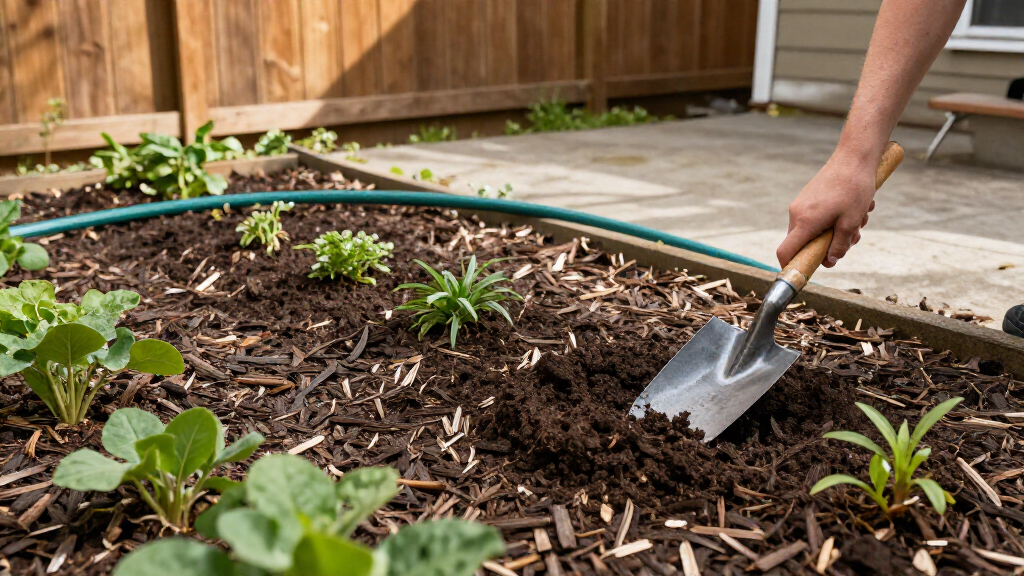
For soil improvement, grow-your-own expert Huw Richards recommends a layer 5–7cm (2–3in) deep. As organic mulch breaks down, the report says, it adds organic matter and supports worms, fungi and other soil organisms. Richards also says regular mulching can improve soil structure over time and reduce the need to dig, a potential benefit for gardeners using no-dig methods.
The other benefits described are frost insulation, moisture retention and wildlife support. The report says mulch may help soil stay hydrated in hot weather, reducing how often plants need watering, and can provide cover and food for invertebrates. It also cautions indirectly that mulch can shelter slugs and snails, while noting these animals are food for species such as hedgehogs, frogs and thrushes.
How Mulch Can Help Across Seasons
The advice matters because a single garden task may serve different purposes at different times of year. In cold weather, a mulch layer can help moderate soil conditions around roots; during hot spells, it can slow moisture loss. Organic material that breaks down can also contribute to soil health, while ground cover may reduce erosion and help limit weed growth.
These are potential benefits, not guarantees. Results depend on the material used, the plants and soil involved, local weather and how mulch is applied. The report presents expert guidance rather than experimental findings or a quantified comparison of mulched and unmulched gardens, so it does not establish how much protection or water savings a particular gardener should expect.
Products Worth Considering

Sonos Era 100 SL Compact, Microphone-Free Speaker – Black

Shark PowerDetect Corded Stick Vacuum, Self-Cleaning (Eggplant, HZ4002)

Philips Hue Secure Wired Video Doorbell, 2K Resolution, Wide Angle View, Integrated Hue Lights, Two-Way Audio, Infrared Night Visibility, Bl
As an affiliate, we earn on qualifying purchases.
Seasonal Advice for Garden Beds
The report frames mulching as a task to add to a November garden list, ahead of colder conditions. Its recommendations also extend beyond winter: mulch is described as useful in hot weather for helping soil retain water. The source discusses organic options such as compost, leaf mould, bark chippings, straw, leaves and grass clippings.
For gardeners using compost as mulch, Richards advises covering it with straw, leaves or grass clippings to protect it from winter weather. The report also notes that evergreen shrubs and groundcover plants can help stabilise soil, while living ground cover may suppress weeds. These suggestions are presented as gardening advice from the cited experts, not as a single prescribed method for every garden.
“A layer of mulch acts like a blanket to protect the soil from frost.”
— James Ewens, wildlife expert at Green Feathers
What the Advice Does Not Quantify
The report does not provide measurements showing how much mulch reduces frost damage, erosion, watering needs or weeds. It also does not compare specific mulch materials across different soil types or plants. Its recommendations are attributed to gardening and landscape experts, but the expected results for an individual garden remain uncertain.
The source says mulch can provide shelter for slugs and snails while also supporting wildlife that eats invertebrates. It does not establish that predators will keep slug numbers in balance in every garden. Gardeners may need to choose material and placement based on their plants, local conditions and pest concerns.
Choosing a Mulch for the Job
For gardeners following the report’s seasonal advice, the next step is to choose an organic material suited to the bed or container and apply it around plants. Richards’ suggested depth is 5–7cm (2–3in); gardeners using compost can add a covering layer of straw, leaves or grass clippings, according to his advice. The report does not set out a universal schedule, so timing will depend on the garden and local weather.
As the season changes, gardeners can monitor soil moisture, plant condition and pest activity to judge whether their approach is working. No follow-up study or formal evaluation is announced in the source; the article offers practical advice rather than reporting a new trial or policy change.
Key Questions
What are the main benefits of mulching?
The report lists frost protection, reduced erosion, richer soil, moisture retention, improved soil structure and wildlife support as potential benefits. The effects vary with the material and garden conditions.
How deep should mulch be?
Grow-your-own expert Huw Richards recommends 5–7cm (2–3in) in the report. It does not give separate depth guidance for every mulch type or plant.
Can mulch help in both winter and summer?
The report says mulch can help insulate soil in cold weather and retain moisture during hot weather. These are described as potential effects, not guaranteed outcomes.
Does mulch attract slugs?
Mulch can provide shelter for slugs and snails, the report says. It also supports invertebrates eaten by wildlife, but the source does not claim this will control slugs in every garden.
Which materials does the report mention?
Examples include compost, leaf mould, bark chippings, straw, leaves and grass clippings. The report does not identify one material as best for every garden.
Source: idealhome.co.uk