TL;DR

Get cleaning gear delivered free — and shop member deals
- Fast, free delivery on millions of items
- Access to Prime Big Deal Days deals on October 6–7
- Prime Video, Amazon Music and more included
A cordless stick vacuum is a battery-powered cleaner that pairs a long handle with interchangeable floor heads and smaller tools. It can handle daily messes and many hard-floor homes, but runtime, carpet depth, bin size, and replacement battery availability determine whether it can replace your full-size vacuum.
A vacuum can be ready in seconds—or stay in the closet because the cord keeps snagging on chair legs. A cordless stick vacuum removes that friction with a rechargeable battery and a slim, easy-to-steer body.
These cleaners have grown from quick spill tools into everyday vacuums for many homes. Here’s how they work, where they shine, and what to check before you spend your money.
Match the brush head to your floors: motorized rollers suit carpet, while soft rollers are useful on hard flooring.
Compare runtime at everyday suction; Boost mode can last under 10 minutes even when a headline figure reaches 60.
Check sealed-system filtration and HEPA details if fine dust or allergies are a concern.
Small bins need frequent emptying, especially in homes with shedding pets.
Look up battery replacement or swap options before buying, since battery wear can become a limiting factor.
What a cordless stick vacuum can do around your home
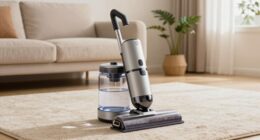
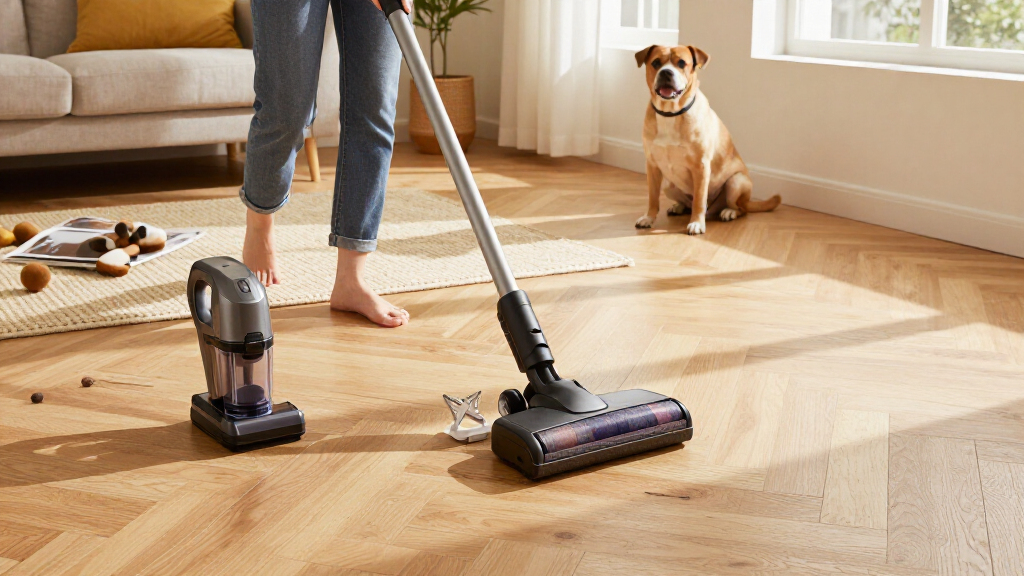
A cordless stick vacuum is a battery-powered cleaner that combines a long wand and handle with a motorized floor head and smaller attachments. Many models convert to handheld mode, so you can move from crumbs under the table to dust on the sofa without changing machines.
Think of it as a broom with a motor and a dust bin, like a compact cleaning kit that follows you from room to room. You still need to empty it and charge it, but there’s no plug to hunt for when cereal scatters across the kitchen tile.
Manufacturers describe these as powered cleaning devices, but the useful question is simpler: can the vacuum reach the mess you have? A crevice tool might pull grit from a car seat seam, while a soft roller can sweep flour from hardwood without scattering it.
How to match suction and runtime to your floors
Cordless stick vacuums need enough airflow and the right brush head for your flooring, while their battery must last long enough to cover your usual cleaning session. Suction is often listed in air watts (AW); leading models in the research brief span roughly 100–260 AW, with the Dyson V15 cited at about 230 AW [1]. These figures can help compare models, but they do not tell you exactly how well a vacuum will clean your rooms: the head, airflow path, and floor surface all affect how much debris reaches the bin.
A motorized brush roll agitates carpet fibers to lift debris, while a soft roller is built for hard floors. The distinction matters because a carpet brush can scatter fine debris on smooth floors, while a soft roller may not loosen dirt embedded in carpet. If you have a low-pile rug in a mostly hardwood apartment, an auto-adjusting head can make the handoff feel as smooth as a skate gliding from wood onto a rug. It also saves you from stopping to change heads, though one head may not perform as well as a specialized one on every surface.
Runtime figures need the same close reading. Typical advertised ranges run from 15 to 60 minutes, but Boost mode can drain the battery in under 10 minutes; a five-room clean on maximum suction may become a series of short sprints [1]. Higher suction uses more power, so a headline runtime usually describes a lower setting and may assume a non-motorized tool. Consider how long your ordinary cleaning takes and whether you need extra power for carpet or stubborn debris. If the battery cannot cover that session, you may need to clean in stages, recharge, or buy a model with a swappable pack.
Before comparing models, check these four details:
- Floor head: Look for a motorized brush for carpet and a soft roller or gentle setting for hard floors. A suitable head can improve pickup while reducing scattering or floor marks.
- Usable runtime: Compare the standard setting you expect to use, not just the longest advertised figure. Check whether the stated time includes the powered floor head, since that can draw more energy than a small attachment.
- Battery access: A removable or swappable battery can keep cleaning going while another pack charges. That flexibility costs extra and only helps if replacement packs remain available at a reasonable price.
- Tools and reach: Check whether the package includes a crevice tool, upholstery head, or extension for stairs and shelves. Included tools matter when they solve recurring tasks; extra attachments that stay in a drawer do not justify much of a price premium.
For example, if your home has two carpeted bedrooms and a long-haired dog, brush design and hair release may matter more than the highest AW number. A head that picks up hair without frequent cutting can save upkeep time, while a large Boost-mode figure may matter little if you use that setting only briefly.
When a cordless model can replace your full-size vacuum
A cordless stick vacuum can replace a corded cleaner for many smaller homes with mostly hard floors, but deep or wall-to-wall carpet may call for stronger, sustained cleaning. The answer depends on floor area, carpet pile, debris, and whether you can clean the whole space on one charge.
Picture a compact flat with tile, a couple of rugs, and a weekly cleanup routine. A lightweight stick vacuum can make short daily passes easy, and its handheld mode can tackle sofa crumbs. In a larger home with plush carpet, the same battery may run down before you finish, and the floor head may not dig as deeply as a full-size machine.
Use this quick comparison to set expectations:
| Home or task | What usually works well | What to check |
|---|---|---|
| Small home, mostly hard floors | Daily crumbs, dust, and quick room-to-room cleaning | Soft roller, bin size, and standard-mode runtime |
| Carpeted rooms | Surface debris and frequent touch-ups | Motorized brush, carpet performance, and Boost runtime |
| Pets and upholstery | Hair on sofas, stairs, and visible floor mess | Hair-resistant head and upholstery attachment |
| Allergy concerns | Capturing fine particles during regular cleaning | Sealed system and HEPA filtration claims |
For deep carpet cleaning or a big house, a corded vacuum can still be the steadier workhorse. That tradeoff is simple: cordless convenience for quick access, corded power for longer sessions.
What to check for pet hair, allergies, and daily mess
Cordless stick vacuums handle pet hair and fine dust best when the brush roll resists tangles and the filtration system keeps particles from escaping back into the room. For allergy sufferers, look for a sealed design and HEPA filtration rather than relying on a filter label alone. These features address different problems: the brush limits hair wrapped around the roller, while the sealed airflow path helps keep captured fine particles from leaking back out.
A fluffy retriever can wrap hair around a brush roll after a single living-room pass. A tangle-resistant head may cut down on scissor work, but no brush stays clear forever; check how easily you can remove and clean it. Hair that builds up around the roller can slow it down and reduce contact with the floor, so convenient access can matter more in a shedding household than a claim that the head is maintenance-free.
Small bins are another reality of slim cleaners. The research brief gives a typical range of 0.1–0.8 liters, so a pet-heavy home may need more frequent emptying than a home with occasional crumbs [1]. Frequent emptying interrupts longer sessions, but waiting until the bin is packed can restrict airflow and make debris harder to remove. If emptying sends a puff of dust into the air, a hygienic ejection mechanism can make the chore more comfortable.
A strong filter helps only when air passes through the filter instead of leaking around it.
After vacuuming a shedding pet’s bed, empty the bin over a trash can and inspect the head. That two-minute habit can prevent hair buildup from turning tomorrow’s cleanup into a noisy, less effective pass. If allergies are a concern, follow the manual’s filter-cleaning directions and avoid shaking dust loose indoors; washable filters must dry fully before reuse or they may obstruct airflow.
How to keep battery life and suction from fading
Cordless stick vacuums lose cleaning time when batteries age, bins fill, or filters clog. The research brief lists typical charge times of 3–5 hours and notes battery degradation as a common concern over roughly two to five years [1]. Exact lifespan depends on use and the model. That means a vacuum that once covered the whole home may eventually need more charging breaks, especially if you often use high power; checking replacement options before buying helps you judge whether that later cost is manageable.
If suction drops halfway through cleaning, check the easy culprits first. A full bin can restrict airflow, and dust packed into a filter can make the motor work harder. A vacuum that leaves crumbs behind may need a five-minute cleanout, not a new motor. If cleaning those parts does not help, look for a blockage in the wand or head and consult the manual before assuming the battery has failed.
- Empty the bin before debris reaches the fill line. A less-full bin leaves room for airflow and helps avoid spills when you detach it.
- Clean filters as the manual directs, and let washable filters dry fully before reinstalling them. A damp filter can restrict airflow and may cause problems the vacuum’s safety instructions are designed to prevent.
- Clear the brush roll when hair or thread winds around its ends. Buildup can slow the roller and leave more debris behind, even when the motor still runs.
- Use Boost briefly for stubborn debris instead of running it across every room. This preserves charge for the rest of the clean, though it may mean making an extra pass on difficult spots.
- Check replacement battery options before buying if you expect to keep the vacuum for years. A replaceable pack can extend the useful life of the machine, but only if the manufacturer sells compatible batteries and the price makes sense.
Some brands offer swappable batteries; others may require a replacement pack or service. If you vacuum a large home in one session, a spare battery can matter more than a display that counts particles or an app that tracks cleaning. For a smaller space, those extra costs may buy little practical benefit if one charge already covers your routine.
Which features deserve your money
The best cordless stick vacuum is the one whose floor head, runtime, weight, and upkeep fit your rooms; a premium spec sheet cannot fix a poor match. The research brief places budget models around $100–$200, mid-range options at $200–$450, and premium models at $500–$1,000 or more [1]. Prices and model lineups change, so verify current details before buying. The price tiers can help narrow the search, but they do not guarantee better cleaning in your home; a feature earns its cost only when it solves a task you face regularly.
If you mainly clean kitchen tile and a small rug, prioritize a useful hard-floor head, easy bin emptying, and a battery that covers your typical session. If you have stairs, a heavy unit can make each trip feel like carrying a small suitcase; compare the weight and how it handles in handheld mode. A lighter vacuum may be easier to use often, while a larger unit may offer more capacity or power, so weigh convenience against the amount of cleaning you need it to do.
Smart screens, app connections, and docking stations can make a vacuum more pleasant to use. They do not automatically pick up more dirt. Spend extra when a feature solves a recurring hassle—such as a dock that stores tools you otherwise lose—or when a removable battery fits your cleaning routine. For occasional quick cleans, simple controls and easy maintenance may deliver more value than connected features; for frequent whole-home cleaning, a second battery or a dock that keeps the vacuum accessible may save time every week.
Frequently Asked Questions
Can a cordless stick vacuum replace a corded vacuum?
Often, yes, if you have a smaller home with mostly hard floors and use the vacuum for regular upkeep. Deep carpet, a large floor area, or long cleaning sessions can make a corded model the more dependable choice.
How long does a cordless stick vacuum battery last?
One charge commonly provides about 15–60 minutes, depending on the model and power setting; Boost mode may run for less than 10 minutes [1]. Batteries can degrade over time, and the research brief identifies two to five years as a common period when wear becomes noticeable [1].
Why has my stick vacuum lost suction?
Start by checking for a full bin, clogged filter, or hair wrapped around the brush roll. Clear those parts according to the manual, and make sure any washable filter has dried fully before you reinstall it.
Are cordless stick vacuums good for pet hair?
They can be, especially with a motorized, tangle-resistant brush and an upholstery tool for sofas. Expect to empty a small bin more often and remove hair from the brush roll from time to time.
Do I need HEPA filtration?
HEPA filtration and a sealed system are useful features if someone in your home has allergies or you want to limit fine-particle release. Check that the whole vacuum is designed to contain the airflow, since a filter alone cannot prevent leaks around the body.
Conclusion
Choose a cordless stick vacuum by matching its floor head, realistic runtime, and battery options to your home. Then keep the bin and filter clear so the motor can do its job. The best vacuum is the one you can grab before the crumbs disappear under the sofa.
Evergreen bestsellers Picks
bestsellers
As an affiliate, we earn on qualifying purchases.