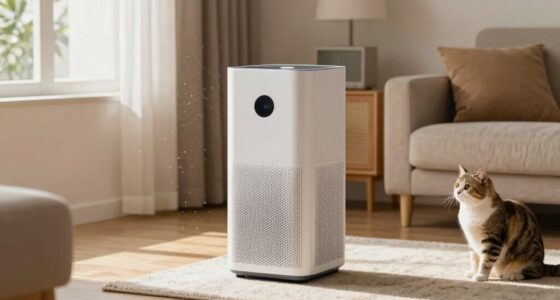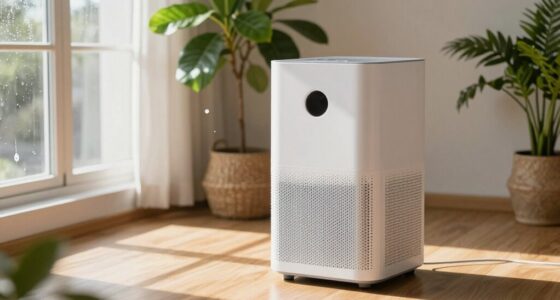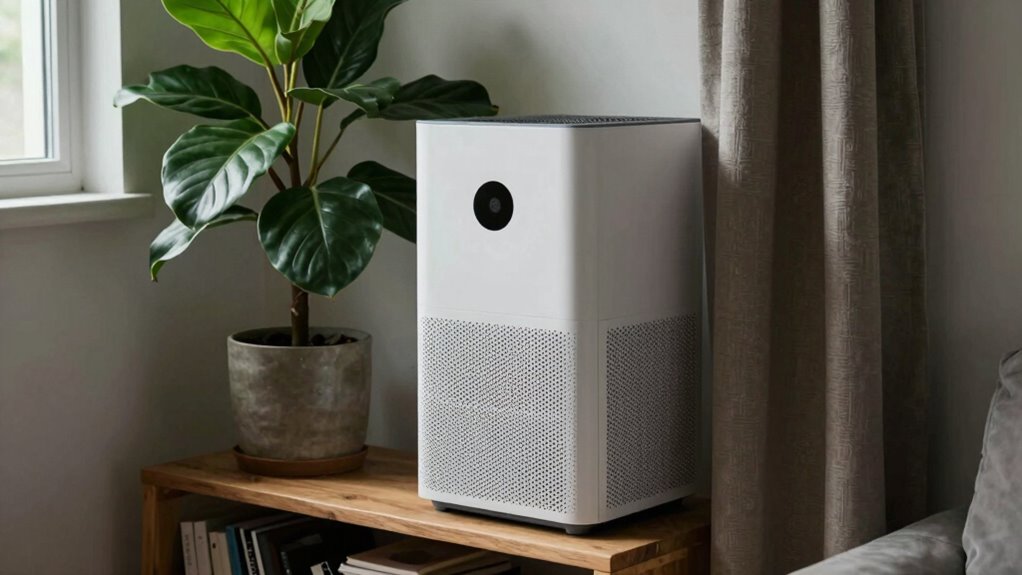

Placing your air purifier in a corner or enclosed space limits airflow and traps pollutants, reducing its efficiency. Blocking intake or outlet vents with furniture or curtains hampers proper filtration. Positioning the device too close to obstructions or at the wrong height can create dead zones and lessen indoor air quality. Hiding it in low-traffic or hidden areas restricts airflow and diminishes performance. Stay tuned to discover how to optimize your air purifier’s placement for top results.
Key Takeaways
- Placing the purifier in corners or enclosed spaces restricts airflow and traps pollutants, reducing effectiveness.
- Blocking air intake or outlet vents with furniture or curtains hampers filtration performance.
- Positioning the device near obstructions or bulky furniture causes dead zones and poor air circulation.
- Setting the purifier at floor level or on high shelves limits airflow and pollutant capture.
- Hiding the unit in low-traffic or hidden spots prevents proper air circulation and diminishes purification efficiency.
Placing the Air Purifier in a Corner or Enclosed Space
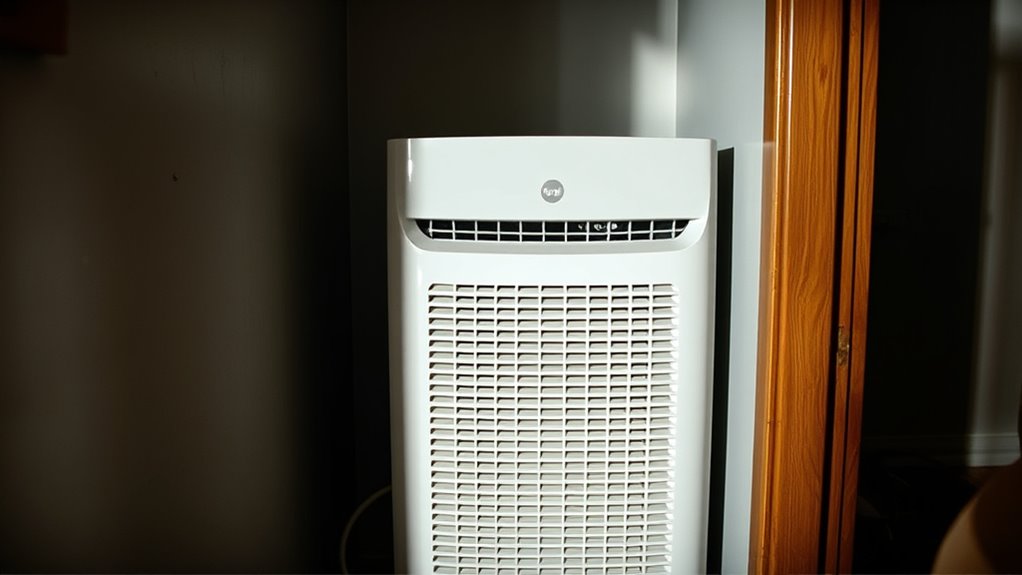
Placing your air purifier in a corner or an enclosed space can considerably reduce its effectiveness. Corner placement limits airflow around the device, restricting the circulation of clean air throughout the room. Enclosed spaces, such as tight closets or behind furniture, trap pollutants and prevent the purifier from drawing in contaminated air efficiently. When your purifier is tucked away in a corner, it struggles to filter the air evenly, leading to stagnant spots and reduced air quality. To maximize performance, position your air purifier in open areas where air can flow freely from all sides. Keep it away from walls or objects that block vents, ensuring ideal circulation and cleaner air in your space. Proper placement makes all the difference in air purification. Airflow optimization is essential for achieving the best results from your air purifier. For optimal results, consider placement guidelines to ensure your device operates at peak efficiency. Additionally, regularly checking for obstructions around the purifier can help maintain optimal airflow and performance. Ensuring correct placement also helps prevent air bypass and pollutant removal is maximized when the purifier is positioned correctly.
Blocking the Air Intake or Outlet Vents
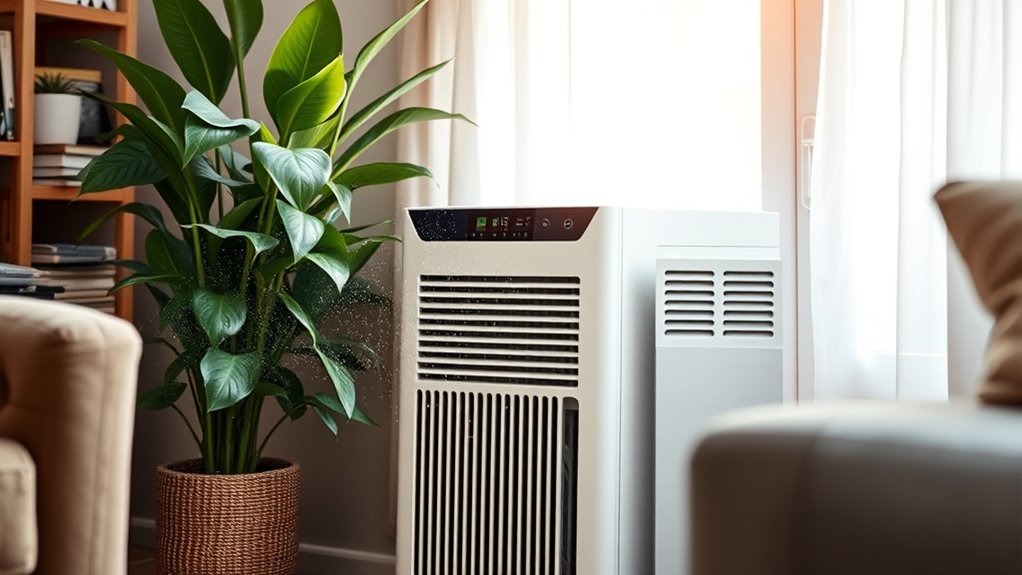
Blocking the air intake or outlet vents can markedly hinder your air purifier’s performance. When vents are obstructed, airflow obstruction occurs, reducing the device’s ability to circulate and filter air effectively. This not only decreases ventilation efficiency but also causes the purifier to work harder, potentially shortening its lifespan. Keep vents clear of furniture, curtains, or other objects that may block airflow. Proper ventilation ensures that unclean air is drawn in and clean air is released without resistance. Regularly check vents for dust buildup or obstructions and clean them as needed. Additionally, understanding indoor air quality can help you identify when your purifier isn’t functioning optimally. Maintaining clear vents allows for better airflow efficiency, which is crucial for achieving optimal air purification. Ensuring the purifier is placed in a location with good air circulation can further enhance its effectiveness. Proper placement not only improves performance but also helps prevent sensor blockage, which can interfere with the device’s operation. By maintaining open vents, you optimize airflow, allowing your air purifier to operate at peak performance and improve the quality of your indoor air more efficiently. Regularly monitoring device maintenance can also prevent performance issues caused by unnoticed obstructions.
Positioning Near Obstructions or Furniture
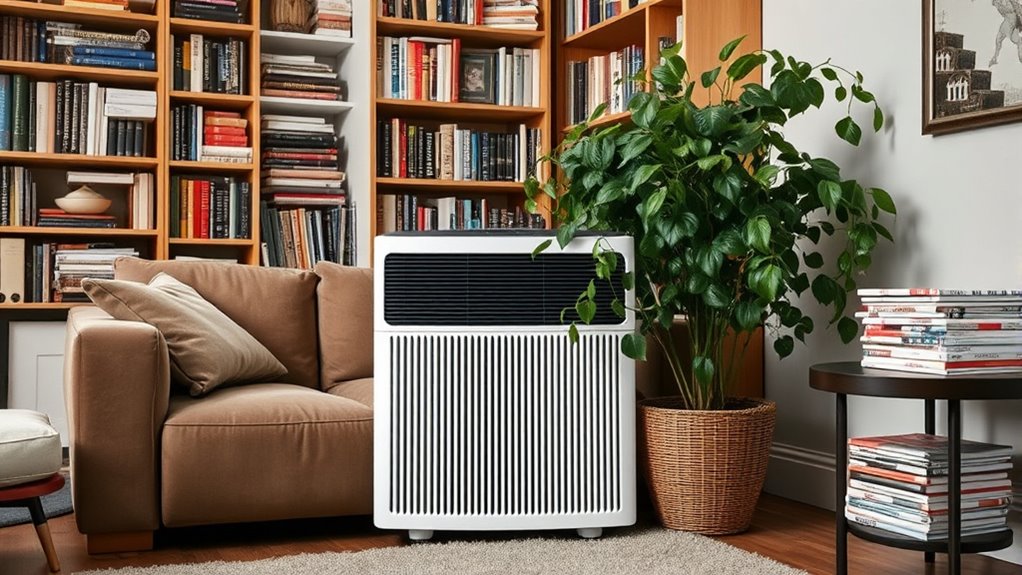
Positioning your air purifier too close to furniture or other obstructions can considerably reduce its effectiveness. When objects block the airflow obstruction, the purifier can’t circulate air properly, leading to improper ventilation. This limitation hampers its ability to filter airborne particles efficiently. Placing the purifier near bulky furniture, curtains, or walls creates dead zones where clean air doesn’t reach. As a result, pollutants linger, and your air quality suffers. To maximize performance, keep the unit at least a few feet away from obstructions, guaranteeing unrestricted airflow. Proper placement allows the purifier to draw in contaminated air and distribute clean air evenly throughout the room. Additionally, understanding the horsepower of electric dirt bikes can help you appreciate the importance of airflow optimization and performance in high-powered devices. Regularly inspecting and maintaining filters ensures ongoing filter efficiency, further enhancing the device’s effectiveness. Ensuring proper placement supports optimal air circulation, which is crucial for maintaining healthy indoor air quality. Moreover, considering smart home automation can help monitor and optimize air purifier placement and operation automatically.
Ignoring the Optimal Height for Placement

Ignoring the ideal height for your air purifier can substantially reduce its effectiveness. Placement at the wrong height limits airflow and filtration, risking poor air quality. To maximize performance, consider these points:
Proper height placement boosts your air purifier’s efficiency and indoor air quality.
- Keep the purifier at ear level or slightly higher for better air circulation.
- Ceiling mounting can be effective in large rooms but requires proper height adjustment.
- Avoid outdoor placement or placing it too close to windows—outdoor conditions can overwhelm the unit.
- Do not place it on the floor or too high on shelves, as dust and pollutants settle at lower levels or disperse unevenly.
- Proper air circulation is essential for the purifier to operate efficiently and improve indoor air quality.
- Additionally, ensure that the placement allows for proper airflow, preventing obstructions that can hinder filtration performance.
- Correct placement height also enhances air quality, ensuring pollutants are effectively captured and filtered.
- Understanding how airflow dynamics impact purifier efficiency can help you choose the best placement height.
- Considering ventilation patterns can further optimize indoor air purification by promoting even distribution of clean air throughout the space.
Hiding the Purifier in Unobvious or Low-Traffic Areas
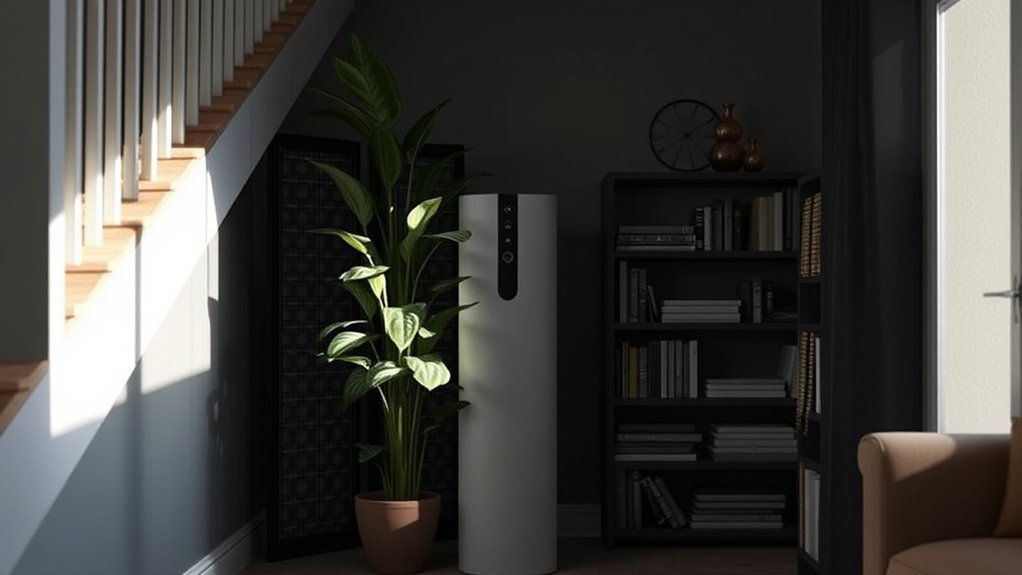
While it might seem tempting to hide your air purifier in a closet or behind furniture to keep it out of sight, doing so can considerably diminish its effectiveness. Concealing your purifier with decorative covers or placing it in low-traffic areas limits airflow and prevents proper air circulation. Even if you prefer aesthetic placement, avoid hiding it behind drapes, inside cabinets, or in corners where airflow is restricted. Proper airflow and placement are crucial for the purifier to operate at peak efficiency. In addition, air circulation helps disperse purified air evenly throughout the space, ensuring better overall air quality. Optimal placement ensures the purifier works efficiently, capturing pollutants effectively. Proper placement ensures the purifier works efficiently, capturing pollutants effectively. Prioritize functional placement over concealment to maximize your air purifier’s performance without compromising your interior design. Optimized placement is essential for the purifier to operate at peak efficiency.
Frequently Asked Questions
How Does Room Size Affect Air Purifier Placement?
Room size directly impacts where you should place your air purifier and its capacity. For larger rooms, you need a purifier with higher capacity and should position it centrally to maximize coverage. In smaller spaces, placing the purifier near pollution sources or air entry points enhances efficiency. Avoid blocking vents or placing it in corners, as this can reduce air circulation and overall performance, especially in rooms that are too big or too small for your purifier’s capacity.
Can Multiple Air Purifiers Improve Air Quality More Effectively?
Think of multiple air purifiers as a team of guardians working together. Yes, adding more can considerably boost air quality and purifier efficiency, especially in larger or complex spaces. By strategically placing them, you create a network that captures pollutants from all directions, reducing dead zones. This teamwork ensures cleaner air faster, giving you peace of mind and a healthier environment. More purifiers, better protection.
What Are Signs My Air Purifier Isn’t Functioning Properly?
You’ll notice your air purifier isn’t working properly if it’s unusually noisy, which may indicate a dirty filter or mechanical issue. Reduced air flow or persistent odors also suggest it’s not functioning well. Check the filter lifespan regularly, as a worn-out filter decreases efficiency. If the noise gets louder or airflow diminishes, it’s time to clean or replace the filter to restore peak performance.
How Often Should I Clean or Replace Filters?
Like tending a garden, your air purifier’s filters need regular care to flourish. You should replace filters according to the manufacturer’s maintenance schedule, typically every 3 to 6 months, depending on usage and air quality. Check your filter lifespan regularly, and don’t wait until performance drops—proactive maintenance keeps your air clean and fresh. Proper care guarantees your purifier works efficiently, safeguarding your health and comfort every day.
Does Air Purifier Placement Differ for Smoke Versus Pollen Removal?
Yes, placement considerations differ for smoke versus pollen removal. For smoke, position your air purifier near sources like the kitchen or smoking areas, making certain unobstructed airflow. For pollen, place it in main living spaces or bedrooms to maximize circulation. Keep it away from walls and furniture, and elevate it if possible. Proper placement ensures your purifier effectively targets each pollutant, improving air quality in your home.
Conclusion
To get the most out of your air purifier, avoid common placement mistakes like hiding it in corners or blocking vents. Proper positioning can boost its efficiency so much, it’s like giving it superpowers. Remember, the wrong spot can cut performance in half—don’t let your investment go to waste. Take a moment to find the perfect spot, and watch your air quality soar. Your home deserves nothing less than ideal clean air—no compromises!