TL;DR
Open a free Amazon Business account
Business pricing, bulk buying and tax-exempt orders.
Create a free accountAs an affiliate, we earn on qualifying purchases.
NASA is building a ‘laundry gun’ designed to clean spacecraft efficiently in space. While the technology shows promise for space missions, its adaptation for home use remains speculative and unconfirmed. The development highlights ongoing innovations in space maintenance tools.
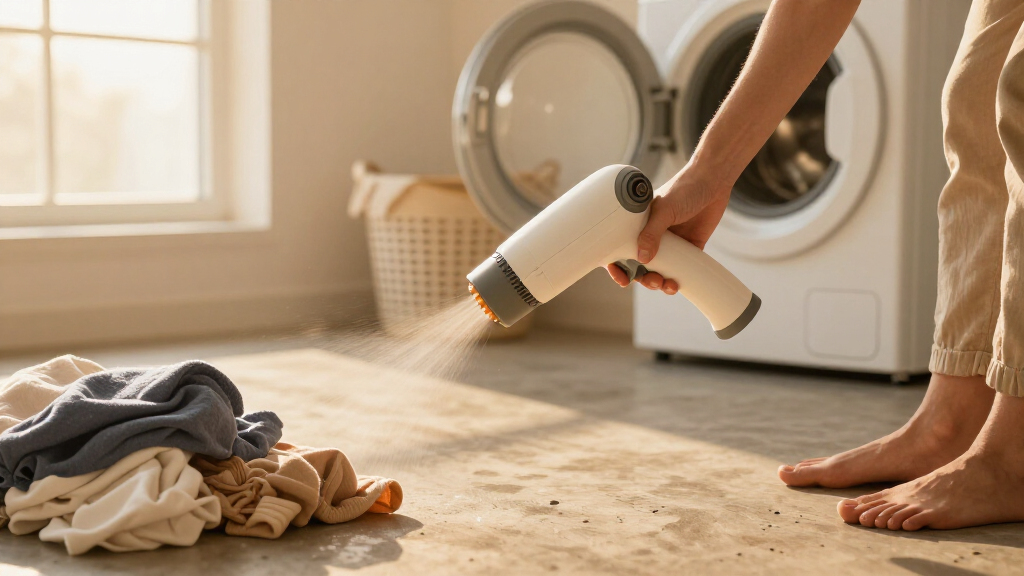
NASA is designing a device known as a ‘laundry gun’ intended to clean spacecraft surfaces in space more efficiently. This innovation aims to address the challenge of maintaining spacecraft cleanliness without traditional cleaning methods that are impractical in microgravity. While the device is confirmed to be under development for space applications, its potential adaptation for home cleaning remains unconfirmed and speculative.
The ‘laundry gun’ is a conceptual cleaning tool that NASA is developing to remove dirt, debris, and contaminants from spacecraft surfaces during missions. According to sources familiar with the project, the device uses a high-velocity jet of compressed air or similar force to dislodge particles, reducing the need for manual cleaning or complex robotic systems. NASA’s goal is to improve spacecraft maintenance, reduce mission costs, and extend the lifespan of space vehicles.
While NASA has not officially announced a commercial version or application outside space missions, interest in the technology has surged amid broader discussions about advanced cleaning methods for homes and industries. Experts note that the core concept—using directed force to clean surfaces—could theoretically be adapted for household cleaning devices, but significant engineering challenges and safety considerations remain. Currently, there is no confirmed plan to develop a consumer-grade laundry gun for home use.
Potential Impact of Space Cleaning Tech on Everyday Life
The development of a space-focused cleaning device like the laundry gun underscores ongoing innovation in cleaning technology. If adapted successfully for home use, it could revolutionize household cleaning by offering faster, more efficient methods to remove dirt and grime without traditional scrubbing. Such technology might reduce water and chemical use, aligning with environmental sustainability goals. However, experts caution that significant engineering modifications would be necessary to ensure safety and practicality in a domestic setting.
For now, the main importance of this development lies in its illustration of how space technology can inspire innovations with broader applications. It also highlights the increasing interest in advanced cleaning solutions driven by consumer demand and environmental concerns.
As an affiliate, we earn on qualifying purchases.
NASA’s Space Cleaning Challenges and Technological Innovations
Maintaining cleanliness on spacecraft presents unique challenges because of microgravity, limited water supply, and the need for minimal crew intervention. NASA has long sought innovative solutions to reduce manual cleaning efforts that can be time-consuming and risky in space. The concept of a ‘laundry gun’ emerged from research into using directed force to remove particles without water or chemical cleaners, which are impractical in space environments.
This development is part of a broader trend of applying space technology principles to terrestrial problems, including robotics, materials science, and environmental management. Interest in such innovations has increased recently, partly driven by a surge in coverage and public curiosity, although the project remains in experimental stages and not yet commercially available.
As an affiliate, we earn on qualifying purchases.
Unanswered Questions About Home Adaptation and Safety
It is not yet clear whether NASA or private companies plan to develop a consumer version of the laundry gun, or if the technology could be safely adapted for household use. Experts warn that high-velocity jets of air or similar force could pose safety risks, such as injury or damage to household surfaces. Additionally, the engineering modifications needed to make the device safe, easy to operate, and affordable for consumers are still unknown.
Further research and development are required to determine whether this space technology could transition into a practical home cleaning device, and whether regulatory or safety standards would permit such use.
As an affiliate, we earn on qualifying purchases.
Next Steps in Space and Potential Consumer Development
NASA continues to refine the laundry gun prototype for space applications, with no announced plans for commercial release. Meanwhile, researchers and industry players are exploring how similar principles could be adapted for home cleaning devices, but no concrete products are imminent. Future developments may include testing prototypes for safety, efficiency, and user-friendliness, alongside regulatory evaluations.
Public interest and media coverage remain high, which could accelerate research into consumer applications, but widespread availability of such a device remains uncertain in the near term.
As an affiliate, we earn on qualifying purchases.
Key Questions
Can the NASA laundry gun be used at home right now?
No, the laundry gun is still in development for space missions and has not been adapted for consumer or household use.
What are the main benefits of the space laundry gun?
It aims to efficiently clean spacecraft surfaces without water or chemicals, reducing maintenance time and extending mission life.
Could this technology replace traditional vacuum cleaners?
It is too early to say. While the concept is promising, significant engineering and safety challenges must be addressed before any home application is possible.
Are there safety concerns with using high-velocity jets at home?
Yes, safety is a primary concern. High-velocity jets could cause injury or damage surfaces, requiring careful engineering and safety standards before any consumer version is developed.
When might a household version of this device become available?
There are no confirmed timelines. The technology is still in early development stages, and it could take years before any commercial product appears.
Source: rss
Fall Picks
fall essentials
As an affiliate, we earn on qualifying purchases.