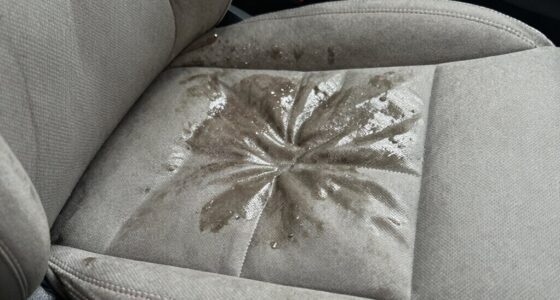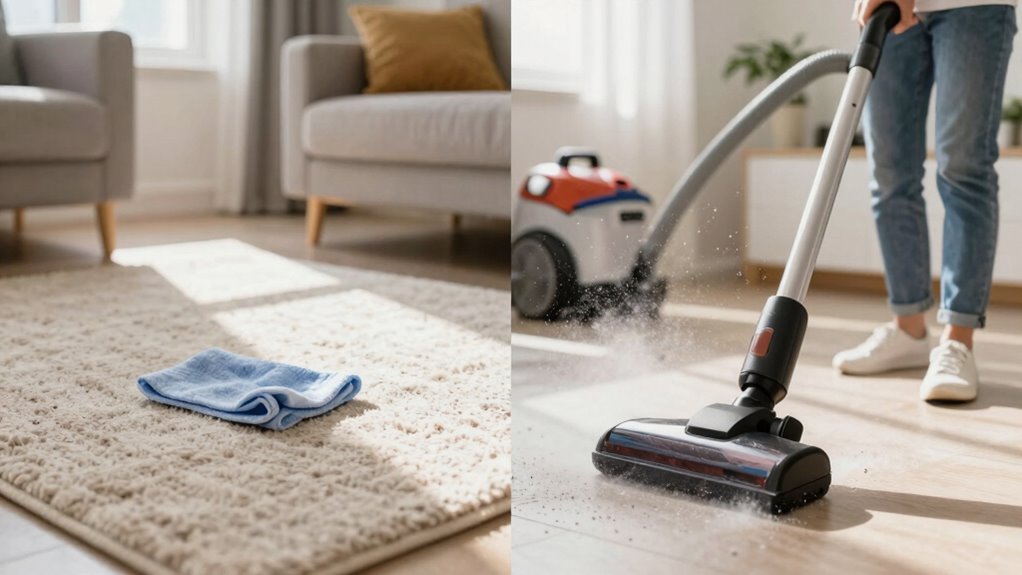

When tackling stains, choose spot cleaning for minor, fresh spills, as it prevents stains from setting and uses less water. If you’re dealing with multiple or deeply embedded stains, full cleaning is the better option to restore fabric texture and remove allergens. Remember to select stain-specific cleaners for spot cleaning. To guarantee your fabrics stay in top shape, it’s crucial to know when to switch methods. There’s more to learn about optimizing your cleaning techniques.
Key Takeaways
- Use spot cleaning for fresh, minor stains like spills, while full cleaning is suited for deeply set-in or multiple stains.
- Choose stain-specific cleaners for spot cleaning to prevent spreading, and employ professional machines for comprehensive full cleaning.
- Consider the fabric type; spot cleaning works well with casual fabrics, while full cleaning restores texture and appearance for all materials.
- Act quickly on stains with spot cleaning to avoid setting in, but schedule full cleaning periodically for overall maintenance and health.
- Evaluate the extent of soiling; if spot cleaning fails, transition to full cleaning for effective dirt and allergen removal.

When it comes to keeping your home and wardrobe looking fresh, understanding the difference between spot cleaning and full cleaning can make all the difference. Spot cleaning is your go-to method for targeting specific stains or soiled areas on items like clothing, carpets, and upholstery. By using gentle solutions only on the affected area, you can avoid the hassle of a full wash cycle. This technique involves blotting from the inside out, which helps prevent the stain from spreading further. It’s imperative to use stain-specific cleaners, especially enzyme-based ones for organic stains, so you can act quickly when those small spills happen, whether it’s coffee or pet accidents. Additionally, color accuracy in the cleaning products can help maintain the integrity of your fabrics.
Understanding spot cleaning is essential for effectively tackling stains and maintaining the freshness of your textiles.
On the other hand, full cleaning is a thorough process that refreshes the entire garment, carpet, or surface. It employs professional machines and methods like steam or dry cleaning to tackle embedded dirt, dust, and allergens that surface cleaning misses. Full cleaning restores the original texture and appearance, guaranteeing your items look consistent and new. You’ll need to schedule this type of cleaning periodically for overall maintenance, especially if you’re dealing with delicate fabrics or larger items that require professional care.
So, when should you use spot cleaning? It’s perfect for minor, fresh spills like makeup smudges or food stains that can be treated promptly. If you address these blemishes right away, you can prevent them from setting in. Spot cleaning is also great for everyday touch-ups on casual wear like cotton or polyester, allowing you to maintain your garments without over-washing. Additionally, spot cleaning is considered an eco-friendly method because it uses less water and energy compared to full cleaning.
However, full cleaning is necessary when you’re faced with multiple stains. If spot cleaning fails or if stains have deeply set in, you’ll want to opt for a thorough extraction. Regular full cleaning is also vital for extending the lifespan of your carpets and rugs, especially when dirt and allergens build up over time.
Ultimately, the choice between spot cleaning and full cleaning depends on the nature of the stains and fabrics involved. Spot cleaning is ideal for quick fixes on fresh, isolated stains, while full cleaning is best for widespread issues. Knowing when to use each method ensures that you maintain both the appearance and longevity of your textiles, enhancing the health of your home as well.
Frequently Asked Questions
Can I Use Bleach for Spot Cleaning Stains?
You shouldn’t use bleach for spot cleaning stains unless the fabric is bleach-safe. Bleach can damage or discolor many materials, so it’s best to check care labels first. Instead, opt for a gentle solution like dish soap or a fabric-specific cleaner. If you do use bleach, dilute it with water and test it on an inconspicuous area first. Always blot the stain gently to avoid spreading the stain further.
How Do I Know if a Stain Is Set In?
Picture a thief lurking in your fabric’s fibers—once a stain settles in, it becomes harder to evict. You’ll know a stain is set in if it’s darkened or discolored, even after your best spot-cleaning efforts. When it feels rough or stiff, that’s another sign that it’s taken root. Test it with water; if the stain doesn’t budge, it’s time to contemplate a full cleaning to reclaim your fabric’s former glory.
What Materials Are Best for Spot Cleaning?
For spot cleaning, materials like cotton, polyester, and microfiber work best. These fabrics respond well to gentle treatments and can withstand quick cleaning methods. When tackling stains, use a clean cloth to blot the area and avoid spreading. Avoid delicate fabrics like silk or wool, as they can be damaged by spot cleaning. Always check care labels first to confirm you’re using the right approach for your specific materials.
Are There Any Stains That Can’t Be Spot Cleaned?
Some stains just won’t budge with spot cleaning, like large grease or ink marks. While quick fixes work wonders for small spills, deep-set or organic stains often require a full cleaning. You might think you’re saving time, but ignoring those stubborn marks can lead to bigger issues later. If you notice a stain that’s spreading or deeply embedded, it’s best to choose an extensive cleaning method for effective results.
How Long Should I Wait Before Spot Cleaning a Stain?
You should act quickly when dealing with a stain, ideally within a few minutes. The sooner you spot clean, the better chance you have of preventing it from setting. If the stain’s dried, it might be tougher to remove, so don’t wait too long. Blot the area gently with a clean cloth and a suitable solution to lift the stain without spreading it. Remember, prompt action is key to effective spot cleaning!
Conclusion
Ultimately, choosing between spot cleaning and full cleaning comes down to your needs and lifestyle. While some might argue that full cleaning is too time-consuming, remember that a thorough clean can save you time in the long run by preventing dirt buildup. Embrace the approach that fits your schedule and keeps your space looking its best. Whether you opt for a quick touch-up or a deep clean, you’ll create a healthier, more inviting environment for yourself.